
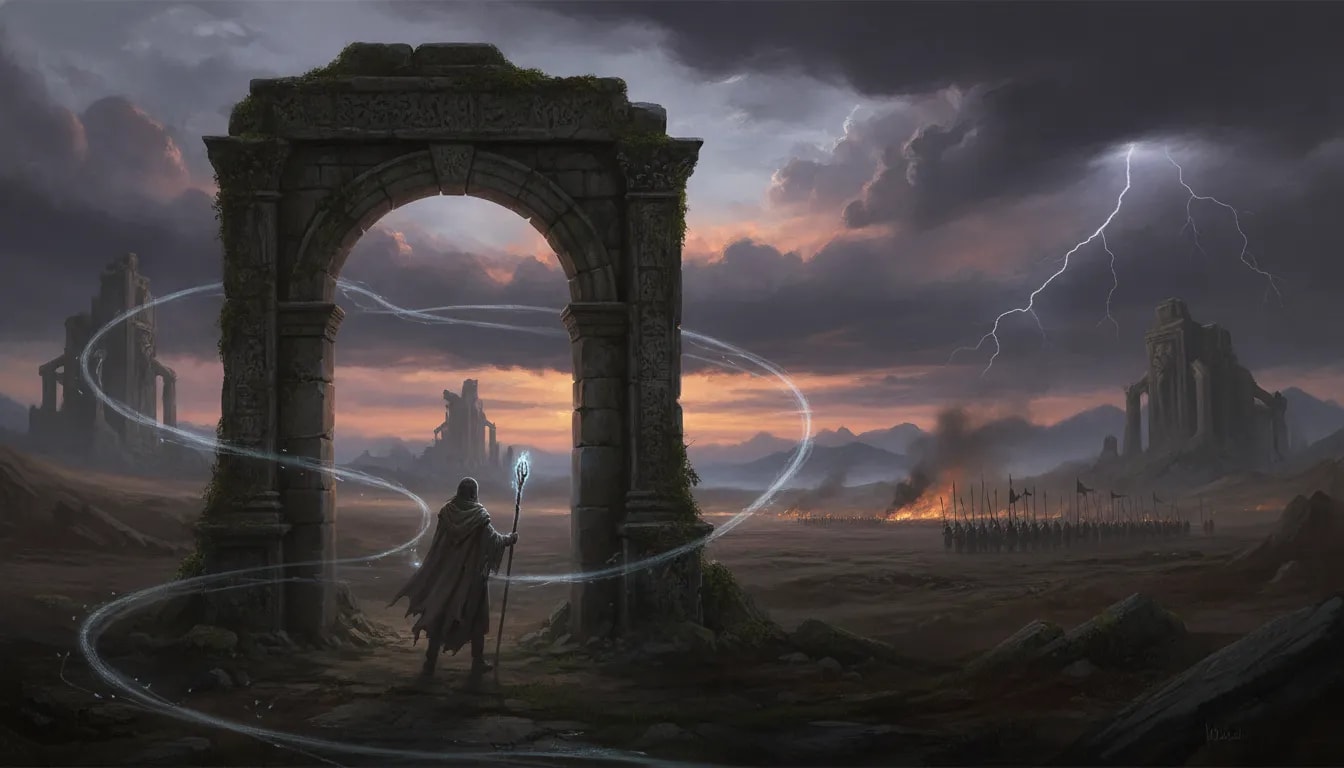
Oh yeah, it is happening. After five years away, we are finally heading back into Steven Erikson’s Malazan Book of the Fallen.
Specifically, we are picking up Toll the Hounds.
That sentence feels both exciting and a little insane. Malazan is not exactly the sort of series where we casually step away for half a decade, crack open book eight, and expect everything to be right there waiting for us. This is a series built on ancient history, massive casts, shifting continents, gods, ascendants, soldiers, assassins, warrens, convergences, and plot points that can look completely meaningless until thousands of pages later.
And yet, here we are.
We never quit Malazan. We just took what became a wildly longer break than intended.
How We Got Here: Seven Huge Books and One Very Long Pause
We finished Reaper’s Gale around Christmas 2021 and said we would put the series down for a little while. The plan was simple enough: take a breather, come back refreshed, and finish the final three books.
That “little while” became five years.
Now, there were plenty of people ready to call this a quit. We heard the usual version of it: finish the series or admit it is over. But that was never what this was. We do not need anyone to give us permission to stop reading something. If we are done with a series, we will say we are done.
But one does not read seven gigantic Malazan books and simply walk away because one volume lands at the wrong time.
The series had too much going for it. Too many scenes had stayed lodged in our brain. Too many characters and images had never really left. Even with a five-year gap, Malazan was always there in the background, waiting for the right moment.
There was also a small physical-book issue. The old mass market paperbacks had that tiny font that makes an 850-page fantasy novel feel like an endurance event before the story even begins. We got rid of those copies and intended to wait for the Broken Binding editions. They still have not arrived, so we are going digital for Toll the Hounds.
That is not the reason for the five-year delay, obviously. We are not blaming typesetting for a presidential administration coming and going. But it is one more little reminder of how long this journey has been sitting in limbo.
Why Malazan Was Never Easy to Leave Behind
Malazan has one of the strangest reputations in fantasy.
People often pitch it by saying it ruined every other fantasy series for them because it is that good. Then they immediately follow that with a warning: it is difficult, confusing, challenging, and we may not understand much of what is happening for a while.
That is not exactly a sales pitch. It is more like being handed a waiver before getting on a roller coaster.
So we went into Gardens of the Moon expecting a nightmare. We expected to spend the entire book lost, frustrated, and wondering why anyone thought this was fun.
Instead, it was surprisingly easy to follow. More importantly, it immediately felt huge.
Even very early on, Pale showed the scale Erikson was operating on. This was not just another quest fantasy with recognizable genre furniture rearranged into a new shape. It felt strange, grand, brutal, old, and completely confident in its own mythology. We could not point to another fantasy series and say, “Oh, this is basically that thing.”
Malazan felt like Malazan.
Since Tolkien, there had not been another fantasy world that gave us quite the same feeling of standing at the edge of an enormous history. The setting feels lived in, scarred, and ancient. Every culture seems to carry its own burdens. Every empire has layers underneath it. Every god appears to have an agenda. There is always the sense that the characters are walking through the remains of stories that began long before they arrived.
That is what made it so hard to close the door on the series. We were not just reading for answers to plot questions. We wanted to return to that world.
For anyone curious about the series, the official Steven Erikson website is a useful starting point for news and background on the world of Malazan.
The High Points That Still Live Rent Free in Our Head
Five years is a long time. We have read a lot since then. Details blur. Names disappear. Exact mechanics of the magic system become foggy. Yet some Malazan moments are still crystal clear.
That tells us something.
Deadhouse Gates and the Chain of Dogs
Deadhouse Gates was the book that made us realize this series could become something special. We liked Gardens of the Moon, but we loved Deadhouse Gates.
It was also where a lot of people fell away during the original readalong. Erikson’s early structure can be hard on readers because he does not simply build one central cast across every volume. He moves around. New locations appear. New groups of characters take center stage. Familiar faces can vanish for long stretches before reappearing much later.
For some, that is a dealbreaker. We understand it. Getting attached to a group and then being told to spend 700 or 800 pages somewhere else can feel like being asked to start over.
But Deadhouse Gates won us over because its emotional payoff was so powerful. The Chain of Dogs remains one of those storylines that can leave us with a serious book hangover. It is painful, exhausting, and unforgettable. It is the kind of fantasy arc that makes the page count feel worthwhile.
Mappo Runt and Icarium also became one of our favorite duos in all of fantasy. There is a tenderness and tragedy to their relationship that stands out amid all the chaos, violence, military maneuvering, gods, and impossible stakes.
Memories of Ice and the Pure Madness of Malazan
Memories of Ice kept the momentum going. This was where Malazan showed just how far it was willing to go with horror, tragedy, and gigantic battle sequences.
Whiskeyjack versus Kallor is still one of those fights that sticks with us. The conflict carries weight because these are not just names thrown onto a fantasy battlefield. By that point, their history, personalities, and grudges make the confrontation matter.
Then there is Itkovian and the T’lan Imass, a storyline built around pain, memory, compassion, and sacrifice. Malazan can be incredibly cruel, but it also has a surprising amount of heart. Some of its strongest moments come when characters choose to carry another person’s suffering rather than look away from it.
And yes, the Tenescowri are nightmare fuel. There is no cleaner way to put that.
Erikson can take a battle and make it feel physically overwhelming. The bodies pile up. The walls become impassable. The scale becomes grotesque. The image lingers because it is not presented as clean, glorious warfare. It is horrifying.
House of Chains and Karsa Orlong
House of Chains was more uneven for us. It is probably one of our lesser favorites among the books we have read so far. But its opening gave us Karsa Orlong, who became our favorite character in the entire series.
Karsa is one of those characters who announces himself with such force that the whole book seems to shift around him. The fact that he had already been present in the series in a way we did not fully recognize is classic Erikson. Details that look insignificant can become meaningful much later. A throwaway reference can come back with enormous consequences.
That is part of the appeal and part of the challenge. Malazan rewards attention. It does not always reward it quickly.
Midnight Tides and Learning to Trust the Reset
Then came Midnight Tides, and Malazan pulled its favorite move again: new cast, new location, new situation, and a fresh reason to be annoyed that we were leaving people behind.
At first, we were tired of that approach. We had finally gotten comfortable with certain characters and storylines, and suddenly we were being asked to invest in an entirely different part of the world.
Then the book got its hooks into us.
The Edur material and the family dynamics were what won us over. That is one of the lessons Malazan kept teaching us: even when we resisted a change, Erikson usually had something worth showing us on the other side of it.
By the halfway point, at least in terms of book numbers, we thought we understood the rhythm. We had accepted that this series would change the map, rearrange the cast, and ask for patience.
Then The Bonehunters came along and blew the doors off.
The Bonehunters and the Best of What This Series Can Do
The Bonehunters remains our favorite Malazan novel so far.
The Battle of Y’Ghatan is one of the greatest battle sequences we have ever read in fantasy. It is huge, intense, and relentlessly stressful. The sequence runs for what feels like forever in the best possible way, and it demonstrates how Erikson can sustain momentum when everything is going right.
This was also the book where the sprawling structure began to feel especially rewarding. Characters, factions, and storylines started to converge. We could look at the dramatis personae and actually recognize the people involved. That might sound like a small thing, but after several Malazan novels, it feels like a victory.
All the pieces were coming together. The characters mattered. The stakes mattered. The convergences were firing. The book had that rare feeling of a long series rewarding us for the investment.
It was awesome.
When Reading Malazan Started to Feel Different
The problem was not that Malazan suddenly became bad after The Bonehunters. The problem was fatigue.
Seven books is a lot of Malazan. Not just because of the page counts, though those are certainly not small. Erikson asks for a serious commitment. He expects us to remember people, places, references, and events after long stretches away from them. He changes settings. He changes casts. He drops us into unfamiliar situations and trusts that we will catch up.
That can be thrilling. It can also be exhausting.
During the original readalong, we had planned to spread the series across two years. That seemed reasonable. But people wanted a faster pace, and we sped things up. In hindsight, that probably hurt the experience.
There is a difference between reading one massive Malazan book and immediately preparing for another massive Malazan book. When the storylines are already complex and the casts constantly shift, the pressure compounds. A character can disappear for three books, then return and expect us to remember what happened 2,500 pages ago.
That is a lot to carry.
By the time we reached Reaper’s Gale, the fatigue had been building for a while. The book did not create the burnout on its own, but it was where the burnout finally became impossible to ignore.
Why Reaper’s Gale Was the Breaking Point
Reaper’s Gale is a very long book, especially in mass market paperback form. Going into it already tired made every stretch that did not connect feel even longer.
We expected a major confrontation between two incredibly powerful figures. The setup promised an irresistible force meeting an immovable object. We were ready for something spectacular.
Instead, the payoff did not land for us.
There were plotlines that simply did not grab us, including the patriotist secret-police material. Tehol and Bugg are beloved by a lot of Malazan readers, but they were not really doing it for us at that particular moment either. That is not an indictment of anyone who loves them. It was just where we were as readers.
When the anticipated conflict arrived, it felt more like a frustrating boxing match than the colossal showdown we had expected. One side of the fight did not even seem to show up in the way we wanted.
That disappointment probably would have been easier to handle under different circumstances. But when a reader is already carrying series fatigue, one difficult book can make every reading session feel like a chore.
And that is exactly what happened.
We had felt something similar with House of Chains, but Karsa’s material carried us through. With Reaper’s Gale, we did not have the same momentum. Rather than force ourselves through the final three books while growing more resentful, we made the right call.
We stepped away.
Taking a Break Is Not the Same as Quitting
There is a weird pressure around long fantasy series. Once we begin one, it can feel like we owe it a finish, even if we are no longer enjoying the experience. That is not a healthy way to read.
We do not want to hate-read the conclusion of anything. If burnout turns every page into work, taking a break is better than dragging ourselves through the remaining books just so we can say we completed them.
We did something similar with The Wheel of Time. After Lord of Chaos, people warned us constantly about the so-called slog. If we were already feeling tired, why not take six months away and come back with a clearer head?
That worked out fine. We did not forget every important detail just because we took time off. Stories do not evaporate from our minds the moment we close the book.
The Malazan break was supposed to work the same way. It just grew much longer than planned because other series kept coming along. We started new worlds, continued existing commitments, and kept pushing Malazan further down the schedule.
We tried returning to Toll the Hounds twice.
One attempt happened during a family trip to the Caribbean. That was not the right environment for this book. It is hard to settle into grim, horrific Malazan material while surrounded by beautiful sunsets and vacation energy. The mood mismatch was real.
Another attempt came later, but the excitement still was not there. Too many other series were competing for our attention, and Malazan still felt more like an obligation than a place we genuinely wanted to revisit.
So we put it back down again.
Why Now Is the Right Time to Return to Malazan
The difference now is simple: we actually want to go back.
That was always the condition. We would return when we missed Malazan, not when we felt guilty about leaving it unfinished.
Over the years, we have seen peers who started the series after us and finished it. Hearing how much they enjoyed the full journey made us want to give it another shot. Friends and fellow fantasy readers have spoken very highly of the ending, particularly The Crippled God.
One friend had a roller coaster experience with the final book. Near the end, he was worried that the series had dropped the ball. A couple of days later, after finishing it, he was calling Malazan the greatest fantasy series ever. That is a pretty strong endorsement.
Other trusted readers who have completed the series have also had great things to say. When enough people whose opinions we respect keep telling us that the ending is worth it, that matters.
But this is not merely a completionist project. We are not returning because we need to cross a title off a bucket list. We are returning because this world has remained in our head despite five years away from it.
We still think about the Chain of Dogs. We still think about Karsa Orlong. We still think about Y’Ghatan. We still think about the scale of the world, the strange creatures, the soldiers, the tragedies, the improbable friendships, and the overwhelming sense that the history of this place goes back forever.
That is not what a failed reading experience leaves behind.
Our plan for the year also made this the right time. We have been looking at unfinished series and series we want to get current with, and Malazan was one of the biggest priorities. We deliberately held it for later in the year because we did not want to pair these enormous books with another hefty reading commitment at the same time.
These are not light reads. We want to give them room.
How We Are Preparing for Toll the Hounds After Five Years
The honest answer is that there is no perfect way to prepare for Malazan after five years away.
We are not rereading the first seven books. That would be a massive undertaking, and it would turn the return into an even bigger obstacle. We are not trying to punish ourselves here.
Instead, we are going to roll with it.
The first time through, the usual Malazan advice drove us crazy: do not worry if we do not understand everything. We are the kind of readers who want to understand what is happening. If we are completely lost, our immediate response is to ask why we are reading the book at all.
But perhaps the long break has changed our perspective.
We did not understand every part of Malazan even while reading the earlier books close together. So stressing about perfect recall after five years is probably pointless. We know there will be moments where a name appears and we have absolutely no idea who that person is. There will be references to past events that barely ring a bell. There may be moments involving warrens, gods, or historical lore where we just have to keep turning pages.
That is okay.
If something is important enough, Erikson will likely bring us back around to it. If it becomes so confusing that we cannot follow the actual plot, then we have lifelines.
- We can revisit our own spoiler discussions and recaps for the earlier books.
- We can lean on friends who know Malazan deeply.
- We can ask for clarification when the issue is preventing us from understanding the story rather than merely leaving a bit of lore mysterious.
- We can accept that some answers may not arrive immediately.
That last part is the biggest change. We are trying to be more receptive to uncertainty.
We have read a lot since the first Malazan run. Reading tastes shift. Skills develop. Things that once bothered us can become easier to accept, while things we once loved may hit differently. We may find that the distance gives us a better appreciation for Erikson’s approach.
Or we may get thirty pages in and realize we were wildly optimistic. That is possible too.
But at least we are going in with the right mindset: not demanding immediate mastery, not pretending we remember every detail, and not treating confusion as automatic failure.
What We Expect From Toll the Hounds
Toll the Hounds has a reputation for being divisive. Some readers rank it among the very best Malazan books. Others rank it near the bottom. It seems to inspire strong reactions, which honestly sounds about right for this series.
We do not know where we will land.
We know that the next book, Dust of Dreams, is frequently treated as one of the less universally loved entries. We know the final book has a powerful reputation. We know that going back after a long break could either make us more patient or expose every old frustration all over again.
So expectations are complicated.
We have low expectations in one sense because we expect to be confused. We expect to miss references. We expect to need time to get comfortable in the rhythm again.
But we have high hopes in another sense because we remember what this series can do when it is operating at full power.
We remember the emotional devastation of Deadhouse Gates. We remember the horror and compassion of Memories of Ice. We remember Karsa’s entrance in House of Chains. We remember being skeptical of Midnight Tides and then loving where it went. We remember the pure adrenaline of The Bonehunters.
That is enough to make a return worthwhile.
The Real Goal: Finding Out Whether the Heart Still Burns
Finishing a long series feels good. There is no denying that. Ten-book fantasy epics are not small commitments, and closing the final volume can feel like an accomplishment.
But completion is not the main goal here.
The goal is to find out whether we can return to this world and feel that same spark again. Can we pick up Toll the Hounds, get past the initial confusion, and remember why Malazan once felt so different from everything else?
Can we go home again after five years?
Maybe the answer will be no. Sometimes time changes us. Sometimes we revisit a beloved series and discover that the connection belonged to a particular moment in our reading life. There is nothing wrong with that.
But we do not think that is what will happen here.
Malazan never really left us. It was not forgotten. It was paused.
Now, with the fatigue gone and the desire to return finally back, it is time to see whether our heart still burns there too.
Toll the Hounds, we are coming for you. Just please do not expect us to remember every single thing that happened 2,500 pages ago.
Frequently Asked Questions About Returning to Malazan
Can we return to Malazan after a long reading break?
Yes, but it helps to accept that some details will be forgotten. Malazan can be confusing even without a long gap, so the best approach is to keep moving, use recaps or trusted friends when necessary, and focus on following the immediate story.
Do we need to reread the earlier Malazan books before Toll the Hounds?
Not necessarily. Rereading seven enormous books can become a barrier that prevents the return entirely. A lighter refresh through personal notes, past discussions, or recaps can be enough if specific details become important.
Why is Malazan Book of the Fallen considered difficult?
The series has a massive world, a large cast, shifting locations, long gaps between character appearances, deep history, and a storytelling style that does not explain everything immediately. It asks readers to be patient with uncertainty.
What Malazan books stand out most before Toll the Hounds?
Deadhouse Gates stands out for the Chain of Dogs, Memories of Ice for its devastating battles and emotional weight, and The Bonehunters for the Battle of Y’Ghatan and its major convergences. The Bonehunters remains the favorite so far.
Is taking a break from a fantasy series the same as quitting it?
No. A break can be the best choice when reading starts to feel like a chore. Returning with genuine excitement is far better than forcing an ending while burned out.


