
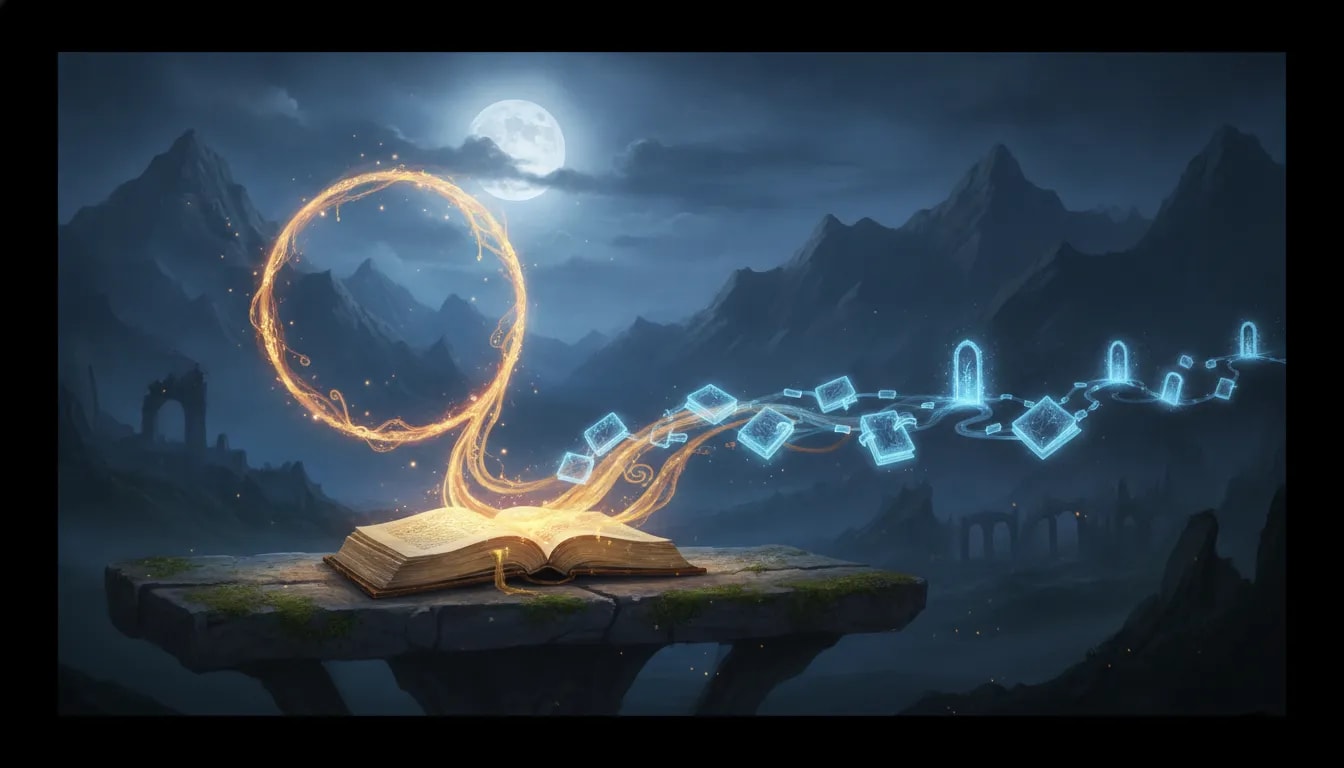
You ever pick up a fantasy book with an awesome cover, get about a hundred pages from the end, and start thinking, “Man, I have no idea how this author is going to wrap all of this up?”
Then we reach the last page and find the words: Book One of a Planned Nine-Book Series.
Well, crap.
Now, we love a great fantasy series. Some of our favorite stories of all time are enormous journeys with giant casts, sprawling maps, magic systems, wars, monsters, betrayals, all of it. There is a reason fantasy readers get attached to worlds like Middle-earth, Discworld, and the Forgotten Realms. When a world works, we do not want to leave it.
But every now and then, it would be nice to pick up a fantasy novel, read 400 or 500 pages, get a complete story, and know that is the deal. Beginning, middle, end. No homework assignment. No twelve-book commitment. No “it gets really good around book three.” Just one excellent fantasy story that has the courage to say goodbye.
So, is the fantasy standalone novel dead?
Not exactly. But it sure can feel like it is becoming a unicorn.
Standalone Fantasy Still Exists, but Does It Stay Standalone?

First things first: standalone fantasy novels are still out there. We are not saying they have vanished from bookstores entirely. They are simply harder to find than they used to be, especially if we are looking for an epic-scale fantasy story that is truly one-and-done.
The bigger question is whether a book stays standalone once it succeeds.
That is where things get tricky. An author may release a book as a complete story, only for readers to love the setting enough that demand begins building for another adventure in the same world. Sometimes the author already has more ideas. Sometimes the publisher looks at sales numbers and asks the perfectly reasonable business question: “What else have you got?”
Why begin from scratch with a new world, new political system, new mythology, new cast, and new magic rules when we already have an established setting that people are eager to revisit?
We can understand that impulse. Building a fantasy world is an enormous amount of work. If we have created a place with history, languages, cultures, conflicts, religions, creatures, geography, and characters people care about, it makes sense to want to keep using it.
Even writers often cited as examples of standalone fantasy may have plans to revisit those stories. Brandon Sanderson’s Elantris and Warbreaker, for instance, are commonly recommended as individual books, but both have been discussed as stories with possible sequels. They may work as complete reading experiences right now, but the door remains open.
And look, an open door is not automatically a bad thing.
The issue is mostly terminology. A book that tells a full story but takes place in a previously established fictional universe is not quite the same thing as a true standalone. It may have a new cast and a separate plot, sure, but it is still part of a larger continuity. That is closer to an anthology-style universe, a companion novel, or a shared-world entry than a completely isolated fantasy novel.
For some readers, that distinction does not matter at all. For others, it matters a lot. If we are specifically seeking that clean, finite experience, “standalone set in an existing universe” can feel a little like ordering a single scoop of ice cream and discovering the cone is attached to a theme park.
Fantasy Was Not Always Defined by Massive Series
Fantasy did not begin as a genre where every book needed to announce itself as the opening installment of an increasingly enormous saga.
Even The Lord of the Rings, perhaps the most influential epic fantasy story of all time, was conceived as one novel. It was later published in three volumes because of practical concerns involving printing, paper shortages, and production realities of the time.
Now, it is almost impossible to think of The Lord of the Rings as anything other than a trilogy. But the story itself is one long narrative with one central quest, one major conflict, and one ultimate ending. It has a beginning, a middle, and an end because that is what it was designed to have.
Classic fantasy certainly built on success. If readers loved a world or character, authors often returned to it. But there was generally more of a sense that an author had to establish themselves first. We did not see as many debut releases that arrived carrying the burden of “Book One of a Planned Nine-Book Series.”
That is a lot to ask from a first book.
It is also a lot to ask from readers. We are not just being asked to try a new author. We are being asked to commit to thousands of pages before we even know if the first installment sticks the landing.
This is why the trilogy remains such a strong storytelling format. The three-act structure exists for a reason:
- Book one can establish the world, characters, conflict, and inciting problem.
- Book two can complicate everything, deepen the stakes, and put the heroes through the grinder.
- Book three can bring the central story to its conclusion.
That does not mean every fantasy story needs exactly three books. Some need one. Some need five. Some genuinely need ten. But the trilogy provides a useful discipline. It reminds us that a story should be moving toward something.
Too often, a planned trilogy becomes five books. Then five becomes seven. Seven becomes nine. By the time we get there, the final volume has grown so large that it has to be split into two parts because it is too big to print comfortably in one binding.
Sometimes that happens because the story naturally expanded. More characters appeared. More plotlines mattered. The author discovered something important along the way. We get that. Creativity does not always stay inside the neat little box we built for it.
But sometimes it can also feel like nobody knows where the finish line is anymore.
Why Fantasy Naturally Lends Itself to Series
We should be fair here. Fantasy is probably one of the hardest genres to make work as a standalone, especially on an epic scale.
Think about everything a fantasy author may need to establish in a relatively short amount of time:
- A believable world with its own history and geography
- A magic system with rules and consequences
- Political factions, kingdoms, rivalries, and wars
- A large cast of heroes, villains, mentors, and side characters
- Religions, myths, prophecies, creatures, and cultural traditions
- A central conflict substantial enough to matter
- Character arcs that feel earned rather than rushed
That is a whole lot of machinery to fit inside one book.
If we move too quickly, the story can feel underdeveloped. If we spend too much time explaining the world, the plot can grind to a halt. If we introduce too many characters, nobody gets enough page time. If we keep the cast small, the world may not feel as large as the story wants it to feel.
Fantasy needs room to breathe. That is not an excuse for every book being a doorstop, but it is a reality of the genre.
Once readers become invested in a world, they often want more of it. We want to know what is happening beyond the borders of the main kingdom. We want to follow the side character who only got three chapters. We want to explore the ancient ruins nobody had time to investigate. We want to know what happened after the war, after the wedding, after the prophecy, after the great evil was defeated.
Authors may want those things too.
That is why a continuing series is not automatically a cynical cash grab. An author can finish one story and still have more stories worth telling. The key is whether the original story received a real ending.
Pierce Brown’s Red Rising is a useful example, even if we tend to file it under science fiction rather than fantasy. The original trilogy tells a complete arc. It has an ending. Then the story continues in later books because there were more places to go in that world.
That is a model we can respect.
Finish the story we were promised. Leave room to return if there is genuinely more to say. Do not make the first ending feel fake just because we might want to sell another book later.
The Publishing Incentive Is Obvious
We cannot talk about long-running fantasy series without acknowledging the business side of publishing.
A successful first book does not merely make money once. It creates a potential audience for book two, book three, collector’s editions, novellas, spin-offs, adaptations, audiobooks, companion guides, and who knows what else.
From a publisher’s perspective, this makes complete sense.
If one book performs well, three books performing well is better. If a series develops a recognizable name and an established readership, marketing becomes much easier. We do not have to introduce the entire concept from scratch every time. The world already has brand recognition.
Readers who loved the first book are likely to be interested in the sequel. New readers may be drawn in because they see a large, popular series everyone is discussing. Once a fantasy universe takes off, it can become an engine that keeps producing material for years.
That is not unique to books, either. We can look at what major studios do with well-known properties such as The Lord of the Rings and Harry Potter. If there is still an audience, there is a strong incentive to keep expanding the world.
The hard question is whether the industry has much incentive to let a successful story simply end.
Probably not.
If people still care, companies will naturally ask for more. And again, we understand why. There is a lot of money involved, and there is nothing wrong with authors being paid for work that readers enjoy.
But that incentive can work against finality. It can make a clean ending feel like a missed opportunity rather than the entire purpose of the story.
Fantasy Has a Lost Art of Ending
Endings are hard. They are hard in every genre, but fantasy endings can be especially difficult because readers invest so much time and emotion into these worlds.
By the final pages of an epic fantasy series, we have traveled with characters for years. We have seen them fail, change, suffer, win, lose, fall in love, betray each other, and survive things that should have broken them. We have spent hundreds or thousands of pages inside their world.
Of course we do not want it to end.
That is part of why endings receive so much criticism. An ending may be well written, logical, and completely appropriate for the themes of the story, yet some readers will still dislike it simply because it means goodbye.
Trying to please every possible reader is a dangerous goal. Usually, when we try to make everybody happy, we make nobody happy. A story needs to make choices.
Standalone fantasy demands those choices.
The characters need to complete their arcs. The major plot threads need to come together. The climax needs to matter. The resolution needs to feel like a culmination rather than a pause button.
There is no next book coming to fix it. There is no later installment where we can explain why the ending did not quite work. There is no sequel waiting in the wings to reveal that the real story was somewhere else all along.
That is difficult. It also makes a great standalone feel special.
Not every ending needs an epilogue. Not every story needs a prequel. Not every character needs a spin-off. Not every fantasy world needs to become a cinematic universe with every minor supporting player receiving a backstory.
Sometimes the strongest choice is to close the book and let the ending stand.
That requires confidence from authors, publishers, and readers alike. It means trusting that a story can have value because it ended well, not because it can be endlessly extended.
What Standalone Fantasy Can Do Better
A good standalone fantasy novel has some real advantages, particularly for readers who are trying to choose their next book.
The biggest one is simple: the barrier to entry is lower.
It is much easier to recommend a 500-page fantasy novel when we can say, “This is one complete story. If you like it, great. If you do not, you are done.”
That is very different from saying, “Well, the first book is kind of slow, but stick with it because it gets good in book two. Or maybe book three. And there are fourteen books total, but do not worry, some of them are shorter.”
That is a tougher sell.
Huge series can be amazing, but they can also intimidate people who are new to fantasy or simply do not have the time to make a massive commitment. Hearing that a series has 30 or 40 novels can make even enthusiastic readers step back and say, “Yeah, maybe later.”
A standalone can offer a complete experience without demanding months of reading time. It is accessible. It is easier to recommend. It can also be a fantastic palate cleanser between larger series.
Higher Stakes and Bigger Risks
Standalones may also give authors more freedom to make permanent choices.
When we know a series has several books left, we often begin to suspect which characters are protected by plot armor. The author still may surprise us, of course, but there can be a sense that certain people need to survive because the franchise needs them later.
In a standalone, anybody can be expendable.
A character can die. A kingdom can fall. The magic system can be shattered. The entire world can be permanently changed. The author does not necessarily have to preserve a neat status quo for four more books.
That can create real tension. Choices matter because there may be no reset button.
It can also encourage experimentation. An author can try a wild premise, take a sharp tonal turn, or deliver an ending that completely transforms the world without worrying about how every decision will affect a future installment.
There is something refreshing about a fantasy novel that is willing to burn the bridge behind it because it knows it does not need to cross back over.
Tighter Pacing, at Least in Theory
Fantasy books are getting longer. We all know it. This is not exactly an underground revelation.
Some of the biggest books in the genre are also some of the best. We love a good chonker. We are not here to pretend that every fantasy novel needs to be 250 pages and wrapped up before lunch.
But length has increasingly become part of fantasy’s identity. Bigger books, bigger casts, bigger maps, bigger battles, bigger word counts. It can feel as if every author is trying to top the previous volume.
If book one was 300,000 words, then book two needs to be 310,000. Then the sequel has to be 325,000. Eventually, the book is so big that it has to be divided into two physical volumes.
We do not need the biggest and loudest car at the car show for it to be an awesome car. In the same way, we do not need the biggest, heaviest fantasy novel on the shelf to prove that it is important.
A standalone can force a degree of focus. There is less room for endless detours, repeated setup, and plotlines that exist mostly to keep the series moving for another volume.
When a story has one book to make its point, it often has to get to the point.
That does not mean every standalone is perfectly paced. Not even close. But the format can encourage discipline.
Standalone Does Not Automatically Mean Better
Now, before we turn the standalone fantasy novel into some idealized fantasy crush from high school, we need to admit something: standalones are not automatically superior.
It is easy to imagine that every standalone is tighter, faster, cleaner, and more satisfying because we do not have to live with its flaws across multiple books. In our heads, the standalone becomes perfect simply because it is rare.
But we have all read long standalone novels that were still too long.
A 700-page book can absolutely drag. A standalone can have bloated pacing, unnecessary characters, repetitive worldbuilding, and a middle section that feels like it wandered into the woods and never found its way back.
Likewise, some stories are crammed into one volume when they clearly needed more room.
We have seen movies that feel like someone planned a trilogy, then got told to condense everything into one film. The result often feels rushed, overloaded, and oddly incomplete despite technically having an ending.
Books can have the same issue. An 800-page standalone may contain the material for three excellent books, but instead it becomes a massive sprint through plot points that never get enough space to land.
Some stories genuinely need room to breathe.
Great fantasy often relies on slow-building relationships, complicated rivalries, layered mysteries, political maneuvering, and a world that reveals itself gradually. If we compress all of that too much, we may get a book that feels busy rather than epic.
So the argument is not that series are bad and standalones are good.
The argument is that fantasy may have reached a point where the series has become the default setting. It feels as if every concept, no matter its size, has to begin with “Book One of Nine.”
And that does not need to be the case.
We Need More Stories That Know Their Size
The ideal is not for fantasy authors to stop writing series. Please do not do that. Some stories deserve massive scope. Some worlds are so rich that one book could never contain them. Some of the genre’s greatest achievements are series precisely because the authors had time to build, develop, and pay off everything properly.
We are not asking for fantasy to become smaller just for the sake of being smaller.
We are asking for stories to know what they are.
If a story needs one book, let it have one book.
If it needs three books, build it as a trilogy with a real conclusion in mind.
If it truly needs seven or nine or fourteen books, that is fine too. Just make sure the length serves the story rather than the other way around.
A fantasy novel can still have a huge cast, deep lore, strange creatures, ambitious ideas, intricate magic, and a fully realized world without promising a decade-long reading commitment.
There is tremendous value in a complete story.
There is value in reaching the final pages and knowing that this is goodbye. Not a fake-out. Not an advertisement for the next installment. Not a cliffhanger designed to keep us subscribed to the universe forever.
Just an ending.
Give us a world we want to visit. Give us characters we care about. Give us stakes that matter. Give us a complete story.
Then have the courage to say goodbye.
So, Is the Fantasy Standalone Novel Dead?
No. Not dead.
But it is definitely less common than many of us would like, especially in modern epic fantasy. The pressures of worldbuilding, reader demand, publishing economics, brand recognition, and the difficulty of writing endings all push the genre toward longer and longer series.
That does not mean the standalone has lost its place. If anything, its rarity makes a truly successful standalone fantasy novel even more appealing.
There is a particular joy in finding a book that delivers a rich world and a satisfying conclusion without placing a giant stack of future volumes on our nightstand. It reminds us that fantasy does not have to be a never-ending commitment to be immersive, emotional, or unforgettable.
Sometimes one book is enough.
Frequently Asked Questions About Fantasy Standalone Novels
What is a standalone fantasy novel?
A standalone fantasy novel tells a complete story in one book. Its main conflict, character arcs, and central plot receive a satisfying resolution without requiring a sequel to finish the narrative.
Can a book be a standalone if it takes place in an existing fantasy universe?
It can function as a self-contained reading experience, but it is not always a true standalone in the strictest sense. A book with a separate cast and plot that still shares a larger setting may be better described as a companion novel or an entry in a shared universe.
Why are fantasy series so common?
Fantasy worlds take significant time to build, and readers often want to return once they become invested. Series also provide publishers with an established audience, recognizable branding, and the potential for sequels, spin-offs, special editions, and adaptations.
Are standalone fantasy novels always shorter than series books?
No. A standalone can still be a very long book. The difference is not page count alone, but whether the story is designed to reach a complete conclusion within a single volume.
Are fantasy standalones better than fantasy series?
Neither format is automatically better. Standalones can be easier to recommend, more accessible, and more willing to take permanent risks. Series can provide the room needed for large casts, extensive worldbuilding, and complex long-term storytelling.
What makes a fantasy ending satisfying?
A satisfying ending brings the major character arcs and plot threads to a meaningful culmination. It does not need to answer every small question, but it should feel intentional and earned rather than like a pause before the next installment.


