
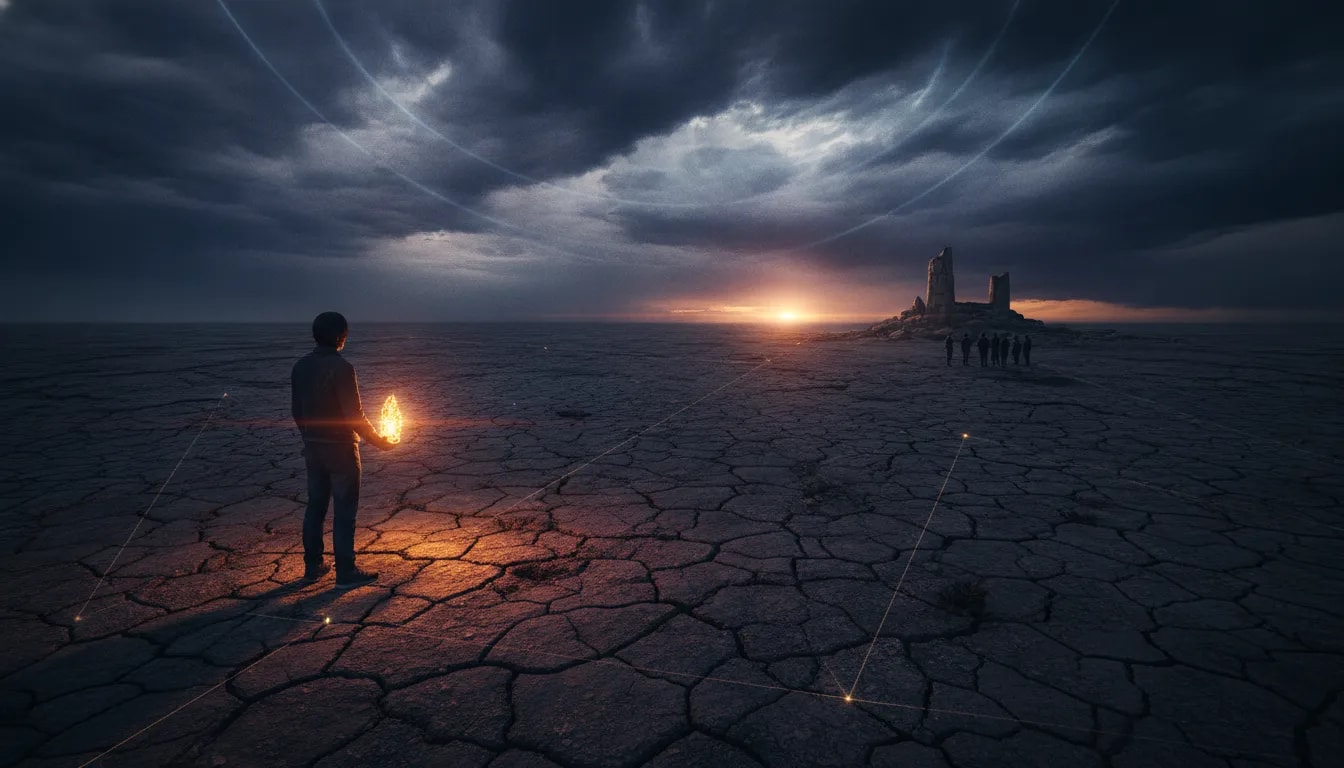
Hope can be a powerful thing. So can truth. But when people are demanding proof of something greater, neither one is enough on its own.
DIGGER frames that tension in the starkest possible terms: people need something to believe in, yet belief cannot be built on empty promises. The answer is not to soften reality. It is to face it, claim it, and act before the stakes become irreversible.
Hope Needs Something Real Behind It
The central idea is simple and unsettling. A community looking for evidence of a higher power is really searching for certainty in an uncertain world. They need reassurance that there is meaning beyond fear, chaos, and the forces they cannot control.
But hope without truth is fragile. It might comfort people for a moment, but it cannot carry them through a crisis. DIGGER rejects the easy answer. Instead of offering a polished illusion, it insists that people deserve the truth, even when that truth is enormous, dangerous, and difficult to accept.
That is where the story’s urgency begins. The question is no longer whether people will be given something to believe in. The question is whether they can confront what is real in time to do something about it.
A Public Promise With Global Stakes
A crowded public gathering, a speaker at a podium, and an atmosphere charged with expectation make one thing clear: this is not a private mission. The promise is being made in front of everyone.

The message is not cautious. It does not suggest that the world might be saved someday by someone else. It is a declaration of intent. The task ahead is immediate, collective, and bigger than any one person’s reputation or comfort.
That boldness gives DIGGER its propulsion. When the world is in danger, vague language becomes another form of inaction. The people at the center of this story are being pushed toward a harder standard: tell the truth, accept the consequences, and take responsibility for what comes next.
From Private Doubt to a Fight for the Future
The imagery moves between sealed rooms, ominous windows, aircraft above the clouds, an immense assembly, and landscapes overtaken by fire. It creates a world where danger is no longer distant or theoretical.
There are moments of quiet observation, but they do not feel peaceful. They feel like the silence before a decision. Characters look outward through glass and portholes, as if searching for answers beyond the walls around them. Meanwhile, the destructive scenes make the threat impossible to ignore.
The result is a sharp contrast:
- People want faith, something larger than themselves to hold onto.
- Reality demands evidence, not slogans or comforting stories.
- Survival requires action, because the cost of delay is written across the horizon.
Why “Higher” Matters
The idea of “higher” works on more than one level. It points to the search for a higher power, but it also suggests a higher calling. When the stakes are this large, ordinary self-interest cannot be the guiding principle.
DIGGER turns belief into a challenge. If people need hope, they must be given a hope sturdy enough to survive the truth. If the truth is terrifying, it must still be spoken. And if the world can be saved, then it is time to stop treating that possibility as somebody else’s problem.
DIGGER Arrives in Theaters October 2
DIGGER is coming to theaters on October 2. Its promise is direct: no hollow reassurance, no retreat from reality, and no time left to waste. The truth is coming. The only question is what happens once it does.
Frequently Asked Questions
When is DIGGER coming to theaters?
DIGGER is scheduled to arrive in theaters on October 2.
What is the central theme of DIGGER: “Higher”?
The piece centers on the relationship between hope and truth, arguing that real hope must be grounded in honest action when the world is at risk.
What does the story’s promise to save the world suggest?
It establishes immediate, global stakes and places responsibility on those willing to confront the truth rather than hide behind comforting illusions.


