
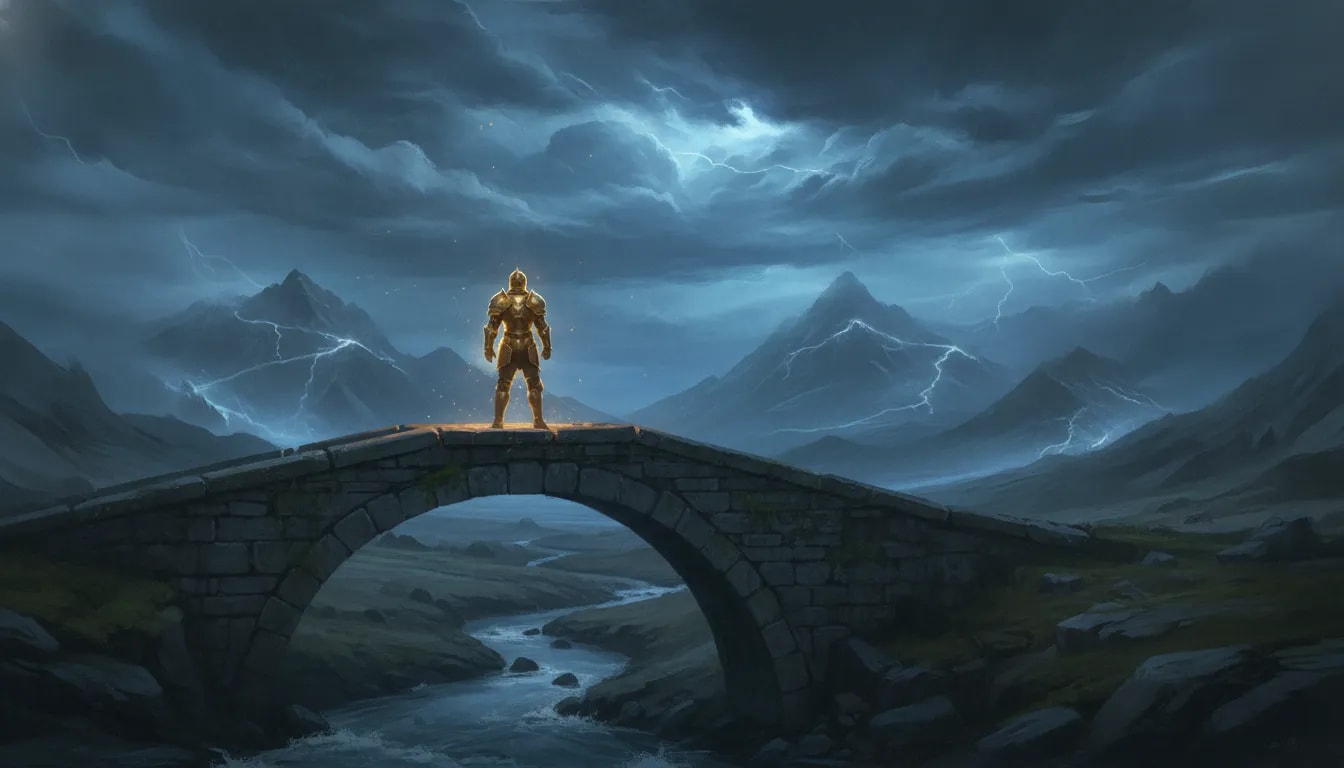
At what point did we decide that heroes were no longer cool?
That is a question worth asking, especially for fantasy fans. Somewhere along the way, “heroic fantasy” started getting treated like a synonym for simple fantasy. If a protagonist is decent, brave, and wants to do the right thing, some folks seem to assume the story must be childish, predictable, or somehow less mature than a book where every single person is compromised, cruel, and one bad day away from selling out the entire kingdom.
We do not buy that at all.
To be clear, this is not an argument against grimdark fantasy. Some of our favorite fantasy stories live in ugly worlds full of ugly people doing ugly things. George R. R. Martin’s A Song of Ice and Fire changed the genre for a reason. Joe Abercrombie’s The First Law is one of the best fantasy series out there, and it is not exactly overflowing with people we would trust to house-sit.
Morally complicated characters can be incredible. Dark fantasy can be incredible. Stories where nobody is safe can absolutely work.
But heroic fantasy can work too. It has always worked. More importantly, it may be exactly what a lot of readers are hungry for right now.
The Game of Thrones Effect on Modern Fantasy
For roughly the last two decades, the fantasy genre has been living under what we might call the Game of Thrones effect.
A Song of Ice and Fire was already hugely influential as a book series. Then Game of Thrones became a pop culture monster, and suddenly every publisher, studio, streaming service, and author seemed to be looking for the next one. Every pitch became “Game of Thrones meets this” or “that meets Game of Thrones.”
We get it. It is recognizable. It is an easy shorthand. When something becomes that successful, everybody wants a piece of it.
The problem is that we already have Game of Thrones. We do not need fifty watered-down copies of it. Nobody is going to out-George George R. R. Martin by simply borrowing the superficial parts of what made his work hit so hard.
What happened instead was that many people seemed to take away the wrong lesson. They decided fantasy fans must only want misery. They decided the secret sauce was:
- Everybody is morally gray.
- Nobody trusts anybody.
- The king is corrupt.
- The church is corrupt.
- The hero is corrupt.
- The random cabbage seller outside the castle gate is probably corrupt too.
- Somebody has to die horribly just to prove the story is not “your grandpa’s fantasy.”
That is not what made the best grimdark fantasy great. The darkness worked because it was attached to memorable characters, political tension, consequence, sharp dialogue, powerful themes, and genuine emotional investment. It was not just a checklist of terrible things happening to terrible people.
Yet for a while, the industry seemed to treat sex, profanity, violence, betrayals, and sudden deaths as proof of maturity. Traditional fantasy tropes got labeled old-fashioned. Heroic characters got labeled boring. A clean moral center got mistaken for a lack of imagination.
We think that is where the genre lost the plot a little bit.
Maturity Is More Than Sex, Violence, and Cynicism
Does mature fantasy really mean more profanity, more graphic violence, more shocking deaths, and less catharsis?
Or can maturity mean sacrifice? Redemption? Responsibility? Forgiveness? Can it mean a hero failing, carrying the consequences of that failure, getting back up, and trying to become a better person?
Of course it can.
There is nothing immature about a story where someone chooses compassion when cruelty would be easier. There is nothing simple about a person accepting responsibility for their mistakes. There is nothing childish about somebody resisting the worst part of themselves when nobody would blame them for giving in.
Those are deeply human struggles. They are the kinds of things that make a character worth remembering.
Optimism is not inherently childish. At the same time, cynicism is not inherently mature. Both have their place. We can love a world that asks us to question heroes, especially in the tradition of writers like Frank Herbert, without deciding every protagonist needs to secretly be a monster by chapter forty-eight.
We do not need flawless knights in spotless armor fighting Dark Lord Number 538 simply because goodness is good. That is not the argument. Good characterization still matters. Complexity still matters. Flaws still matter.
What we are saying is that a character can be complicated without being rotten to the core.
A hero can be angry. A hero can doubt themselves. A hero can be afraid, selfish, frustrated, traumatized, reckless, arrogant, and wrong. They can make a mess of things. They can hurt people. They can fail spectacularly.
The key is what they do afterward.
When Subversion Becomes the New Cliché
Fantasy readers are often told that they are tired of tropes. That may be true in some cases. Nobody wants to read the exact same book with the serial numbers filed off a hundred times in a row.
But here is the thing: morally gray has become a trope.
Subversion has become a cliché.
There was a time when discovering that the apparent hero was not actually a particularly good person felt fresh. It was surprising. It forced us to reevaluate the story and our assumptions about the genre.
Now, though? We have seen a version of this character over and over:
- The morally compromised assassin with childhood trauma.
- The hardened killer who protects a young girl.
- The exiled warrior with a dark secret.
- The thief who claims not to care but is secretly the only person who can save everyone.
- The tortured ruler whose terrible choices are always explained away by a cruel world.
Again, none of those character types are automatically bad. Plenty of great stories use them. The issue is repetition. If every protagonist is secretly awful, then a genuinely decent protagonist becomes the unexpected choice.
That is where we are now. The good person is becoming the subversion.
It is actually easier in some ways to write a character who is always cruel, cynical, and morally compromised. We can explain away nearly any action by saying, “Well, they are not a good person. This world is terrible.” That can become a shortcut.
Writing a hero who tries to be good without making them bland takes effort. We have to give them real flaws. We have to put pressure on their values. We have to make the wrong choice tempting. We have to let them fail and then make them earn their way back.
That does not sound simple to us. That sounds like character work.
Being Good Does Not Mean Being Boring
This is probably the biggest misconception around heroic fantasy: the idea that a good person must be a boring person.
That is not a flaw in heroism. That is a flaw in writing.
A character who is good solely because the author tells us they are good is not compelling. A character who always knows the right answer, never struggles, never doubts, and never pays a price is not compelling either. Nobody is asking for that.
What makes a heroic character work is not that doing the right thing is easy. It is that doing the right thing is hard.
Heroism is choosing what is right when choosing what is wrong would be a whole lot easier.
That is why the classic story structure still has power. We know the hero may eventually defeat the villain. We know they may survive the journey. We know they may save the kingdom, recover the artifact, defeat the dark lord, or bring down the tyrant.
So what?
The destination was never the only point. It is about the journey. It is about what the character loses, learns, endures, and becomes along the way.
Knowing that the good guy might win does not ruin a story. It can actually make the story more meaningful, because we can focus on the cost of that victory. We can ask whether the hero can remain themselves while everything around them pushes them to become something worse.
That is compelling stuff.
We do not need a hero to be secretly terrible in order to make them interesting. We need them to be tested. We need them to earn our support. We need them to face moments where they could take the easy road and decide not to.
That is why people root for heroes.
Readers May Be Tired of Heroes Being Deconstructed
There is a difference between examining heroism and endlessly tearing it down.
Deconstruction can be useful. It can expose empty myths, challenge power, and make us think about why we want leaders and saviors in the first place. But eventually, if every single story says that heroes are frauds, institutions are irredeemable, and every noble act is secretly selfish, it starts to feel less insightful and more predictable.
We may simply be tired of waiting for every hero to die, betray someone, reveal their awful secret, or get replaced by the worst person in the room.
People still want someone to root for.
This is part of why stories centered on characters who are not complete pieces of garbage can feel refreshing now. A decent person stands out in a genre crowded with antiheroes. A character who wants to protect someone, keep a promise, or do the honorable thing can suddenly feel radical.
That is not because readers have outgrown dark fantasy. We have not. There is still a place for grimdark, horror, tragedy, bleak worlds, and complicated people. The issue is that cynicism has often been mistaken for depth.
They are not the same thing.
A story can be dark and still believe people are capable of decency. It can show violence without reveling in it. It can depict corrupt rulers, compromised systems, and broken people while still allowing somebody to make a meaningful choice for the better.
That is not naïve. It is often harder to pull off than pure hopelessness.
Escapism Does Not Have to Mean Misery
Fantasy is escapism. That does not mean it must be shallow, but it does mean there is a reason we reach for it.
Sometimes life is rough. Work is a headache. Relationships are strained. We are tired, stressed, depressed, frustrated, or simply not in the mood to spend another several hundred pages with people doing horrible things to one another while nobody gets a single win.
There is a place for bleak stories when that is what we want. But there is also a place for picking up a fantasy novel where somebody stands up, says “enough,” and actually tries to make things better.
We can put characters through the ringer. In fact, we should. Struggle is part of what makes us care. If a hero gets everything handed to them, the victory means nothing.
But let them have their moment.
Let them save somebody. Let them keep the promise. Let them find the courage they did not think they had. Let them earn a win. Let the ending have some catharsis instead of treating hope like a weakness.
At some point, shocking character deaths stop being shocking. If every major fantasy story teaches us to assume that everyone will die and every victory will be poisoned, then that outcome becomes just as predictable as any old-fashioned happily-ever-after.
The question is not whether a story is predictable because the good guy wins. The question is whether the story is formulaic.
There is a difference.
A formulaic story gives us the same beats at the same moments with no surprise, emotion, or personality. We know exactly when we can step away because we have seen the entire machine run a hundred times before.
But a story where we suspect goodness might prevail can still surprise us in how it gets there. The path can be strange, painful, thrilling, funny, devastating, and unforgettable. The hero can change. The world can change. The victory can cost something real.
That is more than enough to keep us invested.
Why Traditional Fantasy Tropes Still Matter
There is an odd attitude in some corners of fantasy culture that anything written before a certain era must be formulaic and boring. That is a pretty dismissive way to look at the genre’s history.
Yes, traditional fantasy can be predictable. It often drew from mythology, legend, fairy tales, and archetypal storytelling. We have heroes, quests, dragons, dark lords, prophecies, magical swords, lost kingdoms, and fellowships. Those elements have been around a long time.
They have also been around a long time because they work.
The dragon rider fantasy, the quest fantasy, the farm kid who becomes something more, the old warrior returning for one last fight, the company of unlikely allies, the battle between hope and despair: these are not automatically tired concepts. They are tools. What matters is how we use them.
For many of us, those tropes are what brought us into fantasy in the first place. We love them because they made us feel something. They gave us adventure. They gave us wonder. They gave us characters we wanted to become, or at least characters we wanted standing beside us when things got bad.
We should not pretend that all traditional fantasy is beneath us just because modern trends decided darker was automatically better.
That would be as foolish as assuming independent publishing only exists because writers could not get traditionally published. There are assumptions worth challenging in every part of the genre. We can learn from the past, and we can learn from what is happening outside the biggest publishers and most heavily marketed releases.
Many independent fantasy authors are still writing the kinds of stories longtime fans want: heroic fantasy, dragon riders, grand quests, magic, wonder, and protagonists worth cheering for. That should tell us something.
The appetite never disappeared. Maybe it was just ignored for a while.
We Do Not Need to Go Backward to Move Forward
Calling for more heroic fantasy is not calling for the genre to reverse course.
We do not need to throw away everything modern fantasy has learned. We do not need to pretend grimdark never happened. We do not need to abandon moral ambiguity, political complexity, trauma, flawed characters, or stories that challenge us.
We can take the best lessons from modern fantasy and use them to make heroic fantasy better.
Imagine combining rich characterization, hard consequences, complicated relationships, emotional realism, and a believable sense of danger with a protagonist who is still fundamentally worth believing in. Imagine a hero with scars, doubts, rage, and failures who nevertheless chooses to protect rather than exploit.
That is not a step backward. That is a stronger version of heroism.
We can have a traditional quest with modern character depth. We can have a heroic ending that is earned rather than cheap. We can have flawed people who grow instead of characters whose only development is discovering how much worse they can become.
The fantasy pendulum always swings. For a long time, readers wanted darker, harsher, more cynical stories because they felt new and exciting. For good reason, too. When something fresh arrives, it can be exhilarating.
But after enough copycats, the novelty wears off. The dark past, the hidden betrayal, the awful secret, the brutal twist, the corrupt mentor, the doomed hero, and the villainous ruler who was secretly right all begin to blur together.
Eventually, we start craving something else.
Maybe that something else is a hero again.
There Is Still Room for Grimdark and Heroic Fantasy
None of this requires us to choose one side forever.
We can enjoy Abercrombie’s brutal, cynical worlds and still want a book where the protagonist is somebody we would happily cheer for from page one. We can appreciate Martin’s willingness to challenge fantasy conventions while still wanting a story that believes honor can mean something.
Fantasy is a big tent. It should have room for:
- Grimdark fantasy full of compromised people and impossible choices.
- Epic fantasy built around hope, courage, and sacrifice.
- Dark fantasy that explores fear and horror.
- Traditional quest fantasy with dragons, magic, and great evil.
- Character-driven stories about redemption and responsibility.
- Stories where the hero falls.
- Stories where the hero gets back up.
What we do not need is an entire genre chasing one trend until that trend becomes its own formula.
The point is not that dark fantasy is bad. The point is that we are exhausted when dark fantasy becomes the default setting for everything. We do not need every fantasy series to be a contest to see which horrible person ends up on the throne.
Sometimes we want the good guy to beat the bad guy.
Sometimes we want a hero who saves people.
Sometimes we want somebody who does the right thing because it is right, even though it hurts and even though it costs them.
There is nothing wrong with wanting that. In fact, there may be something deeply necessary about it.
Heroic Fantasy Still Works Because We Need Someone to Root For
When the world feels punishing, a genuinely heroic character can remind us why courage matters. Not because they are perfect. Not because they always win. Not because they are stronger than everybody else.
They matter because they choose to keep going.
They matter because they refuse to become the thing they are fighting. They matter because they take responsibility when they fail. They matter because they give us somebody to believe in when everybody else in the story has decided belief is for suckers.
That is why heroic fantasy still works.
It is not boring to have a good person at the center of a fantasy story. It is not outdated to give readers catharsis. It is not immature to let a hero have a win. It is not simplistic to believe that decency can be compelling.
If anything, it feels like decency has become the risky choice in a market saturated with darkness.
We have had plenty of stories where everybody lies, everybody dies, and everybody is corrupt. We can still enjoy those stories. But we can also admit that we may be burned out on them.
There is room for heroes again. There has always been room for heroes.
Maybe modern readers never stopped wanting them in the first place.
FAQ: Heroic Fantasy and Modern Readers
What is heroic fantasy?
Heroic fantasy is fantasy centered on courageous characters, grand adventure, moral choices, and protagonists who generally strive to do what is right. It does not require flawless heroes or simple conflicts. The best heroic fantasy gives its characters meaningful flaws, difficult sacrifices, and real consequences.
Is heroic fantasy the opposite of grimdark?
Not necessarily. Grimdark tends to emphasize cynicism, moral ambiguity, violence, and harsh worlds, while heroic fantasy places more emphasis on courage, hope, and characters worth rooting for. A story can contain dark material and still have a heroic heart.
Why do some readers consider heroic fantasy predictable?
Traditional fantasy often uses familiar structures such as quests, chosen heroes, dragons, dark lords, and ultimate victories over evil. Familiarity is not automatically a weakness, though. What matters is whether the journey, characters, stakes, and emotional payoff feel earned rather than formulaic.
Can a good fantasy protagonist still be complex?
Absolutely. A good protagonist can struggle with anger, fear, guilt, grief, selfishness, doubt, and failure. Complexity comes from pressure, choices, growth, and consequence, not from making a character secretly cruel or irredeemable.
Why might readers be ready for more heroes in fantasy?
After years of stories dominated by corrupt institutions, morally compromised protagonists, brutal twists, and bleak endings, a genuinely decent character can feel fresh again. Many readers still want fantasy escapism that offers adventure, struggle, catharsis, and somebody worth believing in.


