
This Week I Learned…
This week, we learned something very important: Tim Curry has apparently been loved by far more people than we ever realized. We have always felt like the guy was one of those performers we wanted to grab everybody by the shoulders and say, “No, seriously, you need to appreciate this man.” Seeing the outpouring of affection, memories, favorite roles, and general appreciation this week was honestly a pretty wonderful reminder that we were not alone.
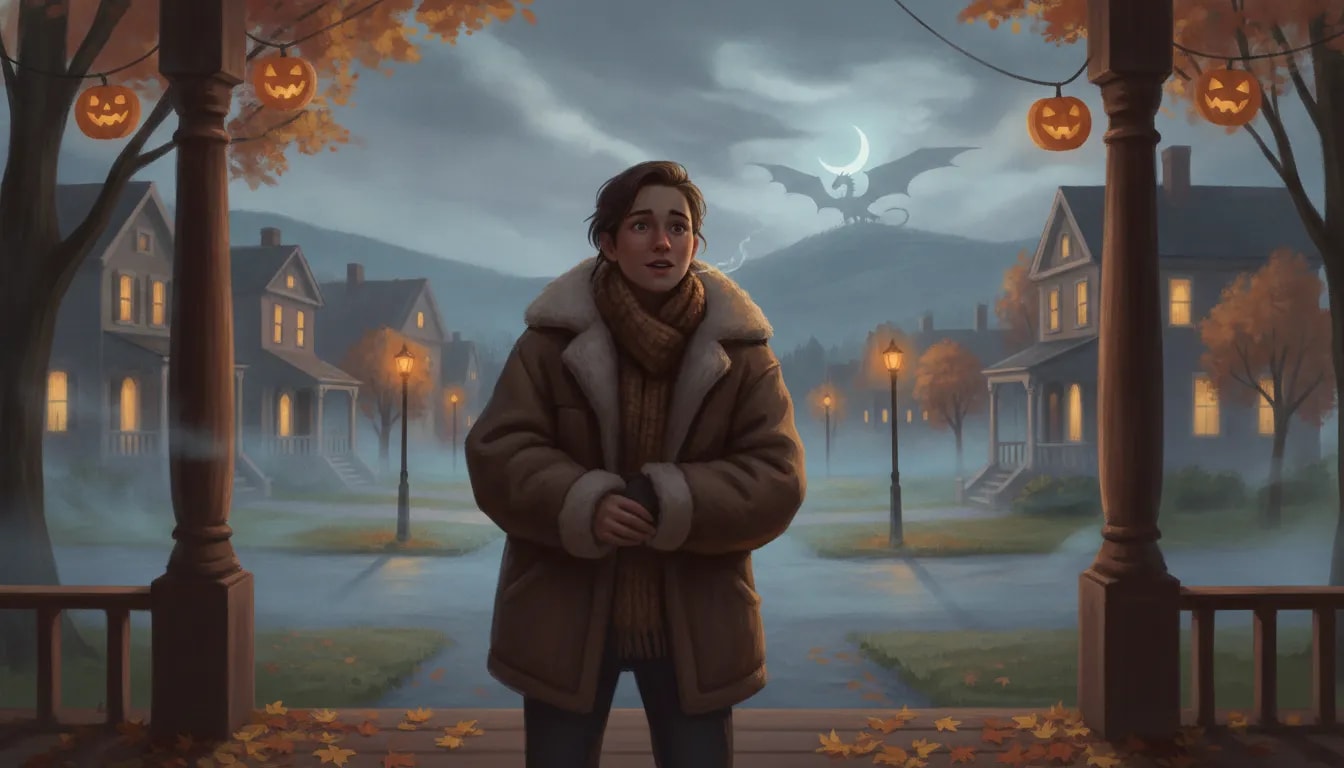
August is winding down, fall is basically standing at the door, and spooky season is creeping up fast. That means it is time for dragon fantasy conclusions, big intimidating epic fantasy plans, pulpy vampires, emotional Pixar movies, and digging through the absolutely stacked career of one of our favorite character actors ever.
It has been a fun week, guys. There has been plenty of reading, plenty of channel stuff, a little nostalgia, a little old-man-shakes-fist-at-cloud energy, and one major milestone that we are still having a hard time fully wrapping our heads around.
What Am I Reading?
We are in the stretch run of Inheritance, the final book in Christopher Paolini’s Inheritance Cycle. After starting this series for the first time around two decades ago, getting to the finish line has been quite the nostalgia trip. There is no question that it has been worthwhile, even if we have had plenty of criticisms along the way.
At this point, Inheritance has recaptured something that felt a little lost during parts of Brisingr: urgency. The third book sometimes felt like it was wandering without a particularly strong sense of direction. There was a lot of travel, a lot of side material, and more than a few moments where we found ourselves asking why a particular detour needed to happen right then.
The final book feels like it knows where it is going. The story has momentum again. There are fewer moments of wandering around Alagaësia simply because the map exists, and more of a sense that the characters are being pulled toward the endgame. That alone makes a huge difference.
The Action Keeps Improving
One thing we do not think Paolini gets enough credit for is how much his action writing improves over the course of the series. Whatever complaints people may have about the Inheritance Cycle, the action is not where the problems lie. The big sequences become larger, sharper, and more effective as the books go along.

There is a scale to the battles and confrontations in Inheritance that feels properly climactic. The set pieces have real energy, and Paolini has clearly become more confident at staging combat on a massive fantasy canvas. That is worth acknowledging. It is easy for criticism to get louder than praise, especially with a popular series that many readers encountered when they were younger, but there are genuine strengths here.
Paolini’s worldbuilding is another of those strengths. Alagaësia feels lived in. It has developed into a place with its own peoples, conflicts, histories, and texture. Most importantly, it does not simply feel like a Middle-earth imitation with the serial numbers filed off. Traditional fantasy is always going to carry familiar DNA, and that is fine, but this world has enough identity to stand apart from the pile.
For readers who want to revisit the series history or see how the books fit together, the official Christopher Paolini website remains a useful place to start.
Damaged Characters Matter
The thing that has landed particularly well in this final stretch is the emotional damage these characters are carrying. In traditional dragon fantasy, we all know the setup. The farm boy leaves home. Somebody hands him a sword. Destiny comes calling. Suddenly, he is expected to start killing monsters, soldiers, and all kinds of living creatures with barely a moment to process what his life has become.
It is a trope we love. We will probably always love it. But too often, the farm boy hero becomes a machine. Last week he was bailing hay, and now he is mowing down enemies by the thousands, yet the story acts as if that should not leave any scars.
Here, the characters are not doing that. They are not full-on emo about it, but they are clearly changed by everything they have endured. They are emotionally battered. They have witnessed death, caused death, lost people, made terrible choices, and carried responsibilities that no person should have to carry.
That makes a difference. It tells us that the story recognizes the cost of its own violence. It also gives the ending more potential emotional weight. Whatever happens with Eragon, Arya, Roran, Saphira, Nasuada, and the rest, the journey has left marks. That is the kind of character work that creates payoff.
Where the Final Book Still Struggles
Now, we are not going to pretend the final stretch is perfect. The biggest issue remains the length. Inheritance is still too damn long.
Even before reaching the end, it feels safe to say that books three and four could probably have been tightened into one volume with a much sharper editorial scalpel. That does not mean the material is unreadable. It does not mean every extra chapter is bad. It means there are diversions, extended conversations, and repeated explanations that do not always feel necessary.
One common issue is when dialogue makes a point perfectly clear, only for the narrative to spend multiple paragraphs explaining exactly what that dialogue meant. We understand how that happens, especially when writing a big story for the first time. We can look back at our own drafts and find places where a conversation establishes something, then the narration repeats it, then perhaps a character thinks about it one more time just to make absolutely sure nobody missed it.
That kind of repetition affects pacing. It is the reason a story can feel slower than it needs to, even when the core plot is moving toward a satisfying destination.
Eragon himself also risks becoming a little too perfect. He has earned much of his growth, and it is important to say that. This is not one of those situations where a character picks up a weapon and instantly turns into an unstoppable legend with no real development. Eragon has taken a long road to reach this point.
Still, he is edging close to Gary Stu territory. He is now so capable, powerful, and seemingly prepared for everything that it becomes difficult not to assume he will succeed. Maybe the final pages will pull the rug out from under that assumption. Maybe there is still a great equalizer waiting around the corner. We will find out soon enough.
Regardless of where the ending lands, finishing the Inheritance Cycle has been a great experience. We have enjoyed revisiting it, talking through its strengths and flaws, and joining others on what has become a pretty fun nostalgia ride. The series deserves criticism where criticism is due, but Paolini also deserves real credit for the world he built, the emotional places his characters reach, and the steadily improving ambition of his storytelling.
What Am I Going to Read?
September is right around the corner, although we may bleed into the new month before Inheritance is finished. That would make two consecutive months of running a little behind schedule. It happens. The important thing is getting the books read and not making anybody wait around on us.
The first major September plan is a Quill Illuminati group read: The King Beyond the Gate by David Gemmell. It is the second Drenai novel and follows Legend, which we read a couple of years back.
We thought Legend was fine, even if we did not get quite as much out of it as many longtime Gemmell fans do. That is not really a knock on Gemmell. His writing was strong enough that we always wanted to give the world another chance, and the Drenai books have been sold to us as stories that can be relatively standalone in nature.
More importantly, The King Beyond the Gate has a trope we simply do not get tired of: the half-breed caught between two worlds. Neither side fully trusts him, and the question becomes which side he will ultimately choose. That is catnip for us. Give us a character who does not fully belong anywhere and has to forge an identity in the middle of conflict, and we are usually in.
The group-read date is not locked in yet, but it will likely happen around the second week of September. We want to get to it early so nobody in the group is waiting on us. That is always the goal with these things. Keep an eye on Philip Chase’s channel for further details when the discussion date is set.
Returning to Malazan
The other big September reading plan is a return to Malazan, specifically Toll the Hounds by Steven Erikson. This will be attempt number three.
To be clear, we have never said we were done with Malazan. We have not abandoned the series. We simply stepped away until it felt like the right time to return. Malazan is not a casual little comfort read. It asks a lot from readers, and it is perfectly okay to say, “You know what? I need to come back to this when I am ready to give it what it needs.”
When we made the list of series we wanted to finish or get current with, Malazan was at the top. We had hoped to time the return with the ongoing Broken Binding editions, but it looks like the schedule will be just a bit ahead of those releases. Since the mass market paperbacks are gone from the shelves here, a digital edition may be the way to go for now.
We will not be resuming from the exact point where we stopped. We are starting Toll the Hounds from the beginning. With Malazan, that feels like the only sensible choice.
One of the hardest lessons with Erikson’s world is accepting that we will not understand every single thing immediately. For readers who want every mystery explained right away, that can be a tough adjustment. It certainly was for us. But Malazan often works best when we stop trying to solve the entire universe on page one and simply let the story unfold.
Before diving back into that kind of epic fantasy heaviness, we are also considering The Knife of Never Letting Go, the first book in Patrick Ness’s Chaos Walking trilogy. It feels like a good palate cleanser before taking on the next massive Malazan commitment.
Then, because spooky season needs a proper warm-up, there is Coffin Moon on the schedule. This one has been sold as a fun, pulpy vampire story set in the 1970s, and that sounds like a fantastic time.
There is something about horror set before everybody had a supercomputer in their pocket that just works for us. The lack of instant information, GPS, cameras everywhere, and a thousand ways to ruin the mystery gives stories from that era a different flavor. Give us a grimy seventies setting, vampires, and the feel of a great popcorn movie in book form, and we are pretty much there.
This Week on the Channel
We finally crossed 150,000 subscribers, and we cannot say thank you enough. That is a ridiculous number to us. When this whole thing started, we could not have imagined that anyone would be interested in hearing us ramble about books for twenty minutes at a time, much less that this many people would stick around for the long haul.
Growth has been slow lately. Anybody creating content on YouTube can tell you that things change constantly. The platform changes. Discovery changes. The algorithm changes. One year, a channel might gain a couple thousand new subscribers every month. The next, it may feel like the same number takes an entire year.
Sometimes we wonder if the channel has simply hit its ceiling. Then a comment comes in from somebody who says they cannot believe how much content is here because they have only just found it. That is always a reminder that platforms can make finding things weird, but there are still people out there looking for book conversations.
So, 150,000 is no joke. We appreciate every person who has read along, disagreed respectfully, joined a live stream, shared recommendations, or simply spent some time hanging out with the channel over the years.
A Celebration AMA and Some Gen X Tangents
To celebrate, we rolled the monthly live stream into an AMA and spent a couple of hours talking about books, music, AI discourse, nostalgia, and whatever else came up. Those are always fun because they do not have to stay confined to one specific subject.
We talked about the current AI witch-hunt atmosphere, where some people seem determined to insist that nothing creative can possibly come from an actual human anymore. We talked about music. We talked about how everything was cooler in the 1990s, because of course we did.
That is what Gen X does. The farther we get from our teenage years, the more we look back and think, “Man, we really had it good.” Every generation does it. The difference is that we knew the nineties were great. We just did not realize it was all going to go away so fast.
If all of that sounds like the kind of chaos you enjoy, the replay is there. As long as people keep coming out for those monthly streams, we will keep doing them. If it ever turns into four people sitting around talking about favorite Stargate SG-1 episodes, that is still a conversation worth having, but we can probably handle it with a Zoom call.
September Reading Plans Are Set
The September reading-plans discussion is also up, with the biggest announcement being the Malazan return. After putting it off and taking the time needed to reset, we are ready to take another run at Toll the Hounds.
That will happen later in the month, after the Quill Illuminati read and a couple of smaller books. It is all about setting the table correctly. We do not want to charge into a giant dense epic fantasy novel when our brain is still in the middle of finishing another giant fantasy series.
Malazan needs focus. It needs patience. It needs a willingness to roll with confusion until the pieces begin to click. We are ready to get back into that mindset.
Next Week Plans
Next week means wrapping up August and choosing a Book of the Month. We have a pretty good idea of where we are leaning, but we are not making the final decision until Inheritance is finished.
Could the final Inheritance Cycle book become the first entry in the series to win Book of the Month? It is possible. The ending matters. If Paolini sticks the landing, it could absolutely be in contention. If not, there are other books waiting in the wings. That is part of the fun of the monthly wrap-up: looking at what worked, what did not, and what surprised us.
August is always a good month around here. It is birthday season, Leo season, and the last stretch before the weather hopefully remembers that summer cannot last forever. If we missed your August birthday, happy birthday. Hope it was a good one.
Is the Standalone Fantasy Novel Dead?
We have also been noodling on a bigger fantasy discussion. It started with a simple question: Does every fantasy book need a sequel?
Then it became another question: Are fantasy books getting too long?
And now it has mutated into what may be the real subject: Is the standalone fantasy novel dead?
Standalone fantasy books still exist, of course. But they do not seem nearly as common in modern fantasy as sprawling trilogies, four-book arcs, nine-book sagas, and series where book one is already asking for a decade of commitment.
Some of our all-time favorite stories are part of long series. We are not anti-series. Not even close. There is something awesome about spending years in a world, growing with characters, and seeing a huge narrative pay off over thousands of pages.
But there is also something intimidating about opening a book and seeing “Book One of Nine” on the cover. That is not just picking a book. That is making a lifestyle decision.
- Series offer depth: more room for worldbuilding, character growth, and long-term payoff.
- Standalones offer completion: one commitment, one story, and a satisfying ending without a multi-year reading schedule.
- Massive books can be immersive: sometimes a 1,000-page doorstopper is exactly what we want.
- Massive books can also be exhausting: not every story needs every conversation, journey, and side character expanded to maximum length.
There may be a breaking point coming. More readers are saying they do not want to pick up a 550,000-word fantasy novel. And honestly, we understand it. At some point, the question becomes: why is this one book instead of two books? Or perhaps more importantly, why is it not one tighter book?
There is room for both approaches. There will always be room for a giant series when the story earns that scope. But fantasy should not lose the standalone novel either. Sometimes all we want is a complete adventure, a vivid world, a satisfying arc, and the ability to close the cover knowing we got the whole story.
That is a conversation we will be digging into soon. We can see both sides, which probably sounds like hedging, but it is more about recognizing the good and bad in each direction. Eventually, we all fall to one side of that knife’s edge. We think we know where we lean, but sometimes the best way to find out is to turn the camera on and talk it through.
TV & Movie Talk
Toy Story 5 Finds a Reason to Exist
For family movie night, we went with Toy Story 5, picked by the youngest member of the household, who is a huge Toy Story fan. And really, who is not? Almost everybody has some relationship with those movies.
We will be honest: we have long been in the camp that thinks Toy Story 3 was the perfect ending. That movie wrapped things up beautifully. It gave the characters a conclusion with genuine emotional weight, and it felt like the exact right place to leave them.
Then came Toy Story 4, which we did not care for at all. We have always said that if a franchise is going to undo a great ending or change the established canon, it had better have a very good reason. In our view, the fourth movie did not provide one. Nobody was asking for a Bo Peep-focused follow-up, and it felt unnecessary.
So our main concern with Toy Story 5 was understandable. Was this going to be the same thing all over again? Were we just getting another installment that existed because Pixar knew the brand would make money?
Thankfully, no. This movie earns its place.
It has been marketed heavily around Jessie, and Jessie does have a major story here. Her arc is rewarding, emotionally effective, and central to what the movie is doing. But this is not merely “the Jessie movie.” There are multiple stories working together, and the movie gives its new and returning characters enough space to matter.
Most importantly, it finds a reason to exist beyond continuing a beloved franchise. That was the greatest challenge in front of it, and it clears that hurdle.
Toys Versus Technology Without the Lecture
The core idea of toys competing with technology is something worth discussing, especially for parents. Yet the movie does not beat anybody over the head with its message. It is not standing there yelling that children are bad because they use devices.
Instead, it quietly points out something much more important: adults are just as locked into their screens as kids are. The children are not the only ones missing what is happening around them. The parents are distracted too. They are looking down at devices, not paying attention, and failing to notice the moments passing right in front of them.
That is the message that works. It is not superiority. We are not sitting up on a mountain declaring that everybody else needs to put down their phones. We are just as guilty as anybody else. Most of us are.
There is a real conversation to be had about technology, attention, reading, hobbies, and the ways we use our time. Less time is spent playing with toys. Less time is spent reading. Less time is spent doing things that require us to be fully present. The problem is bigger than kids and devices. It is all of us.
Toy Story 5 gets that across without turning into a sermon, and that is why it lands.
Funny, Emotional, and Surprisingly Necessary
The movie is genuinely funny. We laughed out loud more in the first ten minutes than we did during all of Toy Story 4. Smarty Pants nearly steals the whole movie, which is saying something because a potty-training toy does not sound like an obvious recipe for comedy greatness. Yet it works. It works really well.
That is classic Pixar at its best: jokes that can make younger kids laugh while also sneaking in lines and references that adults will enjoy. The older Pixar films always had that balance. They were never just loud, goofy slapstick with nothing underneath. They had heart, humor, and enough emotional artillery to hit us right in the chest when we least expected it.
Jessie’s story is where the tears come in. At first, we were worried that the movie would repeat the Bo Peep mistake. Instead, it builds toward a resolution that feels earned and genuinely moving. Pixar has a way of making us ask why we are suddenly crying when we were just trying to have a good time with animated toys, and this movie absolutely pulls that move again.
Woody and Buzz are supporting characters here, which may frustrate some people. We had their major story, though, and this movie does not disrespect them or push them out the door. They remain part of the narrative. Their roles are smaller, but they are still meaningful.
It is a bit like the formula Cobra Kai got right. You do not forget the legacy characters. You do not pretend they never mattered. But you also do not allow them to dominate every inch of the new story. There has to be space for other characters to step forward.
That is where Toy Story 5 succeeds. Woody and Buzz are still present. Jessie gets a compelling arc. New characters get room to shine. The balance is mostly there.
The one disappointment is that some other familiar toys are reduced to cameos. A few get barely a line, if that. It would have been nice to spend more time with characters like Rex or RC, especially after following this gang for so long. Still, with such a large ensemble, somebody is always going to get less screen time.
In the end, we came away happy. That was unexpected. We went in prepared not to like it at all, and instead we found a funny, heartfelt sequel with an actual purpose. Toy Story 3 remains the perfect ending, but if Pixar insisted on continuing, this was a far better way to do it.
Thank You, Tim Curry
We do not usually spend much time talking about celebrity deaths, even when the people involved meant a lot to us. Lately, there have been too many losses. But Tim Curry is one we had to talk about.
For us, Tim Curry was like that band you love when you are younger, the one you cannot understand why everybody is not talking about constantly. He was one of our favorite actors ever. He was our Johnny Depp before Johnny Depp became Johnny Depp, a performer who could disappear under makeup, voice, costume, movement, and sheer commitment.
Tim Curry was a chameleon. He never seemed like he showed up merely to hit the required marks and collect a paycheck. The man brought an eleven every time.
It started with Clue. Back in 1985, during a free HBO preview, we saw this wild mystery comedy with an incredible cast. Christopher Lloyd was there. Michael McKean was there. Lesley Ann Warren was there. Yet the performer we did not recognize was stealing the whole thing.
There is a sequence in Clue where Curry essentially races through the entire story’s events in a matter of minutes, and it is just astonishing. The charisma, timing, physicality, and absolute commitment are all there. It was the kind of performance that made us immediately want to know who this guy was and what else he had done.
Then came Legend, where Curry played Darkness beneath giant horns and layers of makeup. We did not even recognize him at first. That is how fully he transformed. Once we realized it was the same actor from Clue, the fascination with his work only grew.
His turn as Pennywise in the ABC adaptation of Stephen King’s It was another watershed moment. That performance was a huge part of what drew us toward Stephen King in the first place. Growing up in a fairly sheltered household, King was not exactly something we were allowed to read or watch freely. But It was on network television, so it got through the gate.
That led to getting a copy of the novel and reading it in secret after moving to Houston, keeping it hidden away so it would not be discovered. It took all summer to get through, but it opened the door to becoming a Constant Reader. In a very real way, Tim Curry’s Pennywise helped start that journey.
Then there was The Rocky Horror Picture Show. As music people, discovering that this incredible actor could also sing like that was a game changer. Curry as Dr. Frank-N-Furter is one of those performances that simply cannot be duplicated. It is theatrical, magnetic, funny, fearless, and unforgettable.
His career was loaded with roles like that. He could lead a movie. He could dominate a scene in a supporting part. He could provide a voice and make an animated character stand out immediately. Whether it was The Hunt for Red October, Home Alone 2, The Three Musketeers, Muppet Treasure Island, FernGully, Peter Pan and the Pirates, or The Wild Thornberrys, he always left an impression.
That is what great actors do. They make us remember. They give us something that stays in our heads for decades.
It was heartbreaking when Curry suffered his stroke and had to slow down. But the love that poured out after his passing showed just how broad his impact was. It was not only people from one generation remembering him. Some know him best as Pennywise. Some know him as Wadsworth in Clue. Some know him from Rocky Horror. Some know him as the villain from Home Alone 2, a role they revisit every Christmas.
And that is beautiful. His work has survived because it was memorable. It was fearless. It was always fully committed.
We are planning to bring Clue into family movie night soon, especially since the kids were surprised to learn that the actor they knew from Home Alone 2 was also the original Pennywise. Hopefully, it lands with them the way it landed with us all those years ago.
Gone too soon, sir. Thank you for the memories. We will absolutely be putting on the Rocky Horror soundtrack again and celebrating a career that gave us so much.
FAQ
What book is being finished in this weekly update?
We are nearing the end of Inheritance by Christopher Paolini, the fourth and final book in the Inheritance Cycle.
What is the next Quill Illuminati group read?
The upcoming group read is The King Beyond the Gate by David Gemmell, the second novel in the Drenai series.
Which Malazan book is planned for September?
The planned return to Steven Erikson’s Malazan series begins again with Toll the Hounds, starting from the beginning rather than resuming from a previous stopping point.
What did we think of Toy Story 5?
We were pleasantly surprised. While Toy Story 3 remains the ideal ending, Toy Story 5 feels funny, emotional, and justified as a continuation of the franchise.
Why is Tim Curry important to this update?
Tim Curry’s passing inspired a reflection on his remarkable performances in Clue, Legend, It, The Rocky Horror Picture Show, and many other memorable film, television, and voice roles.


