
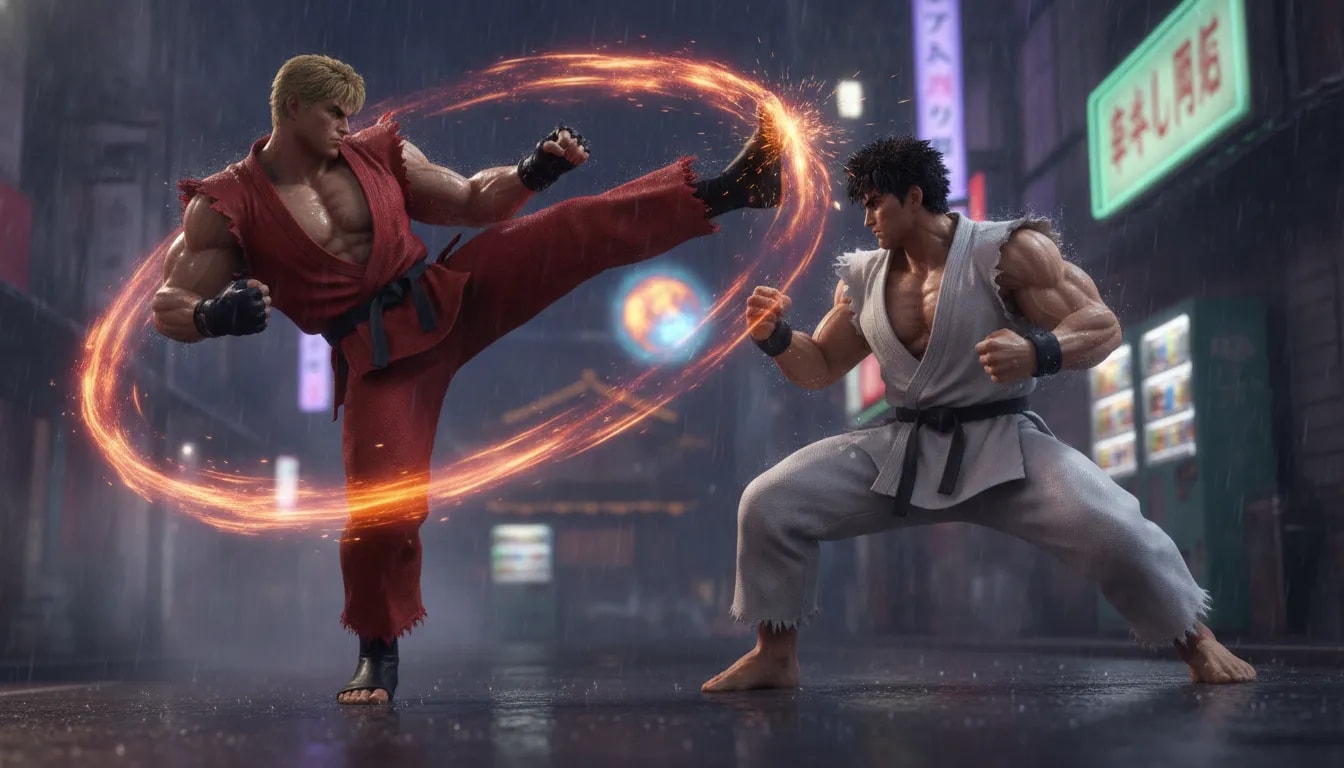
Street Fighter has always been about instantly recognizable impact: the stance, the windup, the special move, and the split second when the entire fight changes. The 2026 movie brings that arcade energy into live action by treating the games’ fighting language as more than a reference. The kicks, throws, energy attacks, and impossible aerial moves are the point.
Set in 1993, Street Fighter follows estranged fighters Ryu and Ken Masters as Chun Li draws them back into combat for the World Warrior Tournament. What begins as a brutal battle royale opens onto a conspiracy that forces the two rivals to confront each other and everything they have been running from. Lose the fight, and it is game over.
From Arcade Animation to Physical Impact
The core idea is simple and very Street Fighter: show the move players know, then show what it looks like when a real fighter attempts it in a real, dangerous world.
Classic game footage is placed alongside live-action action beats, making the inspiration unmistakable. A character launches into a spinning kick, hurls an opponent across a room, or channels a burst of energy, and the film answers with its own version of that same visual signature.
This is not a muted approach to the source material. The fight design leans into the exaggerated rhythm of arcade combat: strong poses, sudden reversals, spinning bodies, airborne attacks, and devastating finishes. The result is a world where a simple punch can be a setup, but a special move can become the whole arena.
The Moves That Define the Fight
The action reel pulls directly from Street Fighter’s move list, using on-screen comparisons to connect familiar gameplay attacks to their live-action counterparts. The featured techniques include:
- Dragonlash Kick, a rapid airborne striking attack with explosive forward momentum.
- Hell Wheel, a throw built around a violent, rolling takedown.
- Shoryuken, the iconic rising uppercut that sends an opponent skyward.
- Tatsumaki Senpukyaku, a spinning hurricane kick that turns rotation into offense.
- Spinning Bird Kick, a full-body aerial assault that demands both speed and balance.
- Falling Crane, a diving attack that drops from above with total commitment.
- Hundred Lightning Kicks, a flurry of rapid strikes designed to overwhelm an opponent.
- Hazanshu, a leaping attack that closes distance fast and hits hard.
The effect is a fighting style that feels rooted in character. Every move has an attitude. Some attacks are disciplined and direct. Others are flashy, acrobatic, chaotic, or downright cruel. That variety is the DNA of Street Fighter.
Throws, Grappling, and Close-Range Chaos
Street Fighter is not only fireballs and flying kicks. The close-range game matters just as much, and the movie gives the grappling moves their own rough, physical weight.
The action includes techniques such as the Oicho, Power Stomp, and Hundred Hand Slap, each built around the kind of force that makes a fighter feel impossible to approach. A move like the Hundred Hand Slap is not subtle. It is pressure, speed, and intimidation delivered at point-blank range.
There is also room for punishing signature attacks including Karma Kick, Crazy Rush, Flash Kick, and Russian Suplex. These moves keep the combat from becoming one-note. A fight can shift from technical exchanges to a brutal slam in an instant.
Dhalsim and the Art of the Impossible
Some Street Fighter moves are not meant to look realistic. That is exactly why they need to be there.
The movie embraces Dhalsim-inspired attacks such as Yoga Mountain and Yoga Mummy, alongside the mystic, elastic, and visually heightened side of the franchise. Street Fighter has always operated in a world where martial arts discipline shares space with superhuman ability. Bringing that contrast to the screen is essential.
These moments give the film its arcade soul. The best Street Fighter action should not merely look painful. It should look like it could only happen in Street Fighter.
A World Warrior Tournament Built for Big Personalities
The World Warrior Tournament is the ideal arena for this kind of combat. It brings fighters with wildly different techniques, temperaments, and histories into the same collision course. That means every matchup can have its own flavor.
One exchange can be a clean contest of kicks and counters. The next can become a lightning-fast barrage, a spinning grapple, or a supernatural burst of power. The fighters do not just use different moves. They bring different philosophies into the ring.
That is the promise behind the title: a battle of fists, fate, and fury. The tournament is where the characters test their skills, but the conspiracy behind it raises the stakes far beyond a win or loss.
Why These Game References Matter
A special move works because it tells you something immediately. You know danger is coming from the stance alone. You know the crowd is about to erupt when a fighter starts the motion. That clarity is part of what made the original games endure.
By putting recognizable attacks front and center, the film connects its action to decades of Street Fighter history while giving the moves a new sense of scale. The old arcade silhouettes, the iconic move names, and the over-the-top finishes are all still there. They are just landing with real bodies, real environments, and real consequences.
For more on the franchise’s game history and characters, visit the official Street Fighter website.
Street Fighter Arrives October 16
Directed by Kitao Sakurai, Street Fighter brings Ryu, Ken Masters, Chun Li, Hadoukens, roundhouses, and a full roster of recognizable fighting styles from the arcade to the big screen.
The fight is set for theaters everywhere on October 16. The question is not whether the moves made the transition. It is whether anyone in the tournament can survive them.


