
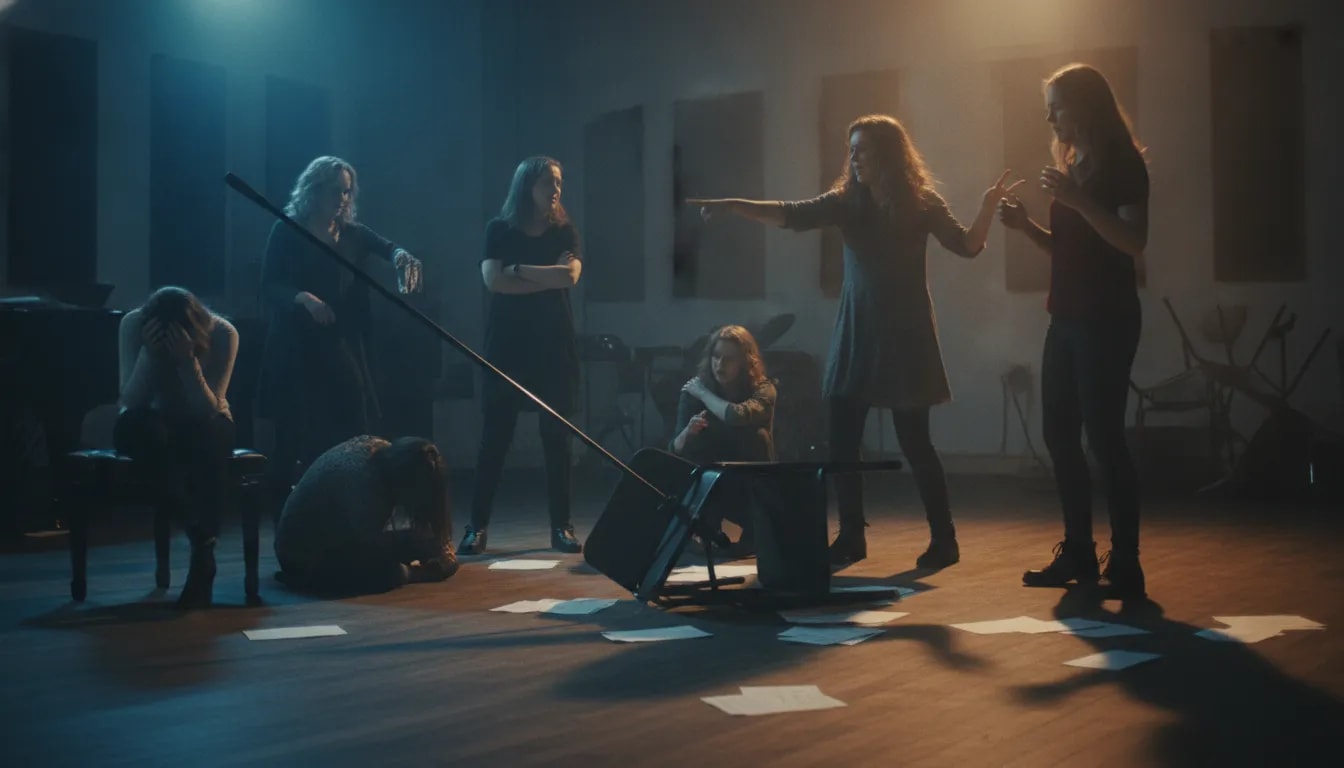
There is a special kind of disaster that happens when a group has been holding things together through denial, passive aggression, forced smiles, and one person barking notes like they are running a military operation. Eventually, somebody snaps. Then somebody else snaps. Then Fat Amy says something brutally honest. And before long, the Bellas are one bad rehearsal away from becoming a cautionary tale.
That is exactly where the Bellas land after Beca leaves the group. Aubrey is panicking, the group is frustrated, nobody feels heard, and the ICCAs are right around the corner. The result is not a productive team meeting. It is a full-scale a cappella implosion involving hurt feelings, terrible leadership, a missing singer, and an extremely aggressive amount of vomit.
Underneath all the chaos, though, this is the moment when the Bellas finally stop pretending that their old way of doing things works. They are forced to admit that winning does not mean much if everyone hates being there.
The Bellas Have a Problem Bigger Than Beca Leaving
At first, it looks simple. Beca changed the set without asking the group, pushed for a new musical direction, and then walked away when things got ugly. From Aubrey’s perspective, Beca is the problem. She disrupted the order, ignored the rules, and abandoned the team at the worst possible time.
But the rehearsal after Beca leaves proves that the issue is much bigger than one person.
Aubrey comes in with criticism for everybody. Chloe is not sounding right. Stacie is behind on choreography. Jessica and Ashley do not seem prepared. The Bellas are tired, distracted, and clearly not responding to Aubrey’s usual management style, which is basically control every single detail until morale disappears.
The group pushes back because they miss Beca. They do not just need another voice in the arrangement. They need the energy Beca brought into the group. Her mash-up approach gave them a chance to sound like something other than the same predictable Bellas routine.
Aubrey, meanwhile, is trying to preserve the version of the Bellas that she understands. The problem is that version has stopped working.
There is a difference between having standards and trying to dominate every person in the room. Aubrey crosses that line. Her anxiety about losing control becomes everyone else’s problem, and the more she tightens her grip, the less the group wants to follow her.
Aubrey’s Control Comes From Fear, Not Confidence
Aubrey is not controlling because she does not care. Honestly, she cares too much. She has attached her whole identity to the Bellas winning, performing perfectly, and maintaining the legacy she believes they are supposed to protect.
That kind of pressure makes every mistake feel catastrophic. It makes a changed set list feel like betrayal. It makes Beca’s independence feel like disrespect. And it makes Aubrey act as if losing control is worse than losing the group itself.
The other Bellas finally say what they have all been thinking: Aubrey’s need to control everything is hurting them.
It is a rough thing to hear when you are the person who has been doing the most. Aubrey has put in the work. She has rehearsed, organized, corrected, and carried the responsibility. But leadership is not just about effort. It is also about whether people feel trusted, valued, and able to contribute.
When a leader treats every difference of opinion as a threat, the team gets quieter. Then resentful. Then completely done.
Aubrey does not take the criticism well. She insists she can let go, which immediately turns into a spectacularly terrible attempt to prove it. Her anxiety boils over physically, and the rehearsal becomes a bizarre free-for-all.
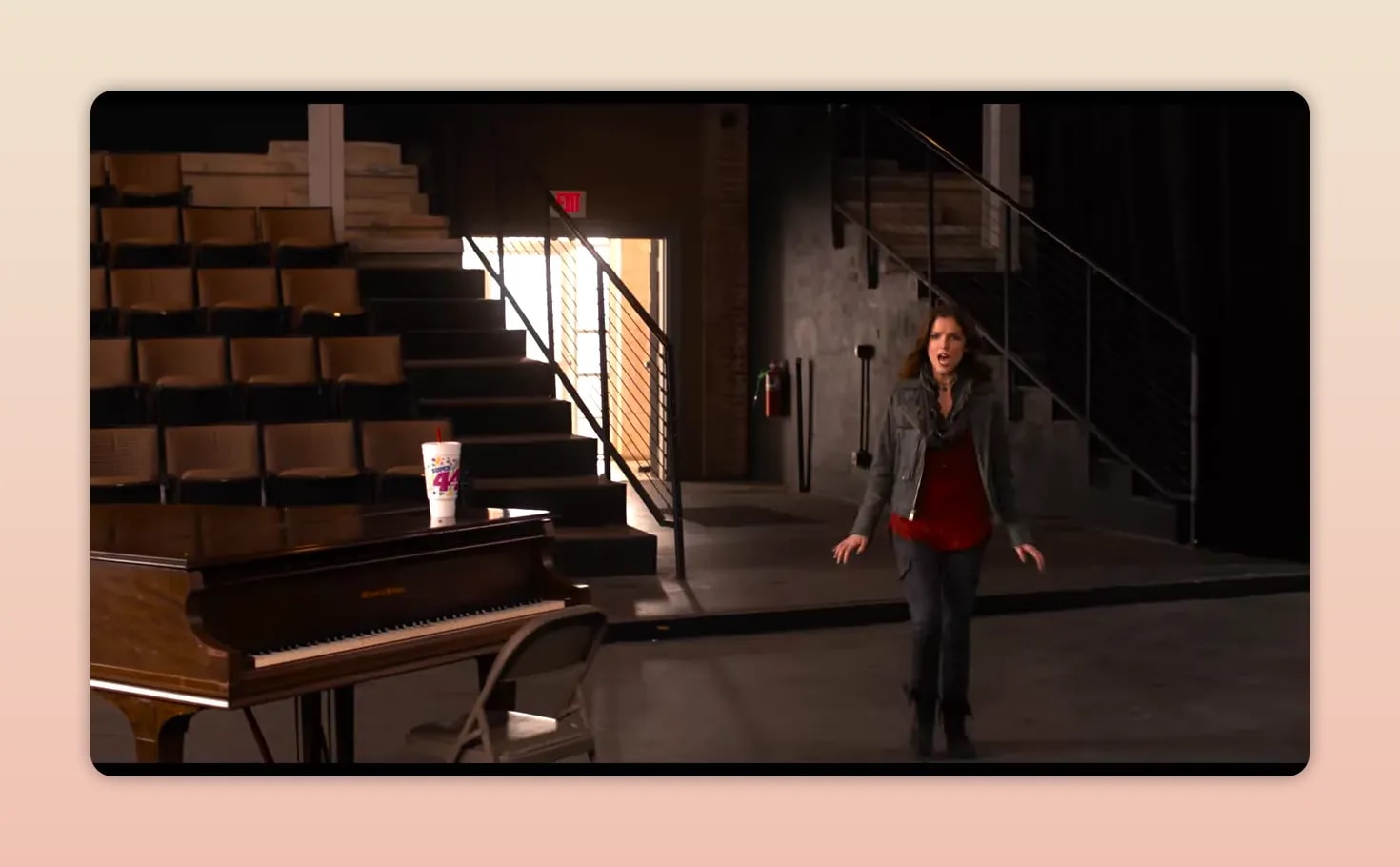
The Rehearsal Meltdown Is Ridiculous, but the Conflict Is Real
The Bellas’ fight is played for maximum chaos. People run through the auditorium, clothes fly, insults get thrown, and Aubrey’s attempt to keep things under control becomes the exact opposite of controlled.
It is funny because it is so extreme. It is also familiar because the emotional pattern is not extreme at all.
Teams tend to blow up when several problems get ignored at once:
- People feel blamed instead of supported.
- Communication becomes criticism.
- One person carries too much authority.
- Creative ideas get dismissed before they can be discussed.
- Everyone acts like the real issue is somebody else’s fault.
The Bellas have all of it. Beca made a selfish decision by changing the set alone. Aubrey made the group impossible to breathe in. The others spent too long complaining to one another instead of confronting the situation honestly. Nobody is completely innocent, which is why the eventual repair works better than a simple apology from one person.
The mess also reveals what the group really wants. They do not want to be the old Bellas. They do not want a competition machine that sings safe arrangements and treats every member like a replaceable part. They want the version of the group where personalities, risks, friendship, and weirdness are allowed to exist.
That is not a small change. It means deciding whether the Bellas are a brand Aubrey has to defend or a team that can evolve.
Beca Learns That Walking Away Is Not the Same as Moving Forward
While the Bellas are falling apart, Beca is dealing with her own tendency to shut people out. Her conversation with her father gets straight to the point: closing everyone off may feel safer, but it is also lonely.
Beca admits that shutting people out is kind of her thing. It keeps disappointment at a distance. If nobody gets too close, nobody can hurt her and she does not have to explain herself.
It is a strategy that works right up until it does not.
Beca genuinely likes the Bellas, even if she did not expect to. She joined a group full of people she never would have chosen for herself, and somehow they became important. That is why leaving hits differently than simply quitting an activity she does not care about.
Her father does not give her a perfect answer. He makes it clear that the choice is hers. That matters. Beca cannot be forced back into the group, and she cannot build a real connection if she only returns because somebody else tells her to.
She has to decide whether she wants to keep repeating the pattern of leaving whenever a relationship gets complicated.
The answer is obvious once she sees what is happening at rehearsal. Beca may be angry at Aubrey, but she is not indifferent to the Bellas. She comes back because she recognizes that she hurt people she actually cares about.
Beca’s Apology Works Because It Is Specific
Beca does not return with a vague speech about misunderstandings. She names what she did wrong.
She admits that changing the set without asking the others was wrong. She admits that leaving was wrong. She acknowledges that she let the group down.
That is the whole thing.
A real apology is not complicated. It does not need a ten-minute explanation about why the person had a bad day, why they felt unheard, or why somebody else was also terrible. Those things can be true, but they do not erase the need to take responsibility.
Beca does not make the moment about defending herself. She asks Aubrey and the group to take her back.
That request matters because it gives the Bellas a choice. They are no longer just waiting for Beca to decide what the group should be. They get to decide whether they are willing to forgive her and move forward together.
It also changes the power dynamic. Beca is not returning as the person who will save everyone with a better idea. She is returning as one member of a team.
Aubrey Finally Lets the Group Be More Than Her Rules
Aubrey has every reason to reject Beca. She has been embarrassed, challenged, and blamed by the people she was trying to lead. But instead of doubling down, she lets Beca back in.
That does not mean Aubrey instantly becomes relaxed. This is Aubrey. She is not about to turn into a carefree chaos gremlin overnight.
Still, accepting Beca back is a major shift. It means Aubrey is starting to choose the group over her pride. She is admitting, even if she cannot quite say it elegantly, that the Bellas need something different.
Aubrey’s explanation for her intensity gives the conflict more context. She grew up with a father who taught her that failure meant it was time to pack up and leave. It is a ridiculous lesson, but it explains why she treats every setback like an ending.
For Aubrey, failure is not an opportunity to regroup. It is proof that everything is over.
That is why Beca’s return matters so much. It gives Aubrey evidence that people do not have to leave just because the group has struggled. They can apologize. They can forgive each other. They can keep going.
The Bellas Start Over by Actually Talking
Once Beca is back, the Bellas finally do something they should have done much earlier: they sit down and learn who they are outside of rehearsals, choreography, and competition pressure.
The conversation starts awkwardly, because of course it does. Nobody in this group is equipped to share feelings in a normal way. But the idea is solid. Each person is invited to reveal something the others do not know.
The confessions range from genuinely personal to completely unhinged. One member talks about a gambling problem. Fat Amy declares that she is basically an open book before revealing that her real name is Fat Patricia. The group responds with the kind of blunt honesty that only works when everyone is already too tired to pretend.
Then the tone shifts.
Chloe reveals that she had her tonsils removed over spring break. The surgery may have permanently affected how high she can sing. For someone in an a cappella group, especially one heading toward a major competition, that is terrifying.
She kept it to herself because she thought the season might already be over for her.
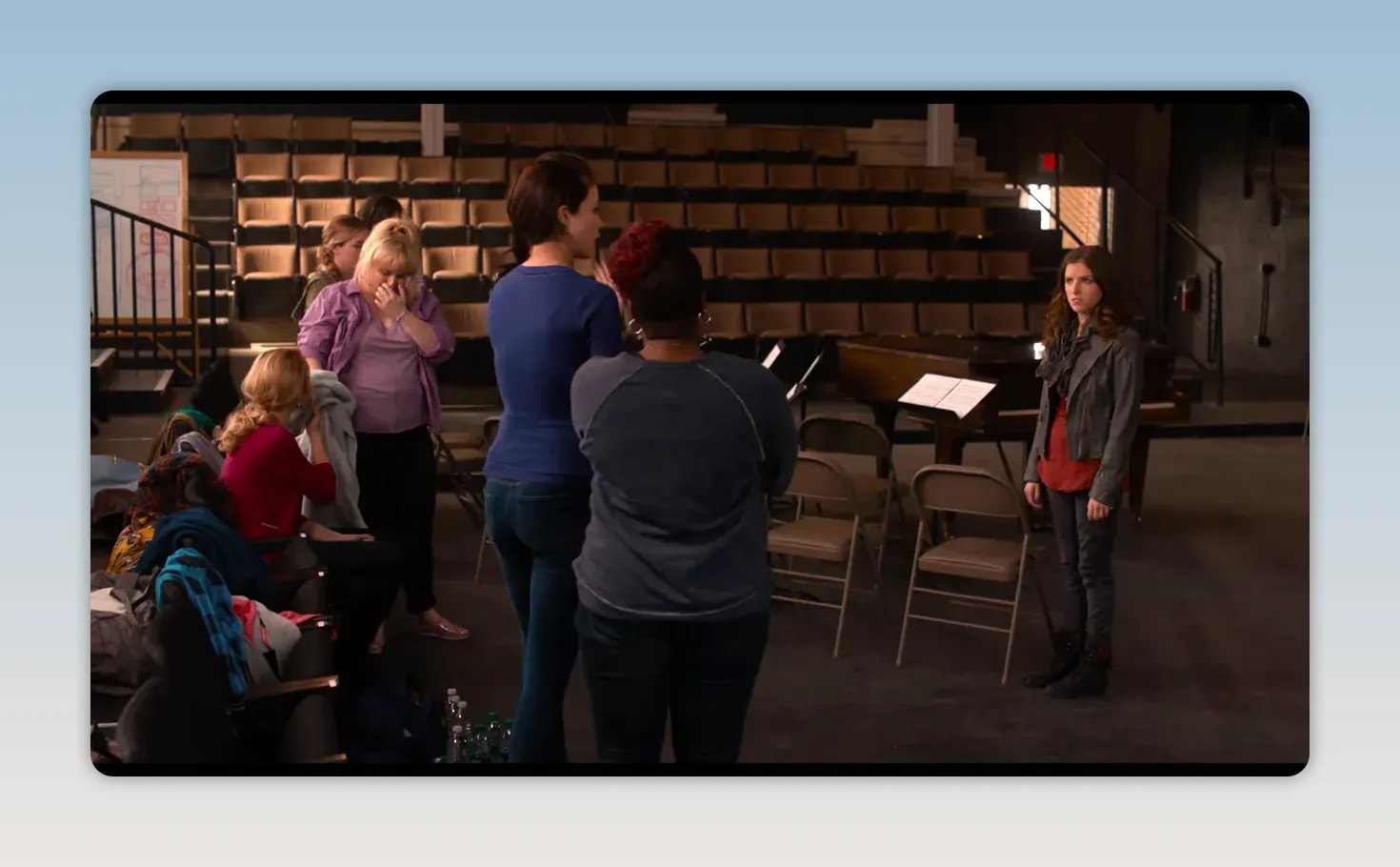
This is the real turning point. Not Beca walking back into the auditorium. Not Aubrey accepting her apology. Not even the group deciding they should be more open.
The turning point is when they realize that they barely know one another.
They have been singing together, competing together, and arguing together, but they have not been connecting. They know each other’s vocal parts and choreography counts. They do not know what each person is carrying.
That is a problem in any group. You cannot build trust on performance alone.
What the Bellas Learn About Teamwork
The Bellas do not fix every problem in one conversation. Aubrey is still intense. Beca is still stubborn. The rest of the group is still fully capable of saying the most inappropriate thing possible at the worst possible moment.
But they do start building a better foundation.
They learn that talent is not enough. A group can have great voices, a strong arrangement, and a major competition on the calendar, but if everyone is disconnected, the performance will eventually crack.
The Bellas also learn that change does not have to mean disrespecting the past. Beca’s mash-ups are not an attack on the group’s history. They are a chance to make that history relevant again. Aubrey’s discipline is not useless either. The Bellas need rehearsal, structure, and someone willing to care about the details.
The answer is not choosing Aubrey’s approach or Beca’s approach. The answer is combining what each person brings without letting one person control the entire identity of the group.
That is what makes an ensemble work. Different voices do not have to cancel each other out. They can create harmony, which is sort of the whole point.
The Parallel Treblemakers Problem
Elsewhere, the Treblemakers get their own reminder that groups can fall apart fast when the leader decides his personal opportunity matters more than the team.
Bumper announces that he is leaving for Los Angeles after getting the chance to sing backup on a John Mayer album. He is thrilled for himself and completely unconcerned about the ICCAs, even though the competition is only days away.
His exit leaves the Treblemakers scrambling for a replacement. A spot opens up, but the new member is given a very clear warning: do not get weird.
It is a small moment compared with the Bellas’ breakdown, but it mirrors the same larger issue. Both groups are dealing with instability because the person at the center has been thinking mostly about themselves.
Bumper leaves because he sees a bigger opportunity. Beca leaves because she feels hurt and refuses to stay vulnerable. Aubrey nearly destroys the Bellas because she is terrified of anything changing.
Different motivations, same result: the group has to decide whether it can survive without the old rules.
Why This Pitch Perfect Scene Matters
The Bellas almost break up because nobody has been honest soon enough.
Aubrey does not admit that she is scared of failure. Beca does not admit that she likes the group until she has already left it. Chloe does not reveal what happened to her voice. The others complain about Aubrey’s control but avoid having the difficult conversation until they cannot avoid it anymore.
Once all of that spills out, the group has a chance to become better. Not perfect, obviously. Perfect would be deeply suspicious in this group.
But better.
The chaos forces the Bellas to stop performing for each other and start relating to each other. Beca returns with accountability. Aubrey responds with forgiveness. The group realizes that every member has more going on than a vocal part or a personality label.
That is why the Bellas do not stay broken. They finally understand that being a team is not just about hitting the right notes. It is about making enough room for everybody’s voice to matter.
For more information about the film, see Pitch Perfect on IMDb.
Frequently Asked Questions About the Bellas’ Breakup Scene
Why does Beca leave the Bellas?
Beca leaves after changing the Bellas’ set without getting agreement from the rest of the group. She feels shut down by Aubrey’s controlling leadership, but she later realizes that leaving hurt the people she cared about.
Why is Aubrey so controlling in Pitch Perfect?
Aubrey is obsessed with winning and terrified of failure. Her father’s harsh advice about failure shaped the way she approaches the Bellas, making her treat mistakes and change as threats.
How does Beca get back into the Bellas?
Beca returns to rehearsal, apologizes for changing the set and leaving the group, and asks to be allowed back in. Aubrey accepts her apology.
What does Chloe reveal to the Bellas?
Chloe reveals that she had her tonsils removed over spring break and may no longer be able to sing above a G-sharp, which makes her fear that her time with the Bellas could be over.
What is the main lesson from the Bellas’ conflict?
The Bellas learn that a successful group needs trust, honest communication, and room for people to contribute. Discipline and ambition matter, but they cannot replace connection.


