
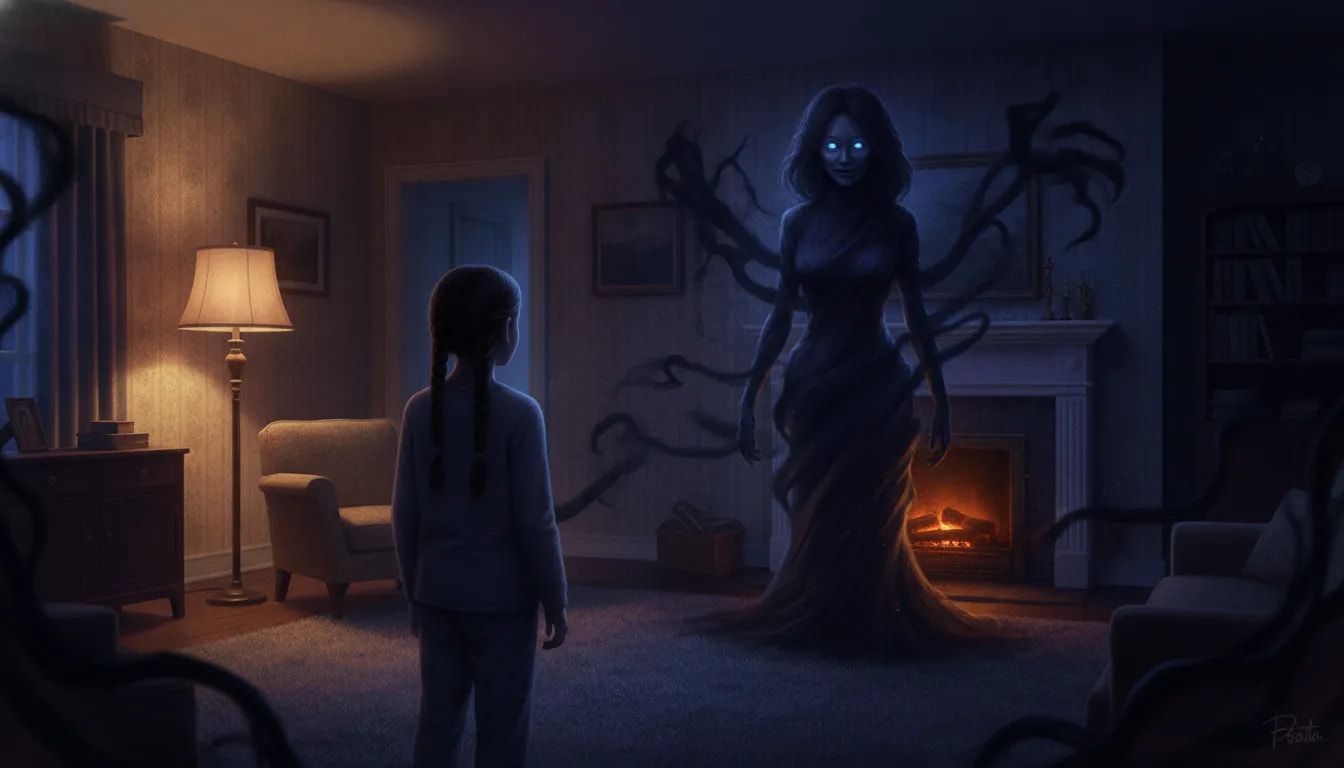
Other Mommy is something sinister.
She may look uncannily familiar, but that is exactly what makes her terrifying. She is not simply a stranger at the door or a shadow in the basement. She takes the shape of someone a child should be able to trust completely: a mother.
At the center of Other Mommy is Bela, a young girl who forms a relationship with a dark entity living in her home. The entity presents itself as “Other Mommy,” a figure who resembles Bela’s own mother while carrying something far more twisted, insidious, and primal beneath the surface.
This is family horror turned inside out. The familiar becomes unsafe. Comfort becomes suspicion. And the person who seems like Bela’s very best friend may also be the thing she has every reason to fear.
A Monster That Knows Exactly What a Child Wants
There is a special kind of dread in a horror story built around childhood. Children live in a world where adults make the rules, decide what is real, and are supposed to keep danger away. So when a child begins to sense that something is wrong, but cannot fully explain it or make anyone believe it, the threat becomes much bigger than one frightening encounter.
Other Mommy enters that vulnerable space. Bela does not meet a creature that announces itself as evil. She meets someone who looks like home. Someone who can offer closeness, attention, and friendship. That emotional access is what gives the character her power.
“Other Mommy” is frightening because she is not just a monster in the conventional sense. She is stranger danger wearing the face of trust. She is the nightmare possibility that the thing caring for you may not actually care about you at all.
The premise understands a fundamental truth about fear: the most disturbing threats are often the ones that blur the line between safety and danger. A dark hallway is scary, but a warm smile that does not feel quite right can be far worse.
The Horror of the Familiar Face
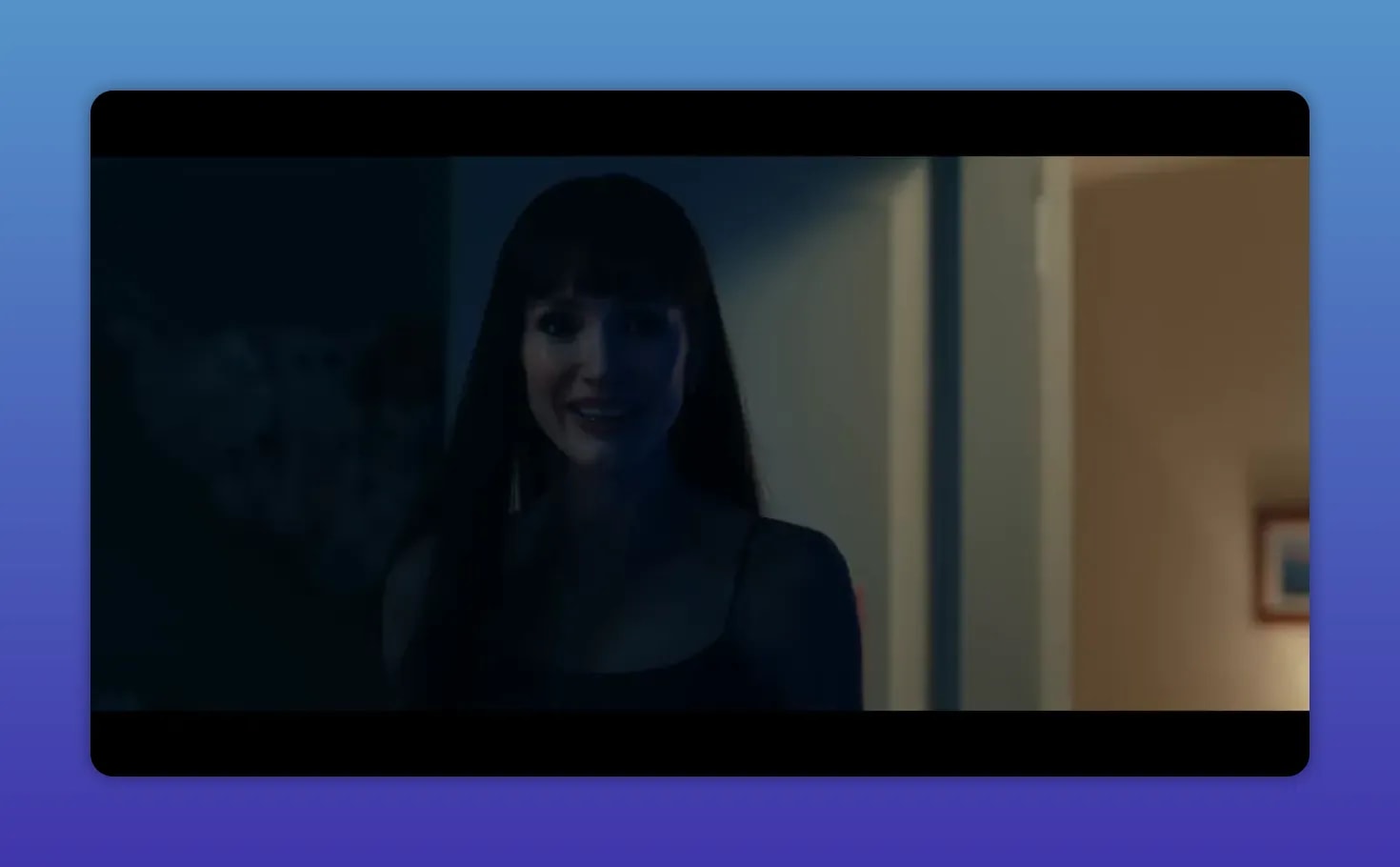
Jessica Chastain takes on a dual role as Bela’s mother and Other Mommy. That casting choice sits right at the heart of the film’s unease. There is no simple visual divide between the real mother and the sinister manifestation. Instead, the terror comes from resemblance.
A familiar face should make a child feel grounded. In this story, it creates confusion. Bela is confronted with someone who appears to be her mother, but who may represent something entirely inhuman.
That gives the horror a deeply emotional dimension. Bela is not only trying to understand whether a supernatural presence is real. She is forced to wrestle with what it means when the person who looks like a parent is no longer a dependable source of protection.
Other Mommy is described as cosmic horror, and that phrase matters. Cosmic horror is not just about creatures or jump scares. It is about the fear that reality is larger, colder, stranger, and less controllable than people want to believe. Here, that huge, unknowable fear is brought into the most intimate place possible: a family home.
The result is a monster that can feel both personal and impossible to comprehend. Other Mommy has the emotional access of a parent, the predatory quality of a stranger, and the unknowable presence of something much older and darker.
Bela at the Center of the Nightmare
This story belongs to Bela. The adults around her may be trying to protect her, but the threat is entering her world directly. That is what gives the premise its emotional sting.
Bela needs a grown-up to help keep her safe. Yet she is also the one closest to the terrifying truth. She is the person who has formed a relationship with Other Mommy. She calls this creature her very best friend, while also being terrified of her.
That contradiction is essential. It would be easy to treat a supernatural entity as a simple villain, but Other Mommy appears to create a more complicated bond. Bela’s fear does not erase the connection. The connection does not make the danger any less real.
For a child, attachment can be difficult to separate from safety. A person or presence who offers attention may still become important, even when the relationship feels frightening or confusing. Other Mommy turns that uncertainty into horror.
The story asks a chilling question: what happens when a child’s need for comfort becomes the doorway through which something dangerous gets inside?
Why Other Mommy Feels So Unsettling
The strongest horror premises take an everyday feeling and push it toward its darkest possibility. Other Mommy does that with family, trust, and childhood imagination.
The film’s terror is built on several unsettling ideas at once:
- A parent can be imitated. The face that represents safety can become a disguise.
- A child can be isolated inside their own fear. Bela may understand that something is wrong before the adults around her can.
- A home can become hostile. The spaces meant for rest, play, and family life can conceal a supernatural threat.
- Friendship can be weaponized. Other Mommy is not merely lurking in the background. She is emotionally involved in Bela’s life.
- The monster may not have human motives. Other Mommy is described as primal and inhuman, suggesting a force that cannot be understood through ordinary logic.
That last point is especially unsettling. A human villain can sometimes be reasoned with, escaped, or defeated through familiar rules. A cosmic or demonic presence creates a different kind of fear. It may not want what people want. It may not follow rules people recognize. It may simply be hungry for access.
“Can I go inside your heart?” is a question that lands with exactly that kind of dread. It sounds intimate, tender, and almost childlike. But in the world of Other Mommy, intimacy itself becomes a threat.
All the Inhuman Parts Put on Blast
Other Mommy’s horror is not confined to one clean category. She is described as twisted, insidious, primal, and monstrous. She has the emotional closeness of a family member, the menace of a demon, and the unknowable quality of cosmic horror.
That mixture makes her feel uniquely dangerous. The character can move between different fears without losing her identity. She is frightening as an intruder, frightening as an imitation mother, frightening as a friend, and frightening as something beyond human understanding.
There is something especially unnerving about a monster whose inhumanity is visible only in flashes. A wrong expression. A sudden shift in the eyes. A presence that feels almost correct but never fully is. That tiny distance between “mother” and “Other Mommy” is where the fear lives.
The film does not need to make Other Mommy unfamiliar from the first moment. The danger is more effective when it begins with recognition. The audience understands why Bela might be drawn toward her before realizing just how terrifying that closeness can become.
A Story About Protection, Belief, and Fear
At its core, Other Mommy is about protection. Bela needs adults who can keep her safe. But horror thrives in the gap between needing protection and being able to receive it.
Parents are supposed to know when something is wrong. They are supposed to recognize danger and intervene. When the threat looks like a parent, lives inside the home, and forms a private relationship with a child, those responsibilities become much harder to fulfill.
That setup brings an emotional realism to the supernatural concept. Even when the danger is otherworldly, the stakes are immediately understandable. A family is trying to hold onto one another while something sinister works its way into the bond between parent and child.
The presence of Bela’s father, Daddo, adds another layer to that family dynamic. The struggle is not simply against a monster. It is a struggle to protect a child whose experience may be difficult for the people around her to fully see or explain.
Horror is often at its most powerful when characters have to confront a danger that sounds impossible when spoken aloud. Other Mommy is a literal monster, but the fear around her is also rooted in a recognizable feeling: knowing that something is wrong and struggling to convince anyone else that it is real.
From a Bestselling Horror Novel to the Screen
Other Mommy is based on Incidents Around the House, the New York Times bestselling novel by Josh Malerman, author of Bird Box. The novel’s title alone suggests a story in which terror is not found in distant haunted castles or remote landscapes, but in the incidents that happen around the place people call home.
That foundation fits the film’s central idea perfectly. The horror is domestic, immediate, and emotionally close. It is about what happens when something impossible begins making itself known within the routines of family life.
The screenplay comes from Nathan Elston, a WGA Award winner whose writing credits include Succession. Rob Savage directs, bringing his genre sensibility to a story that blends family tension with supernatural terror. Savage previously directed Host and The Boogeyman, films that also find fear in intimate, pressured situations.
James Wan produces through Blumhouse Atomic Monster. Wan’s work across the Saw, Insidious, and The Conjuring franchises has helped define modern studio horror, particularly stories in which ordinary lives collide with dark supernatural forces.
That creative combination gives Other Mommy a strong horror lineage: a bestselling source novel, a director with a taste for bold genre filmmaking, and producers associated with some of the most influential supernatural horror of recent decades.
Jessica Chastain’s Dual Role Raises the Stakes
Jessica Chastain’s performance carries a special challenge. She must embody both Bela’s real mother and the entity that looks like her. The two roles are connected by appearance but divided by everything that matters emotionally.
The real mother represents the kind of grounded, human love Bela needs. Other Mommy represents the distortion of that love into something dangerous. The dual role gives the story a built-in visual and emotional confrontation between genuine care and a predatory imitation of care.
Rather than creating a threat that stands completely outside the family, the film places the threat inside the image of family itself. It makes Other Mommy difficult to dismiss, difficult to escape, and deeply difficult for Bela to understand.
That is where the concept becomes more than a simple monster story. The question is not only how to defeat the entity. It is how to recognize the difference between a comforting presence and one that only pretends to offer comfort.
A Family Horror Story With a Primal Edge
Other Mommy is clearly interested in the part of fear that arrives before language. It is the feeling a child has when a room does not feel safe anymore. The feeling that an adult is acting strangely. The feeling that something is close by, even when it cannot be seen.
That kind of fear does not require elaborate explanation. It is instinctive. It is primal.
Other Mommy uses the recognizable shape of family life to make that instinct unavoidable. Dining rooms, bedrooms, hallways, play areas, and familiar faces all become potential sites of dread. Nothing needs to look obviously monstrous at first. The horror can hide in the fact that something appears normal when it absolutely is not.
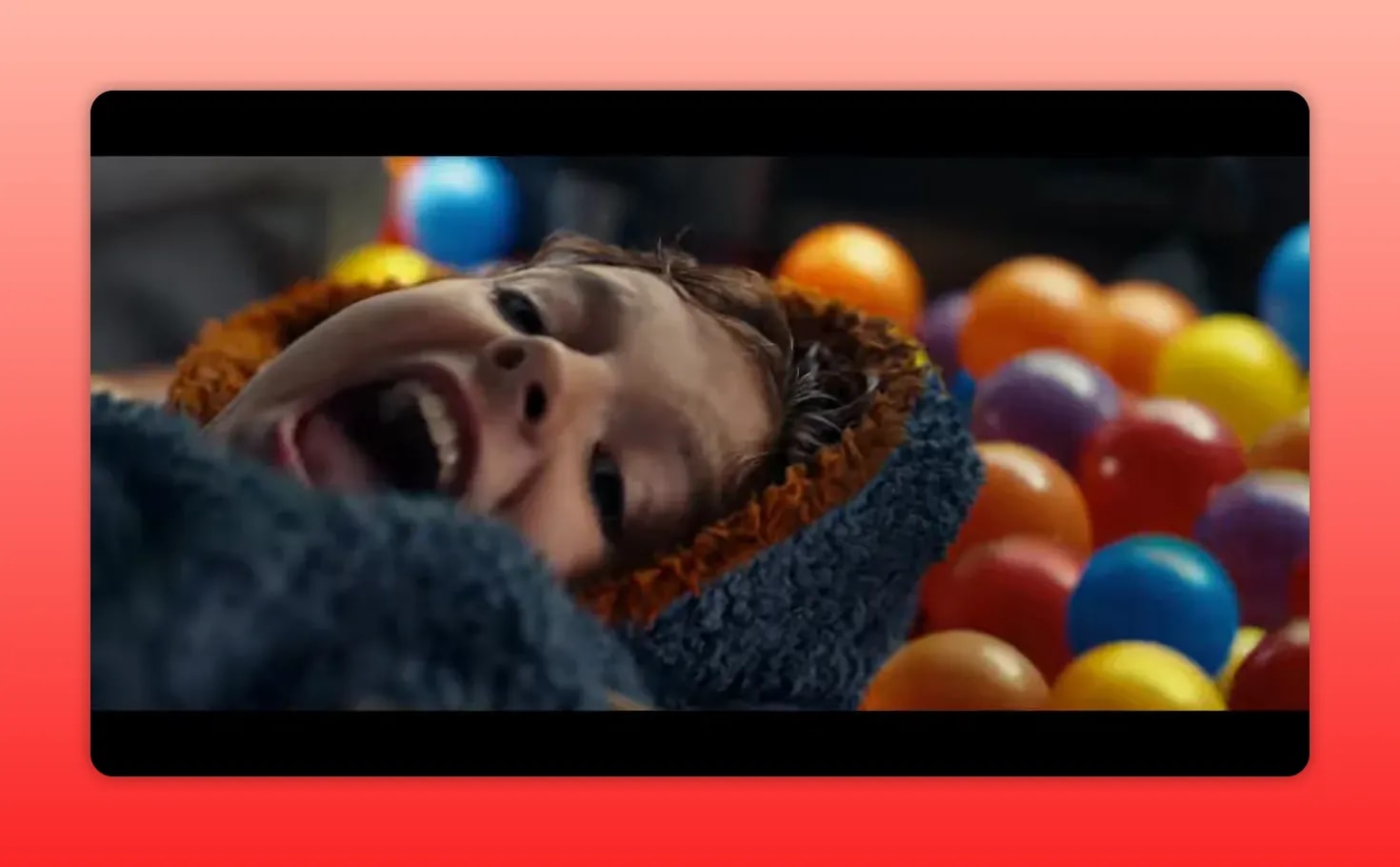
The film’s imagery reinforces that tension. Darkness gathers around domestic spaces. A figure stands in a doorway. A child’s playful environment becomes a scene of panic. A close-up eye reveals something that no longer feels human.
These are not random scares. They point back to the same central terror: the ordinary world has been invaded by something that can mimic love but cannot truly understand it.
The Cast Behind the Family
Alongside Jessica Chastain in the dual role of Bela’s mother and Other Mommy, the film stars:
- Arabella Olivia Clark as Bela, the young girl caught in Other Mommy’s frightening orbit.
- Jay Duplass as Daddo, Bela’s father.
- Dichen Lachman in a supporting role.
- Arian Moayed in a supporting role.
- Karen Allen in a supporting role.
The family is the emotional center of this horror story, but Other Mommy keeps forcing the question of who can be trusted. That tension is what makes the film’s premise feel so potent. The monster is not an outsider trying to break in. She is already close enough to be invited inside.
Other Mommy Is Coming to Theaters
Other Mommy opens in theaters on October 9. Tickets are available through the official ticket page.
For anyone drawn to supernatural horror rooted in family fears, childhood vulnerability, and the terror of an almost-familiar face, Other Mommy offers a nightmare that starts with a simple but deeply unsettling idea: what if your very best friend looked exactly like your mother?
Frequently Asked Questions About Other Mommy
What is Other Mommy about?
Other Mommy follows Bela, a young girl who forms a relationship with a sinister entity in her home that looks uncannily like her own mother.
Who plays Other Mommy?
Jessica Chastain plays both Bela’s mother and Other Mommy in a dual role.
Is Other Mommy based on a book?
Yes. The film is based on Incidents Around the House, the New York Times bestselling novel by Josh Malerman.
Who directed Other Mommy?
Other Mommy is directed by Rob Savage, whose previous genre films include Host and The Boogeyman.
When does Other Mommy open in theaters?
Other Mommy opens exclusively in theaters on October 9.