
Some stories feel personal because they are personal. Forgotten Island comes from a place of love for Filipino families, Filipino traditions, Filipino voices, and the stories that shape us when we are young.
At its core, this is an adventure about two lifelong best friends facing the possibility of growing apart. But it is also a love letter to the people who pass stories down, to the folklore that can scare and delight us, and to the memories that quietly make us who we are.
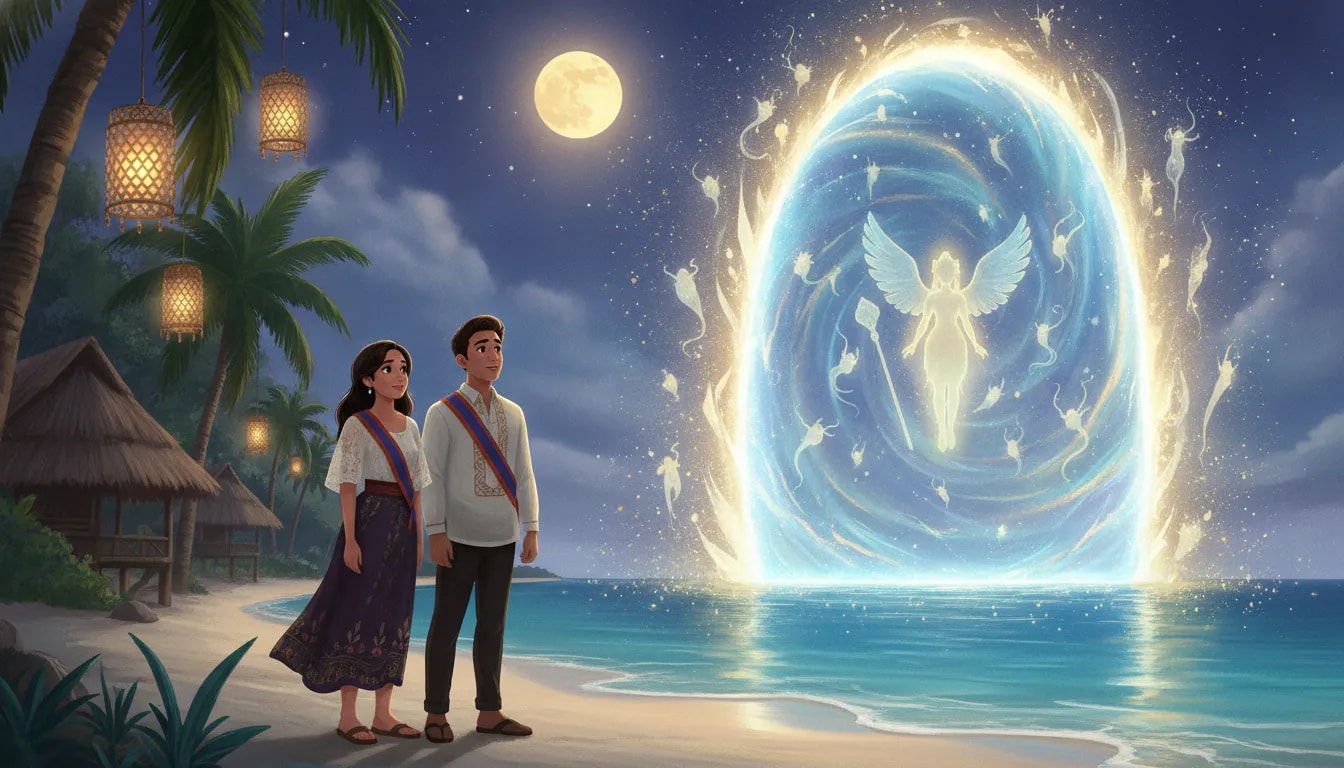
DreamWorks Animation’s Forgotten Island, in theaters September 25, follows high school graduates Jo and Raissa as they prepare to take separate paths after being best friends since grade school. During their final night together, they discover a mysterious portal to Nakali, a fantastical island filled with magical beings and mythological creatures from the Filipino stories they grew up hearing.
Getting home will not be simple. Jo and Raissa must confront friends, foes, a hapless weredog named Raww, and the island’s feared Manananggal. The biggest danger may be the price of escape itself: the memories of their friendship.
That is the emotional engine of the film. What happens when the people you love, and the shared memories you built together, are suddenly at risk of slipping away?
A Love Letter to Family
Forgotten Island was made with a deeply personal sense of purpose. The film’s creative team wanted to consider the impact loved ones have on a life, then turn that feeling into a story that could be both spectacular and sincere.
Family is not simply a background detail here. It is the source of the movie’s heart. The folklore, traditions, music, and humor emerge from lived experience, from the kinds of stories parents tell their children and the cultural details that remain with us long after childhood.
That personal foundation matters. It allows the film to be richly specific without feeling closed off. The more honestly a story embraces where it comes from, the more easily people can recognize something of their own lives within it.
A friendship story can be universal. The fear of change can be universal. The need to hold onto someone who knows your history can be universal. Filipino culture gives Forgotten Island its particular texture, but the feelings underneath it belong to everyone.
Jo and Raissa’s Friendship Is Worth Fighting For
Jo and Raissa are not strangers thrown together by circumstance. They are lifelong best friends standing at a turning point. Graduation means that the future is arriving whether they are ready or not, and their separate paths create the kind of distance that can feel frightening even before it happens.
Their adventure begins on the last night they have together before life changes. That makes Nakali more than a mysterious fantasy setting. It becomes an emotional place where the friends are forced to confront what they mean to each other and what they are willing to protect.
The movie’s central stakes are beautifully direct: their shared memories are the price of returning home. If Jo and Raissa cannot find another way out, they may lose the very history that proves how much their friendship has mattered.
Memories are not just scenes from the past. They influence the person we become. They connect us to family, community, childhood, and the people who helped us understand ourselves. A friendship is built in little moments, private jokes, difficult conversations, celebrations, mistakes, and acts of showing up. Take away those memories and you change the relationship at its foundation.
That is why this adventure is not only about escaping an island. It is about refusing to let a meaningful bond disappear.
Why a Story About Memories Hits So Deeply
Everyone understands the strange power of memory. It can take one sound, one smell, one family meal, or one old story to bring an entire moment back. The details may fade, but the feeling remains.
Forgotten Island treats memory as something active. It is not a dusty archive. It is a living force that shapes the present. Jo and Raissa’s struggle asks a question that lands far beyond fantasy: if you forgot the moments you shared with someone, would you still know how important they were to you?
The answer is not easy, which is exactly why the premise has weight. Friendship is worth fighting for because it changes us. The people closest to us become part of how we tell the story of our own lives.
Nakali Brings Filipino Folklore Into a New Animated World
Nakali is packed with magical and mythological creatures drawn from Filipino folklore. The approach is not to use folklore as decorative wallpaper. The creatures and stories help create a distinctive world, one that feels connected to the myths many Filipino families know and share.
For people raised with these stories, seeing them embraced in a major animated film can be emotional. Folklore has a way of making childhood vivid. These are the monsters, mysteries, warnings, and imaginative possibilities that live in the stories told at home.
One of the key figures is the Manananggal, the most feared creature on the island. Voiced by Lea Salonga, the Dreaded Manananggal raises the stakes for Jo and Raissa as they try to find a path home without sacrificing their memories.
The film also includes Raww, a well-meaning but hapless weredog voiced by Dave Franco, alongside a small but mighty group of allies. Some Nakali residents will become friends. Others will become enemies. That tension gives the island the right mix of danger, mystery, comedy, and heart.
Specific Culture Can Create a Universal Connection
There is an old creative truth at work here: specificity is what makes a story feel real. When culture is handled with affection and care, it does not make a story smaller. It gives the story a point of view.
Filipino folklore brings its own imagery, humor, pageantry, and sense of wonder to Forgotten Island. It is bold, magical, and sometimes frightening. The film embraces all of that, including the spectacle and the delightfully creepy edges of traditional monster stories.
But beneath the fantasy, the emotions remain recognizable. Families tell stories. Children carry those stories forward. Friends grow up. Life pulls people in different directions. Everyone knows the hope that the people and memories we love will stay close.
That is how a story can be proudly Filipino and speak to anyone who has ever cared deeply about where they come from.
Filipino Voices Bring Authenticity to the Adventure
It matters who gets to tell a story, and it matters who gives that story a voice. Forgotten Island brings Filipino folklore to life with Filipino actors whose personal relationship to the culture adds a meaningful layer of authenticity.
H.E.R. and Liza Soberano star as Jo and Raissa, the best friends at the center of the film. The voice cast also includes Manny Jacinto, Dolly de Leon, Jo Koy, Ronny Chieng, Jenny Slate, Dave Franco, and Lea Salonga.
For performers with Filipino roots, this kind of work can carry enormous significance. Voice is personal. It is how humor, emotion, music, rhythm, and identity come through. In a story built around Filipino myth and memory, hearing those characters given life by a cast connected to that cultural world adds to the movie’s emotional resonance.
Voice performance is also a unique form of imagination. An actor must create a full emotional world from a recording booth, using voice alone to communicate fear, joy, frustration, tenderness, and courage. For a movie centered on friendship, every exchange between Jo and Raissa has to feel natural enough to make their lifelong connection believable.
That is especially important as the friends face the possibility of forgetting each other. The stakes work only if their bond feels real from the beginning.
The Sound of the Philippines Is Part of the Worldbuilding
Culture is not only seen. It is heard.
The music of Forgotten Island was developed with a desire to create a unique sonic identity for the film. That meant drawing from indigenous Filipino instruments and exploring sounds that could help Nakali feel like a world with its own history, personality, and pulse.
One especially remarkable part of that work took place at the church in Las Piñas, home to the Bamboo Organ. This instrument is a singular piece of musical history, known for its bamboo pipes and distinctive sound. Recording it for the film brought a rare Filipino instrument into the creative fabric of this animated adventure.
The decision is meaningful because music carries atmosphere immediately. A score tells us whether a place feels joyful, haunting, intimate, grand, or dangerous. In a film where folklore and personal memory are so closely intertwined, the sound has to do more than accompany the images. It has to help make Nakali feel alive.
Using culturally rooted instruments is also a way to honor the traditions that inspired the story. Rather than relying only on familiar fantasy sounds, the filmmakers sought out textures that could give this world its own voice.
For more about the instrument and its history, explore the Las Piñas Bamboo Organ. Its presence in the film is a reminder that cultural celebration can live in every part of the creative process, from character design and storytelling to music and sound.
Pageantry, Spectacle, and a Little Bit of Gore
Filipino folklore is not timid, and Forgotten Island does not approach it timidly either. The world of Nakali makes room for spectacle, pageantry, strange creatures, colorful chaos, and a touch of gore.
That mix is part of what gives the film its personality. Folklore can be scary and playful at the same time. A monster story can be a warning, a source of laughter, a family tradition, and an unforgettable image all at once.
Animation offers the freedom to push those contrasts further. Nakali can be bright and celebratory in one moment, then eerie and dangerous in the next. That tonal flexibility mirrors the way myths often work. They hold beauty and darkness together.
The visual ambition is not separate from the emotional story. It supports it. Jo and Raissa are entering a world that is larger, stranger, and more difficult to navigate than anything they have known. As their friendship is tested, the island grows into an external expression of their internal fears.
A dazzling fantasy world can still be grounded in emotional truth. In fact, the more imaginative the setting becomes, the more important it is to hold onto the human connection at its center.
What Makes Forgotten Island Feel Like an Ode Rather Than an Adaptation
The film is an ode to Filipino folklore. That word matters.
An ode is made with admiration and affection. It is not about reducing a culture to a checklist of symbols. It is about celebrating the spirit of stories, traditions, sounds, and family memories that have been passed down over time.
Forgotten Island takes inspiration from folklore and channels it into an original adventure. Nakali is a new destination, Jo and Raissa are original characters, and their emotional journey is built around a contemporary coming of age moment. The story does not stand still in the past. It carries cultural memory into something new.
That is a powerful act of storytelling. Traditions endure because they are retold. Folklore stays alive when it is shared in new forms, through a parent’s voice, a family gathering, a song, a book, or an animated film that introduces these creatures and feelings to a broader audience.
The movie’s approach says: these stories are ours, we are proud of them, and they deserve to take up space.
The Creative Team Behind the Adventure
Forgotten Island is written and directed by Academy Award nominee Joel Crawford and Januel Mercado, with Mark Swift producing. The team previously worked together on Puss in Boots: The Last Wish.
That background signals a love of animation that can be visually big, emotionally direct, and full of personality. With Forgotten Island, the mission is also deeply rooted in cultural specificity. The filmmakers wanted to go all in, building a world with its own myths, aesthetic energy, and musical identity.
The work behind that ambition is collaborative. It involves artists, performers, musicians, folklore enthusiasts, cultural voices, and storytellers bringing their own knowledge and lived experience into the process. The result is meant to feel like a full world, not a surface level reference.
That commitment can be felt in the film’s central priorities:
- Friendship: Jo and Raissa must choose to fight for the bond that has shaped both of them.
- Memory: Their shared history becomes the most precious thing at risk.
- Folklore: Filipino mythology gives Nakali its danger, wonder, and singular identity.
- Family: The stories and traditions passed down at home provide the emotional foundation.
- Voice: Filipino performers help tell Filipino stories with pride and authenticity.
- Music: Indigenous Filipino instruments, including the Bamboo Organ, help make the world sound distinct.
A Bigger Story About Holding On to What Matters
There is something especially moving about an adventure where the most valuable treasure is not an object. It is memory.
Jo and Raissa are not just trying to defeat a villain or find a portal home. They are trying to preserve the history of their friendship before it disappears. That makes the movie’s fantasy premise feel emotionally immediate.
Growing up often means accepting that life changes. People move. Priorities shift. New paths emerge. Best friends who once did everything together may have to learn how to remain close through distance, uncertainty, and new versions of themselves.
Forgotten Island does not frame that change as simple or painless. It understands that moving forward can also mean fearing what may be left behind. But it also insists that the people who matter are worth choosing, remembering, and fighting for.
That is the spirit of this story. It is a film about a fantastical island, mythological creatures, and an impossible journey home. More than that, it is about the people who give our lives meaning, the stories that connect us to our roots, and the memories we never want to lose.
Your best friendship is worth fighting for.
Learn more about the film at the official Forgotten Island site and follow the celebration through the film’s official Instagram.
Forgotten Island FAQ
What is Forgotten Island about?
Forgotten Island follows lifelong best friends Jo and Raissa after a mysterious portal transports them to Nakali, a magical island inspired by Filipino folklore. To return home, they must face dangerous creatures and protect the memories of their friendship.
Who are the main characters in Forgotten Island?
The main characters are Jo and Raissa, high school graduates and lifelong best friends voiced by H.E.R. and Liza Soberano. They are joined on Nakali by Raww, a well meaning weredog voiced by Dave Franco, as well as a small group of allies.
What Filipino folklore creature appears in Forgotten Island?
The film features the Dreaded Manananggal, described as the most feared creature on Nakali. The character is voiced by Lea Salonga.
How does Filipino culture influence Forgotten Island?
Filipino culture shapes the film’s folklore, characters, family themes, music, and worldbuilding. The creative team also recorded indigenous Filipino instruments, including the Bamboo Organ in Las Piñas, to help build a distinctive sound for Nakali.
When is Forgotten Island coming to theaters?
Forgotten Island arrives in theaters September 25.


