
Introduction & Background Info
Lisey’s Story is Stephen King’s 45th published novel when we count the Richard Bachman books, as we absolutely should. Released in 2006, it occupies a really interesting place in King’s career. It is post-accident King, post-Dark Tower King, and very much a King who seems to be thinking hard about mortality, marriage, memory, and what the people we love are left with after we are gone.
This is not the kind of Stephen King novel that comes charging out of the gate with a monster, a murder, or a town full of folks about to have a very bad Tuesday. It is a slow, strange, deeply intimate book about a widow sorting through the remnants of a life she shared with a famous husband. Then, because it is Stephen King, it also becomes a story about obsessive fans, childhood trauma, alternate worlds, dangerous things in the dark, and secrets that refuse to stay buried.
That combination is pretty much why Lisey’s Story has become one of King’s more divisive books. Some readers love it and consider it one of his most heartfelt works. Others get about fifty pages in, encounter all the unusual phrases and private marital slang, and wonder if they accidentally picked up a book written in another language.
We get that reaction. Boy, some of the lingo in here is a lot.
But beneath all that is a novel that feels unusually personal. King has said the seed of the idea came from imagining what it would be like if his wife, Tabitha King, had to clear out his office after his death. That question is all over the book. What does a spouse leave behind besides possessions? What parts of them do we truly know? What stories were hidden even from the person closest to them?
For further background on King’s published work and his ongoing body of fiction, the official Stephen King website is a useful place to explore. But with this one, it is less important to arrive with a giant checklist of prior reading and more important to arrive willing to sit with discomfort, grief, and a marriage that was beautiful, difficult, private, and very real.
What Is It About?
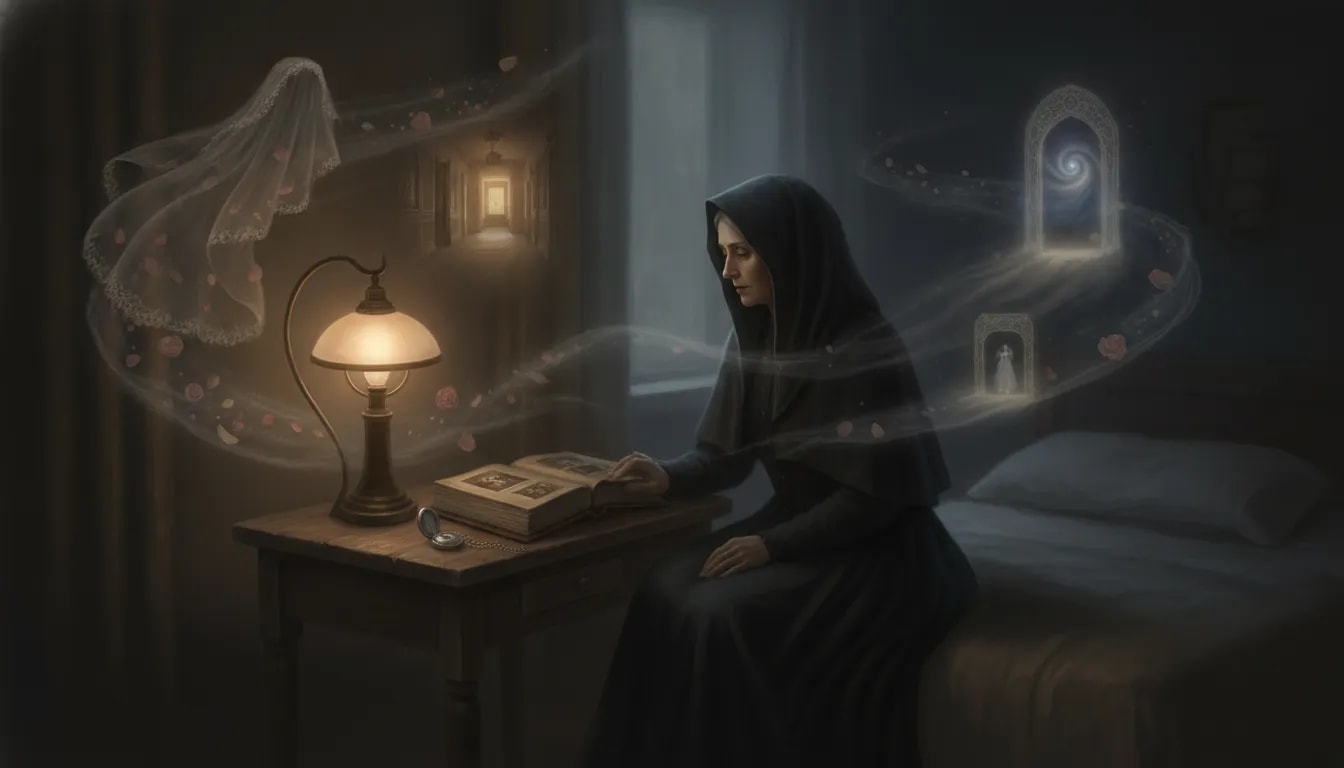
Lisey Landon has been married for more than twenty years to Scott Landon, a hugely successful and celebrated novelist. Scott has been dead for two years when the story begins, and Lisey is finally starting the impossible task of going through his papers, cleaning out his office, and deciding what to do with the professional and personal wreckage he left behind.
That sounds like the setup for a quiet literary drama, and for long stretches, it is. Lisey’s grief is not neat. She has not simply put her late husband on a pedestal and spent two years crying in the dark. She is sad. She misses him. She is angry. She remembers the good parts. She remembers things that were frightening. She recognizes that the man she loved had secrets, damage, and a past she never fully understood.
As Lisey begins digging into Scott’s unpublished work and possessions, the past starts opening up. We learn more about Scott’s horrific childhood, his family, his strange abilities, and a beautiful but terrifying place called Boo’ya Moon. It is a place Scott could visit, but never fully escape.
At the same time, Lisey faces a very immediate and very human threat. Jim Dooley, an obsessed admirer of Scott’s work, becomes increasingly dangerous in his determination to obtain Scott’s unpublished material. So the novel runs on two tracks:
- The present-day threat: Lisey must deal with a disturbed man who thinks Scott’s work belongs to him.
- The buried past: Lisey must uncover what Scott hid about his childhood, his trauma, and the other world that shaped him.
That is the basic engine of the book, but it does not quite explain its feel. Lisey’s Story is as much about the act of remembering as it is about plot. Memories arrive out of sequence. A phrase unlocks an old moment. A joke between husband and wife carries more weight than an entire page of exposition. The past and present keep bleeding together because that is kind of what grief does. We do not experience loss in a straight line.
One minute we are cleaning a desk drawer. The next minute we are remembering a fight from years ago, a sweet moment from the early days of a relationship, or something so dark that the mind has done its best to lock it away.
What Makes It Good?
The Marriage Feels Lived In
The best thing about Lisey’s Story is the marriage between Lisey and Scott. King has written marriages before, of course, but there is something particularly tender about this one. These are not two people in the first bright rush of romance. They have known each other for decades. They have irritated each other, supported each other, fought, forgiven, laughed, worried, and built a private world together.
Anybody who has been with someone for a long time will likely recognize the way Lisey and Scott communicate. Long-term couples develop their own language. They have inside jokes nobody else understands. They use one word to mean an entire sentence. They have nicknames, phrases, and shared references that would sound ridiculous to anybody outside the relationship.
King pushes that idea hard in this novel, perhaps too hard at times, but it comes from a truthful place. The private language makes Lisey and Scott feel intimate. They do not communicate like characters who just met on page twenty. They communicate like two people who have spent more than half their lives learning every strange little corner of one another.
The memories of the good times are especially effective. In a story dealing with death and unresolved pain, it would have been easy to make every recollection grim. Instead, King gives us moments of warmth that can genuinely make us smile. Lisey remembers when her marriage was at its best, when Scott was charming, funny, loving, and safe. Those are the scenes that give the book its heart.
There is a real romance novel inside Lisey’s Story, trying to claw its way out through the supernatural horror. We can see King beginning to lean into a mode that would later come through strongly in 11/22/63, another novel that understands how powerful a love story can be when it is written with sincerity.
It Understands That Grief Is Messy
Stephen King has explored grief in some absolutely brutal ways. Pet Sematary, for example, does not gently approach grief. It grabs us by the collar, throws us face-first into the mud, and does not let us get up.
Lisey’s Story is painful, but it handles loss differently. It is not trying to pulverize us every other chapter. Instead, it looks at the strange, lingering mess left behind after a spouse dies.
Lisey has delayed going through Scott’s things for two years. That feels very real. Many people cannot immediately pack up a loved one’s side of the closet, clear their desk, donate their belongings, or make decisions about the objects that still seem to contain a little piece of the person who is gone. Sometimes those things sit untouched because facing them makes the death feel final in a way it did not before.
The book also understands that grief can include anger. We can love someone deeply and still be furious with them. We can miss them so badly it hurts while also resenting them for the things they never said, the problems they never fixed, the pain they caused, or simply for leaving us behind.
That is one of the most mature things King does here. Lisey does not have to choose between loving Scott and recognizing that he was damaged. She does not have to pretend the marriage was perfect to acknowledge that it mattered. There are no perfect marriages. Put two human beings in the same home for twenty years and, sooner or later, they are going to grind each other’s gears.
What matters is that the novel makes room for the contradictions:
- Lisey can cherish Scott’s kindness while confronting his secrets.
- She can miss him and be mad at him.
- She can remember romance and remember fear.
- She can honor the marriage without turning it into a fantasy.
That is a much truer version of love than the idealized stuff. Love is not pretending the ugly parts never happened. It is recognizing the whole person.
Boo’ya Moon Is King Doing What King Does Best
Whenever King starts playing with other worlds, alternate dimensions, and spaces that feel adjacent to our own reality, he tends to cook. Boo’ya Moon is one of those places that sticks with us because it is not just a fantasy setting with a map and a rulebook.
It is hauntingly beautiful. It is dreamlike. It is seductive. It is also dangerous as all get-out.
Scott’s connection to Boo’ya Moon is central to who he is, and King lets the place retain some mystery. We do not get every answer tied up with a bow, and honestly, we do not need one. The atmosphere is the point. Boo’ya Moon feels like the kind of place we might glimpse in a nightmare or through a half-open door in childhood, a place so magical that we want to go there and so wrong that we absolutely should not.
Then there is the Long Boy.
The Long Boy is one of those King creations that gets under our skin because it has a simple, almost childlike name for something profoundly awful. That contrast makes it worse. The creature is not merely a monster to be punched, shot, or outsmarted. It is an ancient nightmare hanging over the edges of the story.
The book’s best supernatural material comes from this tension. Boo’ya Moon offers wonder, escape, beauty, and possibility. But it is never free. There is always something waiting in the dark.
Scott Landon Is a Damaged, Fascinating Character
Scott begins as the dead famous husband, the literary giant whose legacy everyone wants a piece of. Then we learn that beneath the successful author image is a man carrying around an incredible amount of damage.
King writes damaged people very well. We have seen plenty of writers in his work, and often they come with alcohol problems, recovery issues, ego issues, obsession issues, or some kind of personal wreckage. Scott is certainly another author in the King catalog, but he does not feel like a lazy self-insert. If anything, there is something in him that feels closer to a Richard Bachman character. He is harsher around the edges, stranger, and more haunted.
His childhood experiences explain a great deal without excusing everything. The novel allows us to understand why Scott became who he became. His history is not just backstory. It is the source of the book’s emotional and supernatural weight.
Lisey’s Sisters Give the Story a Needed Grounding
In a novel where one woman is grieving a spouse while trying to unravel impossible secrets, Lisey’s sisters provide a connection to ordinary family life. They have their own issues, because what family does not, but their presence matters.
Grief can isolate people. It can turn life inward until the person who died becomes the only subject that matters. Lisey’s family helps keep the story grounded in relationships that exist outside her marriage to Scott. The sisters offer frustration, support, history, and reminders that Lisey is still part of a larger world.
That grounding is important because the book gets very strange. Without the sisters, the emotional center might drift too far into Scott’s mythology. Their presence helps us remember that this is Lisey’s life, her loss, and ultimately her story to reclaim.
What Makes It Bad?
The “If You Know, You Know” Language Can Be Exhausting
All that private language between Lisey and Scott is realistic in concept, but it can be rough in execution. At the beginning, the novel throws a lot of unfamiliar phrases at us. We can feel as if we missed a chapter, forgot a glossary, or wandered into a book with its own made-up dialect.
There is a point where the language can make us want to tell King, very respectfully, to please speak English for a minute.
The good news is that the meaning of many phrases becomes clearer through context. Also, not understanding every single expression does not necessarily stop us from following the larger plot. Still, the opening can be a genuine hurdle. This is not just regional dialogue or an accent, like the voice-driven language in The Colorado Kid. It is a full-on shared vocabulary.
For some readers, that will be immersive. For others, it will be the reason they put the book down.
Scott Sometimes Takes Over Lisey’s Own Story
This is probably the most common fair criticism of the novel. It is called Lisey’s Story, but Scott can steal a lot of the spotlight. We spend substantial time with his childhood, his gifts, his trauma, his career, his past, and his secrets.
All of that material is compelling, which is part of the problem. Scott is such a fascinating damaged character that the narrative occasionally feels like it should be called The Landon Story. Lisey can seem pushed to the side in her own book.
Now, there is an argument that this is intentional. Lisey is clearing out Scott’s life, so of course she has to encounter the enormous space he occupied. Part of her journey is separating the truth of Scott from the identity she built around being Scott Landon’s wife.
Even so, the balance does not always work perfectly. There are moments when we want the camera to swing back toward Lisey and stay there.
Jim Dooley Is Not King’s Strongest Villain
Jim Dooley is threatening, unsettling, and useful to the story, but he is not an all-time great Stephen King villain. He feels like he has pieces of several earlier King antagonists in his DNA.
There is some Misery in the obsessive fan angle. There is some Secret Window, Secret Garden in the author-related fixation. There is some Finders Keepers energy in the idea of a dangerous person obsessed with unpublished writing.
That does not make him bad. It just means we have seen King tackle this particular fear before, and often with sharper or more memorable results. Clearly, the notion of someone coveting an author’s hidden work is something King finds especially frightening, which makes sense.
The bigger issue is that Jim does not feel essential to the emotional core of the novel. If we removed him, we would still have a compelling story about Lisey discovering Scott’s past, confronting their marriage honestly, and entering the strange orbit of Boo’ya Moon.
Jim brings external danger and helps push the plot forward, but the real villain of Lisey’s Story is the past. It is trauma, secrecy, grief, memory, and the things love cannot automatically heal.
The Nonlinear Structure Can Mess With Our Sense of Direction
King does not tell this story in a clean, straightforward line. We move among present events, memories, traumatic recollections, fragments of Scott’s history, and scenes connected to Boo’ya Moon. Sometimes it works beautifully because it mirrors Lisey’s state of mind. Sometimes it can leave us asking basic questions.
Are we in the present? Is this a flashback? Is this Lisey remembering something? Is this Scott’s past? Are we in another world right now?
That uncertainty is part of the novel’s design, but it can be disorienting. Add the slow opening and all the private phrases, and we have a book that asks for patience before it starts handing out major rewards.
Trust the process is the key phrase here. We do not have to love every structural decision, but the book makes more sense once the patterns begin to connect.
Why You Should Read It
If we are Stephen King completionists, the answer is simple. We have to read it. It is too personal, too strange, and too distinct a part of his bibliography to leave untouched.
But there are better reasons than just checking a title off a list.
Read It for a Mature Story About Marriage
Readers who have been in a long relationship may find a lot to appreciate here. King captures the texture of a marriage that has lasted. He does not only give us big declarations of love. He gives us the weird phrases, the familiar jokes, the affectionate teasing, the old resentments, and the memories that only make sense to two people.
The novel understands that intimacy is not always glamorous. Often, it is accumulated. It is made from decades of knowing how the other person takes their coffee, what a certain look means, which story they always tell wrong, and what private word can make them laugh when nobody else has any clue what it means.
Read It for a Different Kind of Stephen King Novel
This book feels different from much of King’s work from the same period. It is part horror novel, part supernatural fantasy, part domestic drama, part love story, and part meditation on what we leave behind.
King was entering a more sentimental stage of his career, and that is not an insult. We can feel love on his mind. We can feel the awareness of death on his mind too. The questions underneath the story are personal ones:
- What happens to our work after we are gone?
- What does our spouse really know about us?
- How do the people we love survive the losses we fear most?
- Can a marriage contain deep love and deep pain at the same time?
Those questions give the novel a weight that goes beyond its thriller plot.
Read It for Boo’ya Moon and the Weird Stuff
For those of us who love King when he gets cosmic, Lisey’s Story has plenty to offer. Boo’ya Moon is one of the more memorable strange places in his fiction. It belongs in the conversation with the Territories, Mid-World, and other corners of the larger Stephen King multiverse.
The novel does not need to explain every metaphysical detail to work. In fact, it is better when it remains partly unknowable. That is what makes it feel dangerous. We do not know all the rules, so we cannot fully relax.
And if the book clicks for us, the Apple TV+ adaptation is worth considering afterward. Stephen King wrote the screenplay himself, and the adaptation appears to address several of the novel’s rougher areas, particularly in how it handles Jim Dooley. It also gives Boo’ya Moon the visual grandeur it deserves. Information about the series is available through Apple TV+.
Maybe Wait If the Loss Is Recent
There is one major caution. If we have recently lost someone close, especially a spouse or partner, this may not be the right time for Lisey’s Story.
It is not as devastating as Pet Sematary. On a completely unofficial grief-and-misery scale, Pet Sematary is about an eleven. It does not believe in mercy. Lisey’s Story is more around a seven. It is sad, emotionally messy, and occasionally painful, but it is not designed to leave us rolling around in despair for hundreds of pages.
Still, grief is personal. Nobody else gets to decide what will be too much. If the wound is fresh, there is no shame at all in setting this one aside and returning to it later, when the material may feel more reflective than raw.
Final Thoughts
Lisey’s Story is not a perfect Stephen King novel. The language can be frustrating. The nonlinear storytelling can be confusing. Scott sometimes overwhelms Lisey’s side of the narrative, and Jim Dooley is not going to replace Annie Wilkes or Randall Flagg in anyone’s villain hall of fame.
But it is also deeply original. It does not feel like King simply remixing one of his earlier hits and collecting a paycheck. At this point in a long career, that matters. There are writers who reach a stage where the work starts to feel like a familiar machine running on autopilot. This does not feel like that.
This feels like King trying something personal, strange, heartfelt, and perhaps a little uncomfortable. It feels like a novel built from fears about death, love, legacy, and the possibility of leaving the people closest to us with rooms full of unanswered questions.
That is probably why King has identified it as one of his own favorites. We can tell it was weighing on him when he wrote it. The story has flaws, but it has a pulse. It has sincerity. It has some genuinely lovely passages about marriage, and when Boo’ya Moon enters the picture, it has that wild King imagination firing on all cylinders.
If we can get past the early lingo and allow the book time to find its footing, the payoff is there. It requires patience. It asks us to accept confusion for a while. But once the emotional pieces and supernatural pieces begin to lock together, it becomes clear that this is a unique entry in Stephen King’s catalog.
We may not always know what a “bool hunt” is right away, but if we trust the process, we can find the heart beneath the strange words.
Multiverse Connections
As with so many Stephen King books, Lisey’s Story has connections that can be read as direct links, loose echoes, or the kind of thing that makes constant readers raise an eyebrow and say, “Well now, that sure sounds familiar.”
Some of these are firm enough to count as recognizable references. Others are speculation, and that is part of the fun of King’s multiverse. Not every connection needs a giant neon sign over it. Sometimes a place name, a number, or an idea is enough to make us wonder whether the beam bends a little farther than we thought.
Castle Rock and Deputy Andy Clutterbuck
Deputy Andy Clutterbuck appears in Lisey’s Story, connecting the novel back to Castle Rock. He is notably associated with Needful Things, though Castle Rock itself has a long history across King’s fiction.
Any return to Castle Rock is welcome. King once framed Needful Things as the last Castle Rock story, but as usual, the town has a habit of lingering around the edges of the multiverse. Castle Rock is just too useful, too familiar, and too haunted to stay gone forever.
East Stoneham, Maine
East Stoneham appears in Lisey’s Story, and it also shows up in The Dark Tower books five and six. A familiar Maine location may not seem like much on its own, but King uses geography the way other writers use connective tissue. Place names matter. They remind us that many of these stories may be taking place in adjacent versions of the same larger world.
The Territories, The Talisman, and Black House
The strongest speculative connection involves Boo’ya Moon and the Territories from The Talisman and Black House. In those novels, Jack Sawyer can “flip” between worlds. Scott’s relationship to Boo’ya Moon has a similar feel, even if the mechanics are not identical.
The connection makes sense thematically. Both stories deal with alternate realms that are linked to our own world but governed by different dangers and possibilities. Both understand that crossing between worlds is not just a cool trick. It carries a cost.
There are references to “the Territories” that feel like clear nods toward The Talisman and Black House. Since Lisey’s Story arrived not too long after Black House, it is reasonable to think that material was still floating around in King’s imagination.
Whether Boo’ya Moon is literally part of the Territories, a neighboring dimension, or simply another strange world connected through the same multiversal logic is left open. We do not need a definitive answer to appreciate the resemblance.
The Number 19
Then there is 19.
Whenever 19 shows up in Stephen King, constant readers notice. In Lisey’s Story, Scott and Lisey were married on September 19, 1979. That may be nothing more than a familiar King number showing up where it likes to show up, but in the larger multiverse, 19 is rarely ignored.
For anyone who has traveled through the Dark Tower series, it is a little signpost. Maybe it means something. Maybe it means nothing. Either way, we notice it.
The Long Boy and King’s Other Hungry Entities
The Long Boy has also led to plenty of speculation. Is it the same type of entity as Pennywise? Is it comparable to Dandelo from The Dark Tower? Does it belong in the same conversation as Ardelia Lortz from “The Library Policeman”?
There is no need to state any of that as confirmed fact. But the comparison is understandable. King has created multiple ancient, predatory beings that can appear in different forms, feed on human suffering, and seem to exist beyond ordinary human reality.
Dandelo is the clearest point of comparison because of the wider Dark Tower mythology. Pennywise is another natural reference because King fans have long noticed patterns among his shape-changing, reality-bending horrors. Ardelia Lortz also fits the general mold of a terrifying entity capable of changing appearance and preying on vulnerable people.
The Long Boy may be connected to those beings. It may be entirely separate. Either possibility keeps Boo’ya Moon unsettling, because the multiverse is much scarier when we cannot fully categorize everything that lives in it.
That is the real multiverse appeal of Lisey’s Story: it feels connected without being trapped by connection. It has echoes of Castle Rock, the Territories, the Dark Tower, and King’s many hungry things in the dark, but it remains its own weird, deeply personal tale.
FAQ
Is Lisey’s Story a horror novel?
Yes, but it is also a grief story, marriage drama, supernatural fantasy, and psychological thriller. The horror grows from Scott Landon’s past, the dangers of Boo’ya Moon, the Long Boy, and Jim Dooley’s obsession.
Is Lisey’s Story connected to The Dark Tower?
It includes several possible multiverse connections, including the number 19, East Stoneham, Maine, and ideas that resemble the alternate-world travel seen in The Talisman and Black House. Some links are direct references, while others remain open to interpretation.
Why is the language in Lisey’s Story so unusual?
Lisey and Scott share a private vocabulary built over decades of marriage. It is intended to show their intimacy, though it can be confusing and frustrating early in the novel. Context gradually makes many of the terms easier to understand.
Is Lisey’s Story difficult to read?
It can be. The novel starts slowly, uses a nonlinear structure, and introduces a lot of private language. Patience helps, because the emotional and supernatural threads become clearer as the story develops.
Should we read Lisey’s Story after a recent loss?
That depends on where we are with grief. The novel explores the death of a spouse and the difficult process of sorting through love, anger, memory, and belongings left behind. It may be wise to save it for another time if that subject is still especially raw.


