
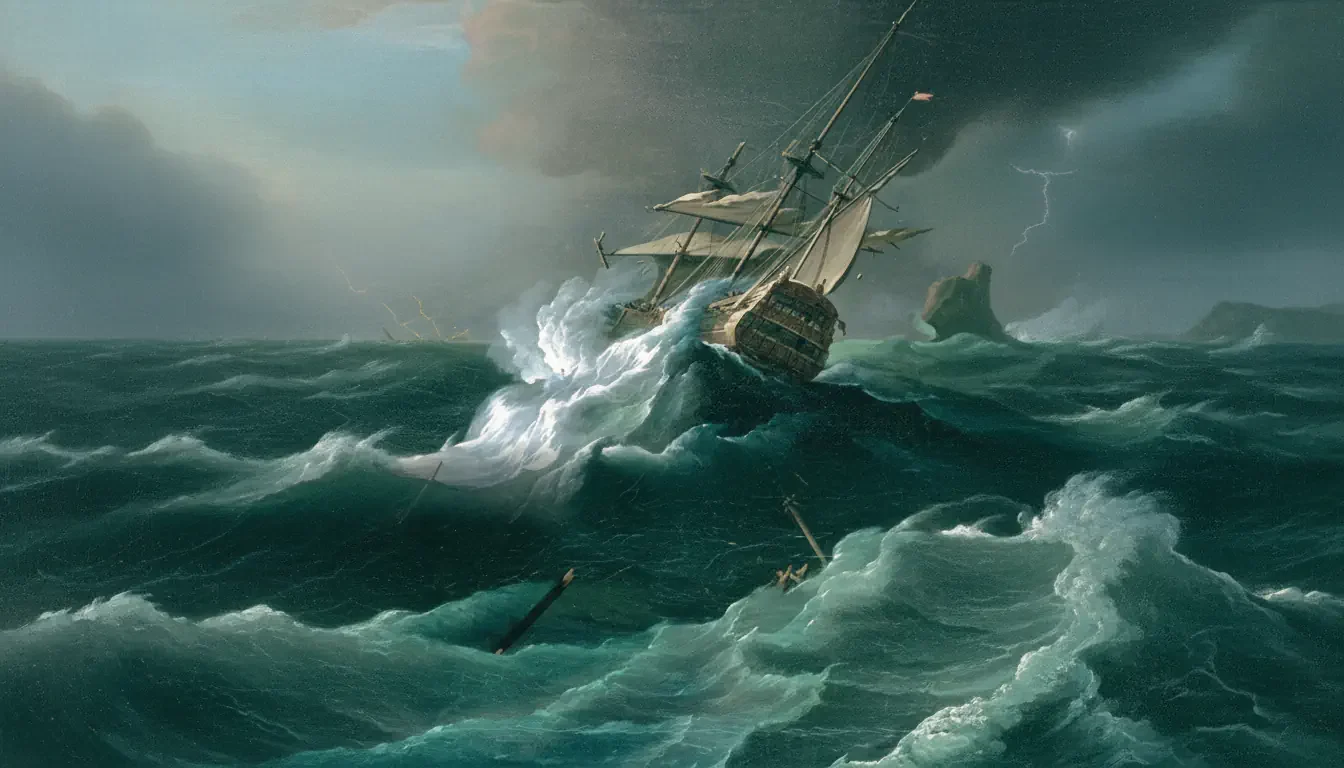
The Wager: A Tale of Shipwreck, Mutiny and Murder is more than just a historical account; it is a masterclass in narrative tension and an unflinching examination of human nature pushed past its breaking point. From the moment the first ramshackle vessel washes up on the coast of Brazil in 1742, bearing thirty skeletal survivors, you are hooked. They arrive as heroes, yet their story is immediately overshadowed by the arrival of a second, even more decrepit craft six months later, carrying three men with a radically different, terrifying account.
This book by David Grann is a grand tale of survival and deceit. It takes a remarkable true story—the wreck of His Majesty’s Ship the Wager during a secret mission against the Spanish—and transforms it into a mesmerizing, fast-paced investigation. The central question is life-or-death: Who is telling the truth? And more profoundly: What is ‘truth’ when men are stripped of civilization and fighting for their lives?
A Spoiler-Free Look at The Wager
The brilliance of The Wager lies in its structure. Grann establishes the initial world of the British vessel in 1740—a rigid hierarchy on a secret mission to capture the Spanish treasure-filled galleon known as “the prize of all the oceans” during the imperial war with Spain. The sheer complexity and tension of life on a warship during this era are meticulously detailed, setting a high bar for historical accuracy that rivals the best maritime fiction.
The disaster, the shipwreck on a desolate island off the coast of Patagonia, and the ensuing struggle for survival are harrowing. However, the true narrative genius emerges in the second half. This isn’t just a survival story; it’s a legal thriller, driven by the contradictory testimonies and the resulting court martial. This transition from a primal fight against nature to a sophisticated battle of wits and perception elevates the book far beyond typical historical nonfiction.
David Grann’s Signature Approach: As in his other best-selling works, Grann doesn’t just chronicle history; he immerses the reader in the hidden world of his subjects, revealing the deeply human drama behind the historical facts.
The Core Plot: What is The Wager About?
The saga of His Majesty’s Ship the Wager begins with a mission of national importance, but it quickly devolves into a desperate struggle. After the wreck, the crew—now castaways—are marooned for months. As starvation sets in and hope dwindles, the tight naval discipline dissolves.
- The Heroic Narrative: The thirty men who land in Brazil claim to have performed a miraculous feat of seamanship, building a flimsy craft and traversing nearly 3,000 miles of storm-wracked seas. They are initially celebrated as heroes.
- The Counter-Narrative: The three men who arrive later in Chile brand the first group not as heroes, but as mutineers. They accuse the thirty of abandoning their senior officers after falling into anarchy on the island.
- The Defence: The initial group responds with equally damning countercharges, claiming they fled a tyrannical and murderous senior officer and his henchmen.
The stage is set for a dramatic showdown at the Admiralty court martial. With accusations of treachery and murder flying, the stakes couldn’t be higher—whomever the court found guilty could hang. The reader is tasked, alongside the court, with sifting through biased testimonies and fractured memories to piece together the terrifying truth of what happened in the barren wilderness.
Analysis: The Major Themes of The Wager
The book’s compelling plot serves as a vehicle for profound thematic exploration:
- The Unraveling of Order: From Discipline to Anarchy: Grann brilliantly shows how the rigid class and military structure of the 18th-century British navy offered the illusion of order. Once that structure is removed by the wreck, the descent into anarchy is swift and brutal, illustrating the fragile nature of civilization.
- Truth vs. Survival: The Ultimate Moral Wager: The court martial is a masterstroke because it’s not just a legal proceeding—it’s a moral battle. The book forces the reader to confront the ethical compromises made for the sake of survival. Can an act be deemed ‘mutiny’ if it was necessary to escape a murderous environment? The book’s title, The Wager, itself refers to the desperate bet each survivor makes on their version of events.
- The Psychological Toll of the Extremes: The narrative delves deep into the human behavior at the extremes—the paranoia, the megalomania of the senior officer, and the psychological breaking points of the ordinary sailors. It’s a chilling reminder of how quickly desperation can turn men against one another.
Echoes of Literary Classics and Genre Mastery

Part of The Wager‘s appeal is how it connects to established genres while simultaneously redefining them:
- Rivaling Patrick O’Brian and the Maritime Epic: Grann’s recreation of the complex, dangerous hidden world on an 18th-century British warship is so detailed and palpable that it fully competes with the world-building of great historical novelists like Patrick O’Brian.
- Survival Writing: Standing Up to The Endurance: The months the castaways spent marooned, facing constant threat and starvation, are recounted with an immediacy that stands up to the classics of survival writing, most notably the accounts of Shackleton’s voyage aboard The Endurance. (See our review of The Endurance for a deeper look at classic survival tales.)
- The Court Martial: A Scott Turow Thriller: The final section, the high-stakes legal drama of the Admiralty trial, has the procedural savvy and narrative suspense of a top-tier courtroom thriller. The reader is held spellbound by the incredible twists, trying to determine who is telling the truth and who is lying for their life.
Answering Your Questions (FAQs & User Intent)
Who is the author of The Wager: A Tale of Shipwreck, Mutiny and Murder?
The author is David Grann, one of the foremost contemporary nonfiction writers. His previous works include The Lost City of Z and Killers of the Flower Moon, both of which were celebrated for their meticulous research and gripping narrative style.
Is The Wager based on a true story?
Yes, The Wager is based entirely on a true story. It meticulously details the historical event of the British naval vessel, His Majesty’s Ship the Wager, which sank off the coast of Patagonia in 1741, and the ensuing controversy and court martial involving the survivors.
What is the main conflict in The Wager?
The main conflict is a direct, life-or-death disagreement between the two groups of survivors. It is the clash between the initial group’s narrative of heroism and the second group’s accusation of mutiny, with the Admiralty forced to adjudicate.
How does the court martial in The Wager resolve the conflict?
The court martial serves to legally determine guilt or innocence regarding the charge of mutiny. The resolution is a fascinating and complex moment in naval history, forcing a ruling on how extreme duress impacts the law. The threat that the guilty could hang makes the entire process incredibly tense.
What are the major themes explored in The Wager?
The major themes include: the corrosive nature of power in isolation, the fragility of social class and order, the slipperiness of truth under duress, and the dark limits of human endurance and morality.
The Verdict: Is The Wager Worth Reading?
Unreservedly, yes. The Wager book review consensus is clear: David Grann has delivered another masterpiece of historical nonfiction. He takes a forgotten corner of history—the wreck of The Wager ship and the resulting trial—and extracts a universal, timeless drama. The incredible twists of the narrative truly hold the reader spellbound.
This is not just a book to be read; it is an experience that lingers. It asks: Who do you believe? And what would you do?
Who is this book for?
- Fans of David Grann: If you loved Killers of the Flower Moon, you will appreciate Grann’s return to a detailed historical investigation with cinematic tension.
- History Buffs: Specifically those interested in maritime history, 18th-century naval life, or the true story of survival at sea.
- Readers of Thrillers: Despite being nonfiction, the back-and-forth testimony and high stakes of the court martial give it all the satisfying tension of a legal or survival thriller.
- Anyone seeking the best survival nonfiction books: This book is an instant classic in the genre.

Final Score and Recommendation: 5/5 Stars. The Wager is a must-read for any reader who appreciates masterful storytelling based on true events. It earns its place among the best historical nonfiction of the decade. (Check out the official Goodreads page for more reader reviews.)


