

Why a simple street game tells you so much about teamwork, trust, and a bit of Disney magic
There is something undeniably joyful about watching two people riff off each other while trying to win a small, silly prize. Moments like that reveal how we communicate, how we solve problems together, and how much a little encouragement can change the outcome. The setup is delightfully straightforward: three quick challenges, light-hearted tension, and iconic Disney prizes. But beneath the playful surface are useful lessons about collaboration and compatibility that anyone can use—whether you are a couple, a pair of friends, or teammates at work.
What the game looks like
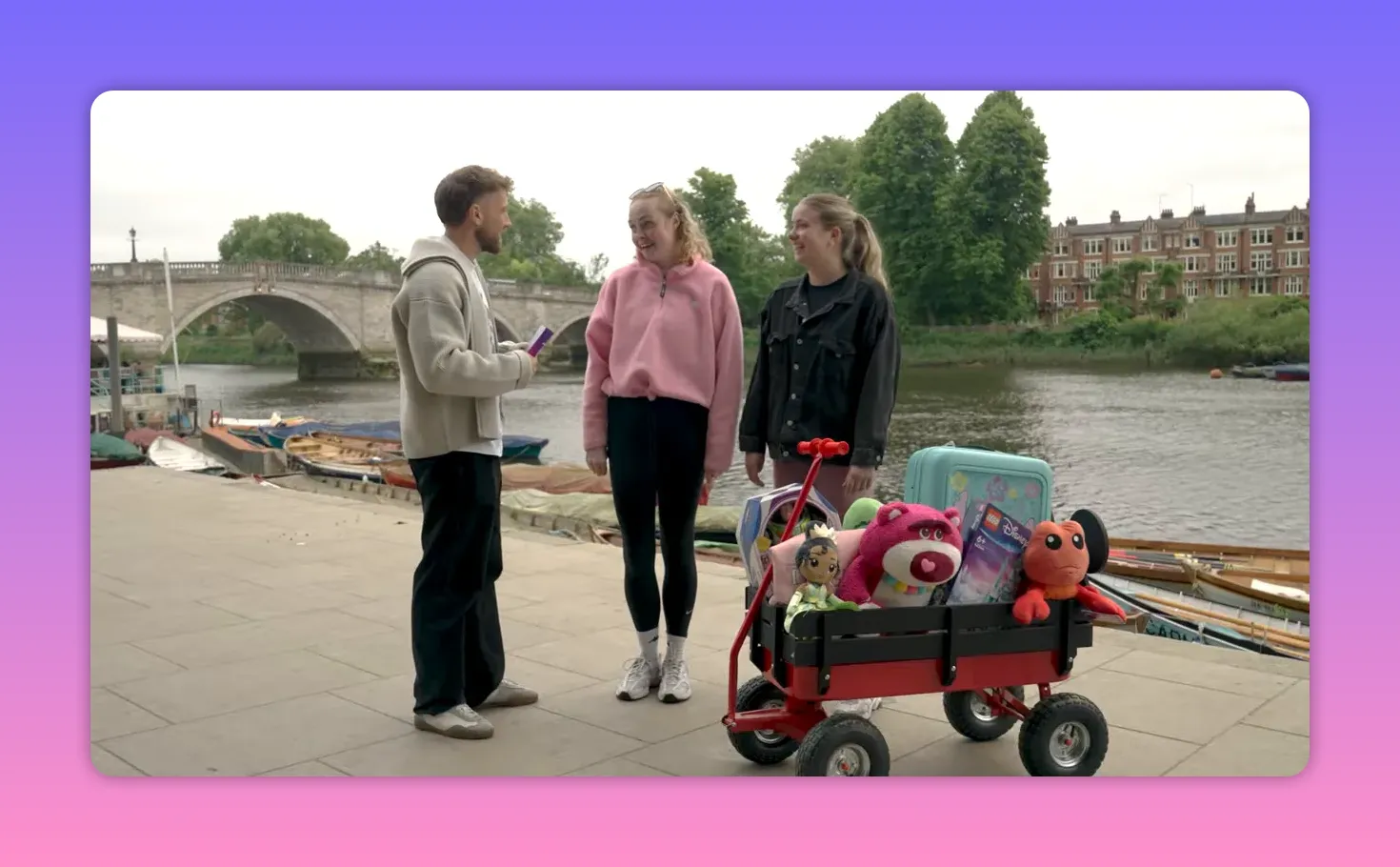
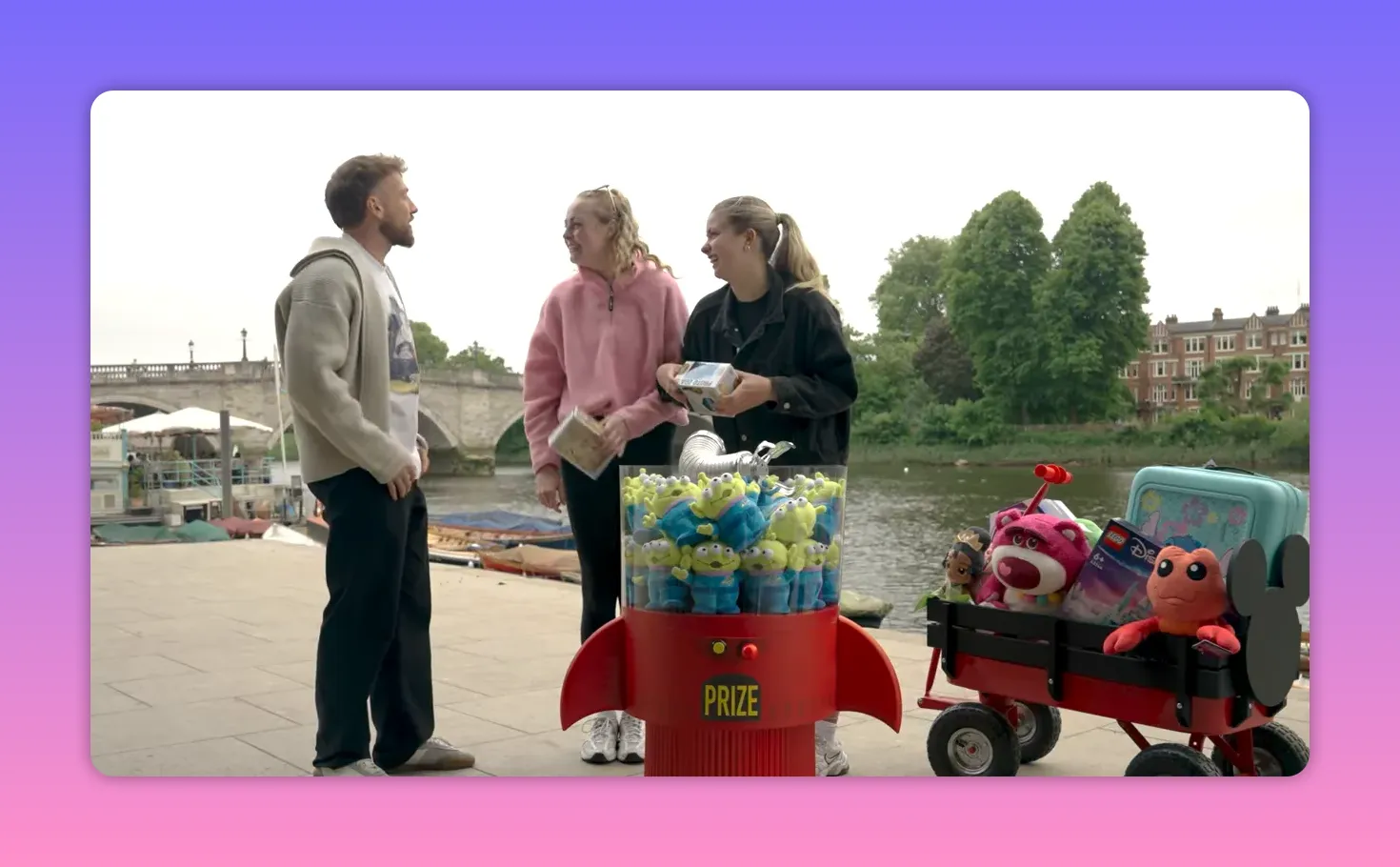
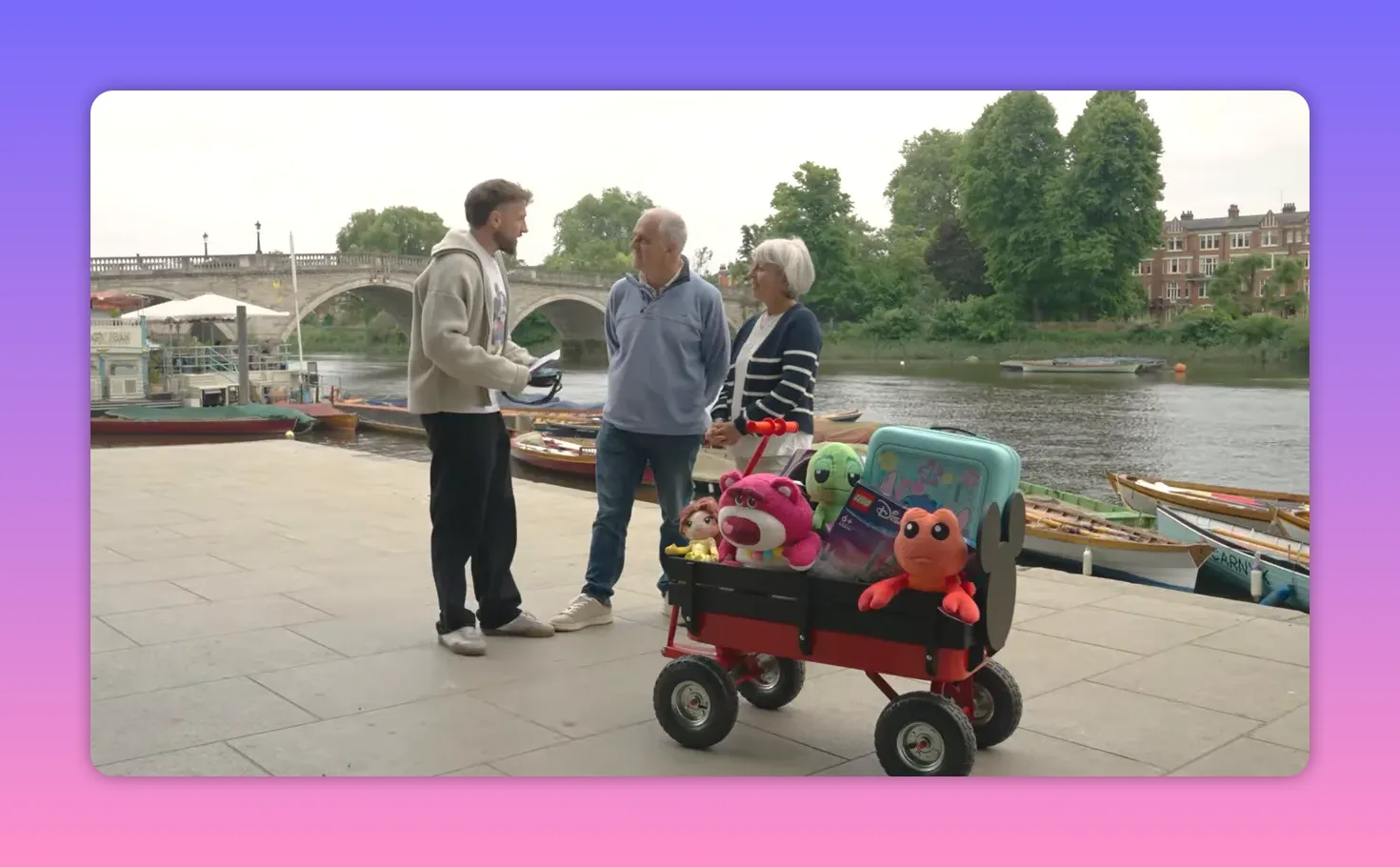
The format is elegant in its simplicity. Two people pair up and attempt three short challenges. Complete all three and you win your pick of themed prizes: think Buzz Lightyear, Woody, Frozen dolls, or collectible Funko Pops. The challenges test distinct, practical skills:
- Communication and directional precision — The Claw
- Tactile recognition and shared intuition — It’s a Small World
- Emotional synchrony and instinctive decision-making — Let It Go
Each round is fast, playful, and crafted to spotlight different types of connection. The goal is not only to win the prize but to showcase how pairs operate under pressure and constraints like blindfolds and no physical contact.
Challenge 1: The Claw — How to guide when your partner is blindfolded
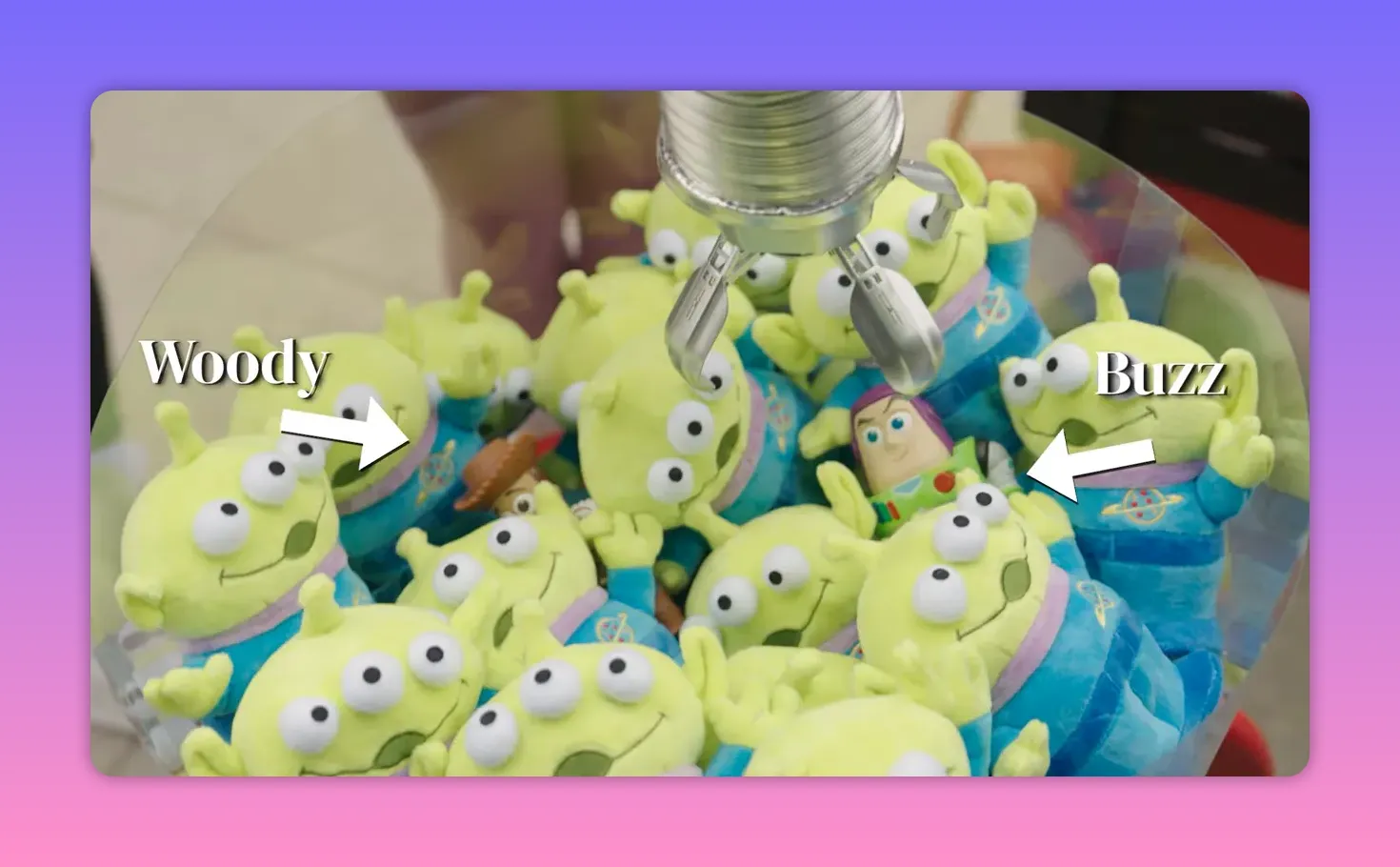
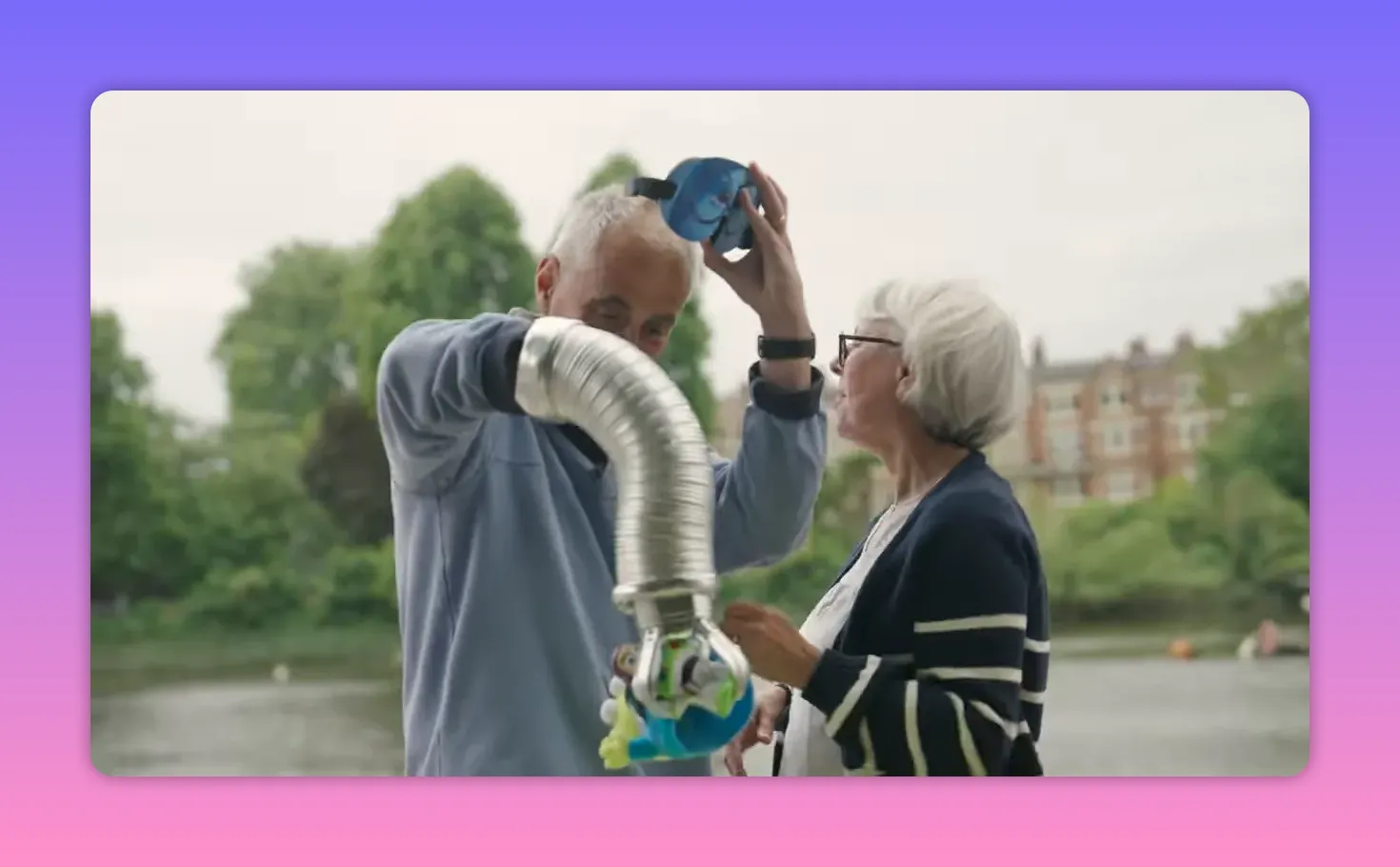
The first task gives one partner a mechanical claw while the other becomes the navigator. The claw-handler wears a blindfold and relies entirely on shouted directions from their teammate. There is a strict no-touching rule, one minute on the clock, and specific targets like Buzz or Woody to grab.
What makes this challenge compelling
At its heart, this exercise is a test of concise communication, situational awareness, and trust. The caller must translate a three-dimensional problem into simple, actionable commands. The claw operator must translate those words into precise motor actions without the comfort of sight.
Practical tips to win the claw
- Agree on a directional shorthand before starting. Use short, specific commands such as “three steps forward,” “twist right,” or “claw down.” Keep language consistent so the blindfolded partner does not have to interpret synonyms on the fly.
- Prioritize landmarks in the scene. Calling out “toward the alien” or “past the green cup” is faster than “a bit more to the right,” because it ties movement to a visible object the caller can see and the handler can learn to aim for.
- Limit commentary while the handler is moving. Constant overlays of encouragement can create noisy input. Callers should be quiet during the action and save longer commentary for the brief pauses when the claw is stationary.
- One command at a time. Avoid stacked instructions like “forward, then left, then down.” Deliver single, clear steps and wait to confirm movement before issuing the next.
- Use counting cues for fine adjustments. If the handler needs to move half a hand’s width, try “one inch” or “one tick” as a repeatable measurement for the pair to internalize during practice.
- Stay calm under the clock. A hurried voice often leads to rushed, imprecise motion. Slow, confident guidance is better than frantic volume.
Success in this round is less about raw skill and more about a well-rehearsed communication system. Teams that take 30 seconds to set a shorthand usually perform better than those who shout long, creative descriptions.
Challenge 2: It’s a Small World — Recognize, feel, and think as one

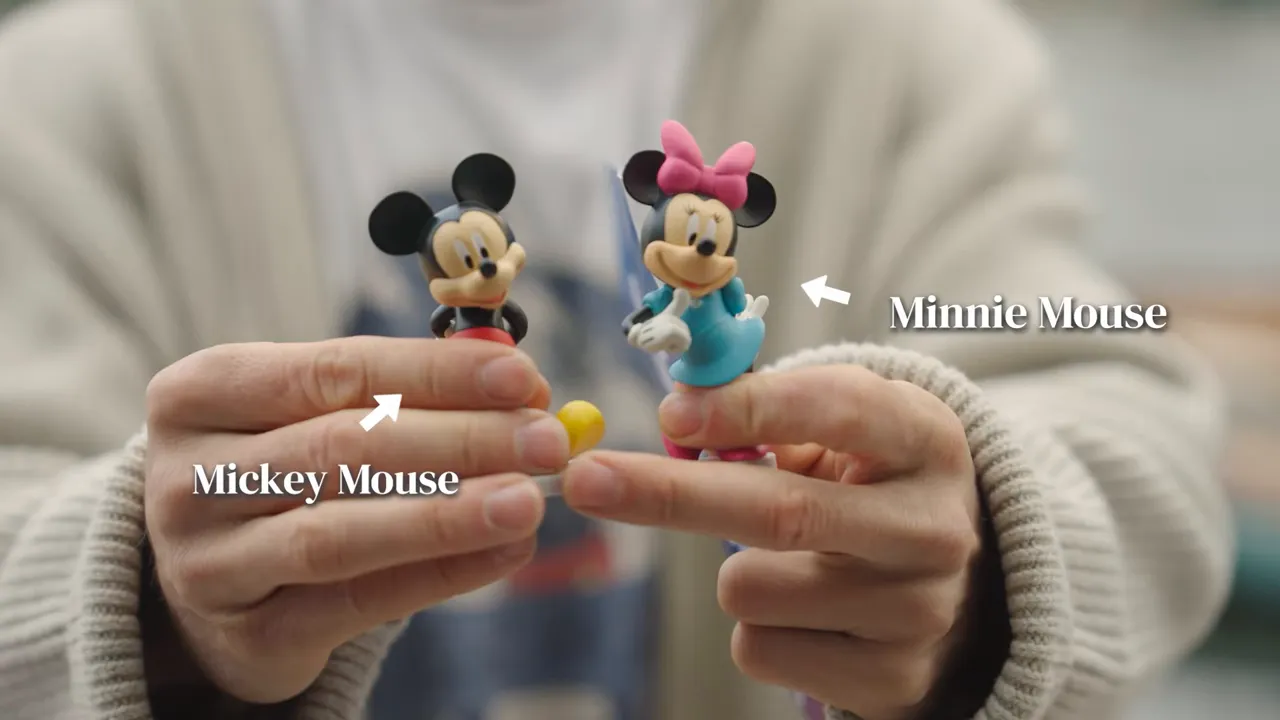
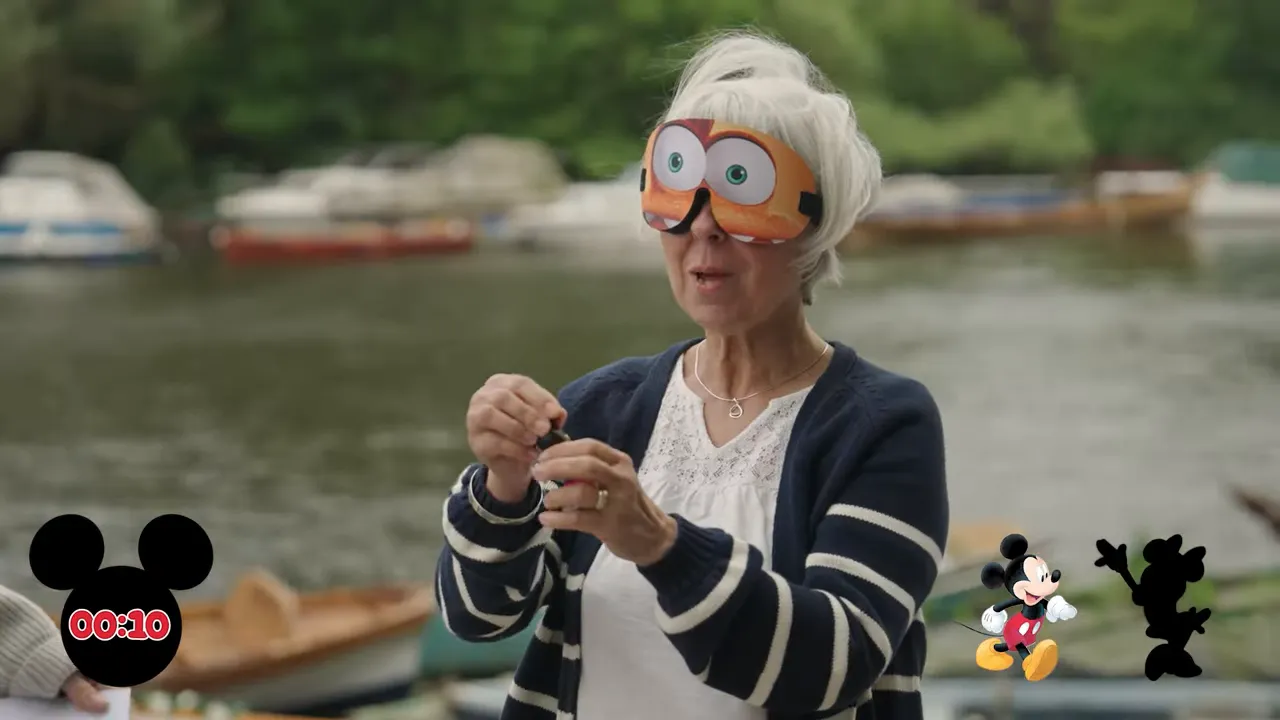
This round asks both participants to be blindfolded and handed figurines. Each person must identify their figurine using only touch. To win, both must identify correctly. No peeking. No hints. A tactile test becomes a metaphor for how well two people “sync” when one of the usual senses is removed.
Why the tactile round reveals compatibility
Tactile recognition forces partners to slow down and rely on nonverbal cues. It is an exercise in focus, memory, and the ability to translate sensory input into vocabulary both people share. When both players instantly name the characters, it signals shared cultural references and similar mental models. It also highlights patience; fumbling, hurried handling leads to misidentification.
How to improve at tactile recognition
- Practice with a small set of familiar objects. Start with toys, utensils, or textured objects. Close your eyes and identify them by touch alone. The more you practice, the better your muscle memory and associative labeling become.
- Develop shared naming conventions. If one person calls a hat a “cap” and the other uses “hat,” confusion can creep in. Agree on labels for common features to speed identification.
- Use descriptive prompts. While not allowed in the challenge, practicing with prompts like “describe shape,” “note texture,” and “count appendages” helps build an internal checklist.
- Slow down the exploration. Touch each distinct area in order: base, torso, head, accessories. Systematic scanning beats random fumbles every time.
- Hone awareness of proportions. Recognizing relative sizes—like a large hat versus a small hat—can distinguish characters fast.
When both partners can reliably identify the same toy, it often reflects more than practice: it shows shared frames of reference. Two people grew up with the same characters, or they have the same go-to heuristics for identifying objects. That alignment reduces guesswork under pressure.
Challenge 3: Let It Go — The compatibility test disguised as a game
Hold hands, close your eyes, and then one count to three. When the cue arrives, each person either holds on or lets go. If both do the same thing, they win. If one holds while the other releases, they lose. It is short, merciless, and surprisingly revealing.
What this test measures
It measures instinctual alignment rather than reasoned agreement. There is no negotiation; no time to plan. The outcome reveals how in tune two people are when forced to make split-second, mirrored decisions. It is less a measure of love and more a measure of reflexive synchrony.
How to increase your odds
- Agree on a default when asked to play similar quick-choice games. If you decide beforehand to “always hold,” then split-second decisions will align. But the challenge often forbids pre-agreement, so consider the next tips.
- Practice quick cues. Try a similar exercise in the kitchen: hold hands, blink once, and decide to squeeze or release on the blink. Practicing this builds conditioned synchrony.
- Mirror body language in daily interactions. Couples and partners who naturally mirror each other tend to mirror inside the challenge, too. Notice how you both breathe, where you place your hands, and how you react to small stimuli.
- Trust your gut. Overthinking a one-second decision increases the chances of divergence.
“Do you love each other?”
That cheeky prompt is the header for the Let It Go round, but the real insight comes from watching two people act without deliberation. When they match, there is joy, relief, and a quick, mutual high-five of shared instinct.

Three design lessons from a playful game
Beyond the immediate fun, this set of mini-games is a compact example of good activity design. If you ever need to run an icebreaker, plan an event, or design a team-building exercise, these three lessons are worth stealing.
1. Vary the constraints to surface different skills
Each challenge removes or alters a different resource: sight, speech, and time for deliberation. That variety ensures multiple facets of partnership are tested. A well-rounded activity doesn’t ask participants to do the same thing three ways; it asks for three distinct competencies.
2. Keep rounds short and stakes clear

With one-minute windows and immediate feedback, engagement stays high. Short rounds reduce anxiety and increase the chance that people will try rather than freeze. Clear rules mean participants can focus on execution instead of parsing logistics.
3. Make the reward tangible and desirable
Simple rewards—collectible toys or branded items—add playful motivation. The prize does not have to be monumental; it has to be meaningful to the audience. A themed plush or Funko Pop hits the sweet spot: instantly coveted, instantly shareable on social channels, and perfectly proportional to the effort required.
How to recreate these challenges at home or at an event
Hosting these games at a party or among colleagues is cheap, easy, and guaranteed to generate laughs. Here is a practical blueprint to set up each challenge and tailor it for different settings.
The Claw — DIY edition
- Materials: A small mechanical claw (arcade claw toy or remote-controlled grabber), a table, several target toys or trinkets, blindfold.
- Setup: Scatter toys on the table. Mark a starting line for the claw operator. The other person stands behind the table as the caller and cannot touch the operator.
- Rules: Blindfold on the operator. One minute to grab a target. No touching. Caller can speak only.
- Accessibility tip: If the claw is physically difficult for some players, substitute with verbal-only guidance to retrieve a visible item on a shelf.
It’s a Small World — DIY edition
- Materials: A set of small figurines or distinct objects, blindfolds.
- Setup: Two players, both blindfolded, each receive one object in their hand.
- Rules: Use only touch and descriptive language internally. Both must name their item correctly to win.
- Variation: For larger groups, create teams and rotate. Add a memory round where each team member must later select a matching object from a mixed set.
Let It Go — DIY edition
- Materials: None required. Players hold hands or touch a common object.
- Setup: Players close their eyes and prepare to respond on a verbal cue.
- Rules: On cue, each person chooses to hold on or let go. Matching choices win. Repeat best-of-three for longer play.
- Safety tip: Make sure participants are comfortable with physical contact. Allow a no-contact variant where they each hold a strap or ribbon instead.
Team-building applications beyond play
These mini-challenges are fun, but the principles translate directly into professional and personal development exercises. Use them to:
- Improve remote team’s verbal precision. Replace the mechanical claw with a virtual cursor task where one person instructs the other to click points on a map.
- Develop tactile empathy for professions that rely on touch, such as healthcare or craftsmanship.
- Strengthen rapid decision-making in leadership workshops by using Let It Go as a calibrated trust exercise.
Exercises to run with teams
- Directional Relay. Create a course with obstacles. One blindfolded person navigates the course while the caller gives only two-word directions. Rotate roles and score based on time and accuracy.
- Tactile Memory Chain. Blindfold teams and pass objects sequentially. After several passes, each team must identify the original object order. This sharpens focus and shared mental models.
- Synch Sprint. Pairs must perform four quick binary choices in sequence (e.g., clap or snap). Pairs that match all choices fastest win. This measures pattern recognition and instinctive alignment.
Psychology behind synchronous behavior
Why do some pairs mirror each other so effortlessly? Why do strangers sometimes instinctively sync while long-term partners miss the mark? A few psychological mechanisms explain this phenomenon:
- Mirroring and empathy. People who unconsciously mimic each other’s posture, speech rhythms, or facial expressions typically report greater rapport. This automatic mirroring reduces cognitive load when making split-second choices.
- Shared mental models. Teams that have common assumptions about problem solving will reach similar choices faster because their mental heuristics align.
- Mutual prediction. Partners who accurately predict each other’s responses have often built that capability through previous interactions, which means they need fewer explicit signals in new situations.
- Emotional contagion. Positive energy is contagious. Encouragement and warmth are not just morale boosters; they literally change how people process risk and uncertainty.
These mechanisms are trainable. Regular, low-stakes exercises that encourage alignment help partners become more predictable to each other.
Practical strategies for couples or pairs who want to get better
If you want to be the duo who always matches each other, try these easy drills. They require no equipment and can be integrated into daily life.
- Mirror walks. Walk together and mirror each other’s pace and gestures for ten minutes. Notice how this increases nonverbal understanding.
- Quick-choice games. Play 10 rounds of binary choices (rock or paper? left or right?). Track how often you match and aim to improve the percentage by 5% each week.
- One-word descriptions. Pick a random object and each describe it in one word. Compare language; repeat until your words converge.
- Silent coordination tasks. Try tasks like folding laundry together without speaking. This improves implicit coordination and timing.
How to choose prizes that matter
Prizes are more than tokens. They create lasting memories tied to the activity. Here are key factors to consider when selecting a reward:
- Relevance. The item should resonate with participants. Themed toys or collectibles from beloved franchises work well because they trigger nostalgia and fandom.
- Shareability. Small, photo-ready prizes encourage social sharing, which amplifies the event beyond the room.
- Proportionality. The prize value should match the effort. Small wins for quick tasks create frequent dopamine hits; huge prizes for trivial games can feel disproportionate.
- Inclusivity. Offer choices so winners can pick something meaningful—one person might prefer a Funko Pop, while another picks a cuddly plush.
Accessibility and safety considerations

These challenges are fun, but thoughtful planning keeps them inclusive.
- Provide alternatives to blindfolding for people who are uncomfortable with sensory deprivation. Use virtual barriers or partitions instead.
- Consider mobility limits. Adjust the Claw so the operator can be seated and the targets moved within comfortable reach.
- Obtain consent for physical contact. Let participants opt out of hand-holding and offer substitutes like holding onto a shared ribbon.
- Ensure clear language in rules. Participants with hearing or cognitive impairments may need written instructions or an audio amplification option.
What this says about relationships, in plain terms
Games like these are delightful microcosms of everyday interaction. They reveal:
- How you manage uncertainty together. Do you panic and contradict each other, or do you form a plan and execute it? The answer often mirrors how you handle diapers, deadlines, or home improvements.
- Whether your mental shortcuts line up. Shared language and cultural touchstones reduce friction in choices and interpretations.
- How you respond emotionally. Calm encouragement tends to draw better outcomes than strained optimism or sarcasm.
Those who work well in a sixty-second, blindfolded toy-grab are often people who have practiced small acts of coordination and patience for years. The game is not a magic test of love; it is an accelerated snapshot of partnership habits.
Stories and small wins: why the tiny moments matter
There is a reason people clap and cheer when a team grabs a toy or matches a quick choice. Those small victories carry disproportionate emotional weight. They turn an otherwise ordinary stroll through a town square into a memory you retell later. An alien figurine won in a minute becomes an inside joke. A perfectly synced Let It Go round becomes a story you tell family members at dinner.
Winning is not always about the prize. It is about the burst of shared triumph, the visible proof that two people can coordinate under pressure, and the simple pleasure of succeeding together.
Sample schedule to run a 30-minute team event using these games
- Warm-up (5 minutes) — Quick icebreaker: name one favorite childhood toy.
- Round 1: The Claw (8 minutes) — Four pairs, two-minute slots including setup. Debrief: what shorthand worked?
- Round 2: It’s a Small World (7 minutes) — Two blindfolded trials per pair. Debrief: how did your approach to touch change after the first attempt?
- Round 3: Let It Go (5 minutes) — Best of three for each pair. Debrief: did you pre-plan, or did you react?
- Closing (5 minutes) — Share one takeaway and award small prizes.
Common mistakes and how to avoid them
- Over-explaining. When the caller in the Claw gives long-winded directions, the handler freezes. Keep instructions short and sequential.
- Rush-touching. In the tactile round, hurried hands translate to incorrect guesses. Slow, deliberate exploration wins more often.
- Telegraphing decisions. In Let It Go, subtle cues like muscle tension or pre-sighs give away choices and break the spirit of spontaneity. Keep faces neutral until the cue.
- Mismatch of stakes. If prizes are too small or too big relative to the game, participants either do not engage or feel excessive pressure. Aim for balanced incentives.
How to keep the fun going after the win
Winners love to celebrate, but the brightest part of these games is how easily they lead into shared experiences. Here are simple ways to extend the joy:
- Create a trophy wall. Snap photos of winners with their prizes and add them to a display board or social feed.
- Turn the prizes into storytelling prompts. Ask winners to share why they picked the item. Often a surprising backstory emerges.
- Make a series. Run a weeklong tournament where different pairs compete daily and accrue points.
What are the rules for the three challenges?
The Claw: One partner is blindfolded and operates a claw while the other gives verbal directions only. No touching allowed. One minute per attempt. It’s a Small World: Both partners are blindfolded and handed figurines; players must identify their figurine by touch alone. Both must be correct to win. Let It Go: Partners hold hands (or a shared object) and close their eyes. On a verbal cue, each person either holds or releases. Matching actions win.
What skills do these games test?
They test communication precision, tactile recognition, split-second decision synchrony, and emotional composure. More broadly, they reveal how well partners form shared mental models and how they perform under time pressure.
Can these challenges be adapted for larger groups or remote teams?
Yes. For larger groups, run simultaneous stations and rotate pairs. For remote teams, adapt the Claw to a virtual cursor-navigation task and the tactile round to a memory exercise where participants describe items in a photo. Let It Go can become a rapid-fire polling exercise requiring matching answers.
Are there safety or accessibility considerations?
Always obtain consent for physical contact and offer a no-contact option. Provide alternatives to blindfolding for those who are uncomfortable. Make sure the setup accommodates mobility differences, and provide written or amplified instructions for participants with hearing impairments.
What prizes work best for these mini-challenges?
Small, thematic prizes that resonate emotionally work best: collectible figures, themed plush toys, or branded memorabilia. The prize should be meaningful but proportional to the effort required. Offering options helps ensure winners get something they truly value.
Final thought
Games like these are more than a carnival novelty. They are rapid, repeatable experiments in human coordination. They teach us how to communicate when senses are limited, how to build alignment with tiny shared codes, and how to celebrate rapid, low-stakes wins that build connection. The next time you want to break the ice or spice up a team meeting, try a trio of short challenges. The laughs come fast, the lessons stick, and the little prizes? They keep the memories alive.