

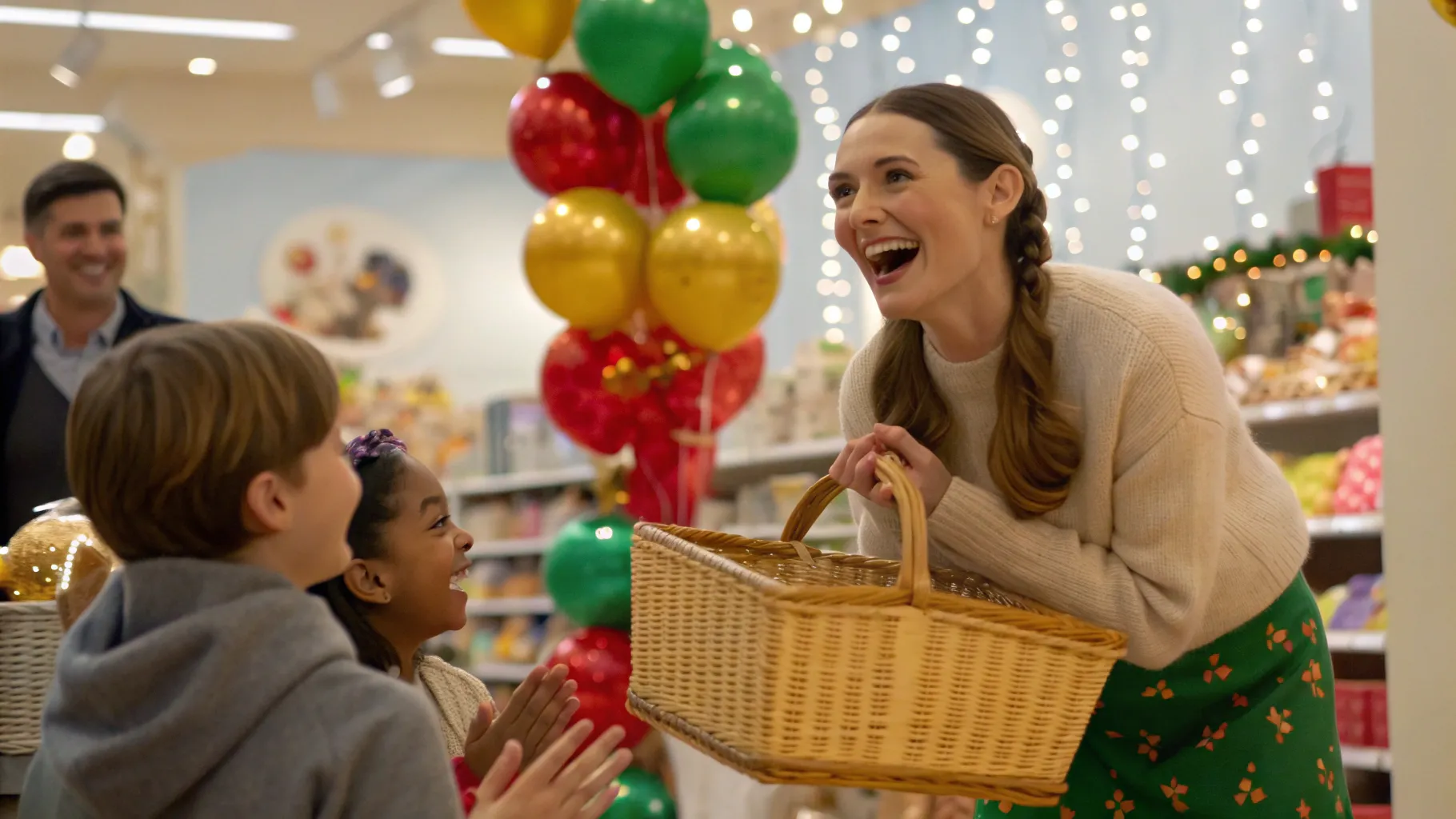
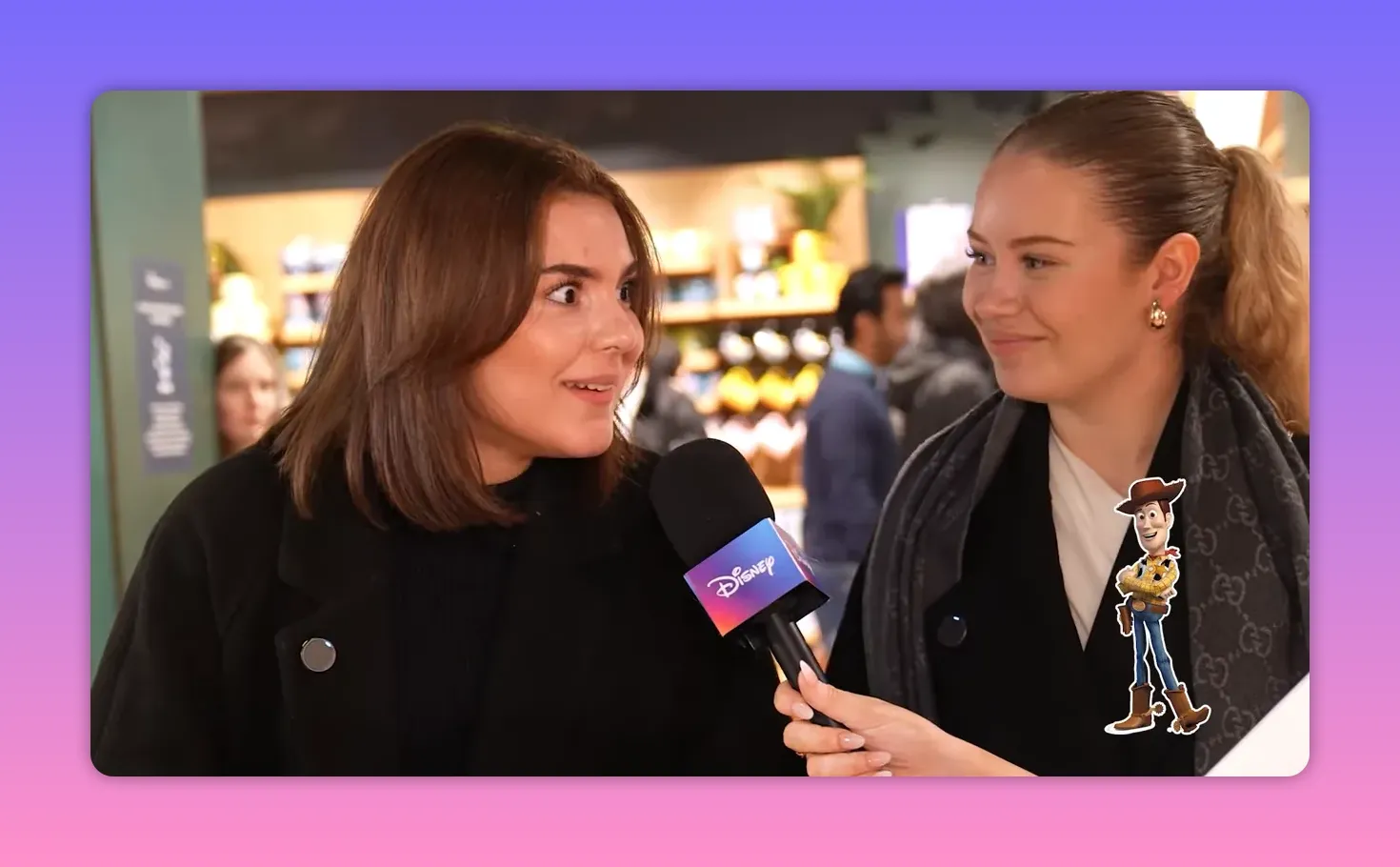
There are few things I love more than catching someone mid-shop and handing them a moment of unexpected magic. On the final day of a twelve-day celebration, I took to the shop floor with a basket, a handful of quick-fire Disney questions and a mission: to turn ordinary shopping trips into tiny unforgettable memories. What followed was laughter, panicked faces, brilliant guesses and a few shockingly accurate answers. That energy — chaotic, joyful and absolutely human — is the whole point.
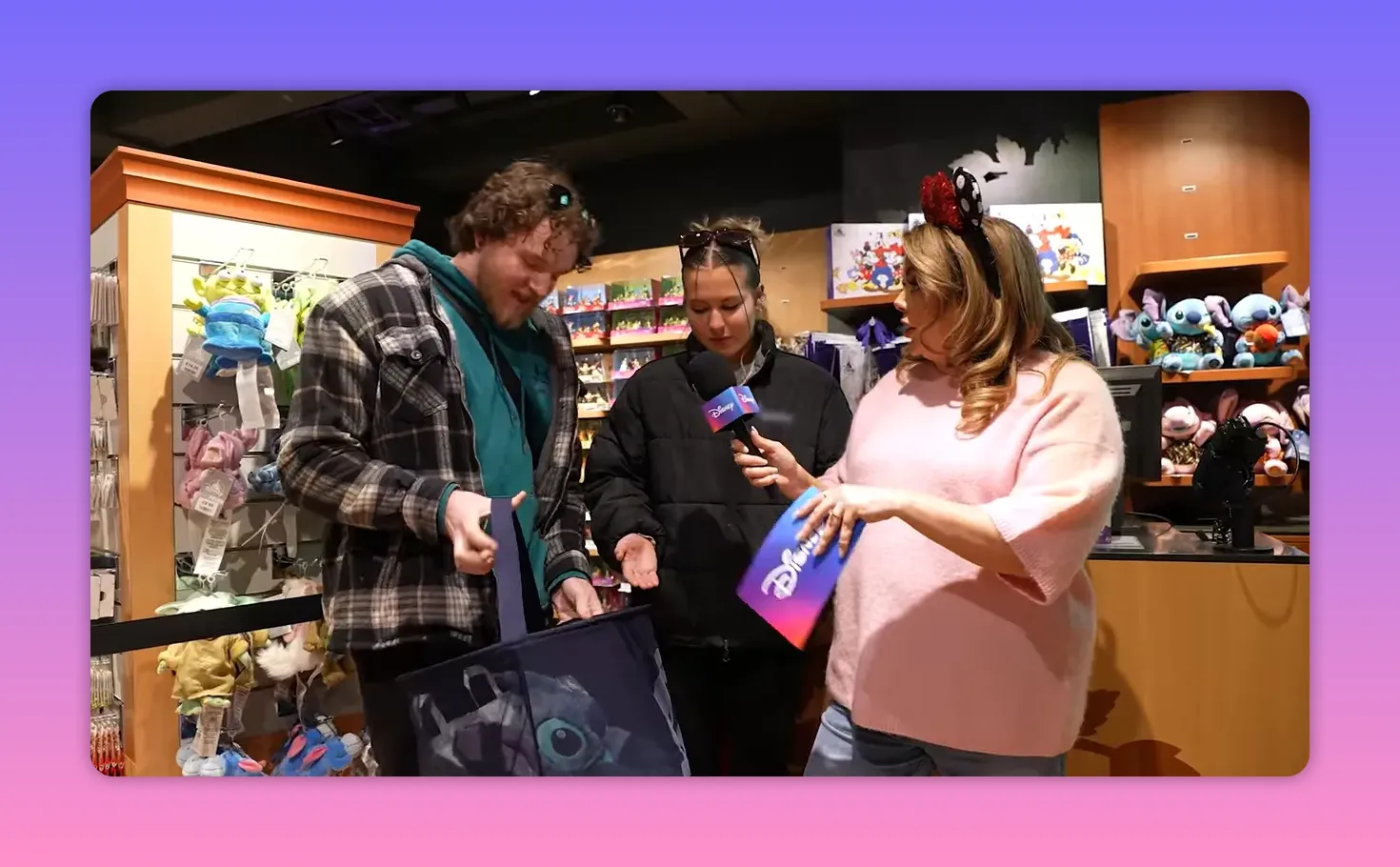
Why spontaneous moments matter
People come to stores with a list and a plan. Interrupting that routine with something playful does three big things. First, it gives people a reset; sudden, positive surprise triggers dopamine and makes the moment feel special. Second, it creates a shared memory — the kind people tell their friends about at dinner. Third, it humanizes brands. Whether it is a cheeky quiz about a classic character or a small giveaway, it reminds people there are people behind the counter who want to connect, not just transact.
I learned quickly that the specifics of the moment matter less than the delivery. Confidence and warmth are contagious. If you approach with 100 percent gusto — even when you actually feel 80 percent — people respond. That little nudge of enthusiasm can turn a “no thanks” into a beaming “yes, tell me!”
Designing a micro-game that works
Micro-games are short, easy-to-understand interactions you can run in a retail environment without blocking aisles or interrupting business. Here’s a simple blueprint that worked incredibly well while I was handing out questions around the store.
- One-sentence setup — Start with a clear, fun instruction. Keep it breezy and friendly: “Fancy a quick Disney quiz?”
- Three to five questions — Enough to make it feel like a proper mini challenge, but not so many that people feel trapped.
- Time pressure — A 10-second rule or a playful countdown adds excitement. It’s not stressful if you smile and laugh with people.
- Immediate reward — A shout of praise, a sticker, a small Disney token or entry into a giveaway is perfect. Instant positive feedback seals the memory.
- Fail-friendly atmosphere — Celebrate wrong answers as much as right ones. Laughter and surprise matter more than correctness.
Examples that proved the point
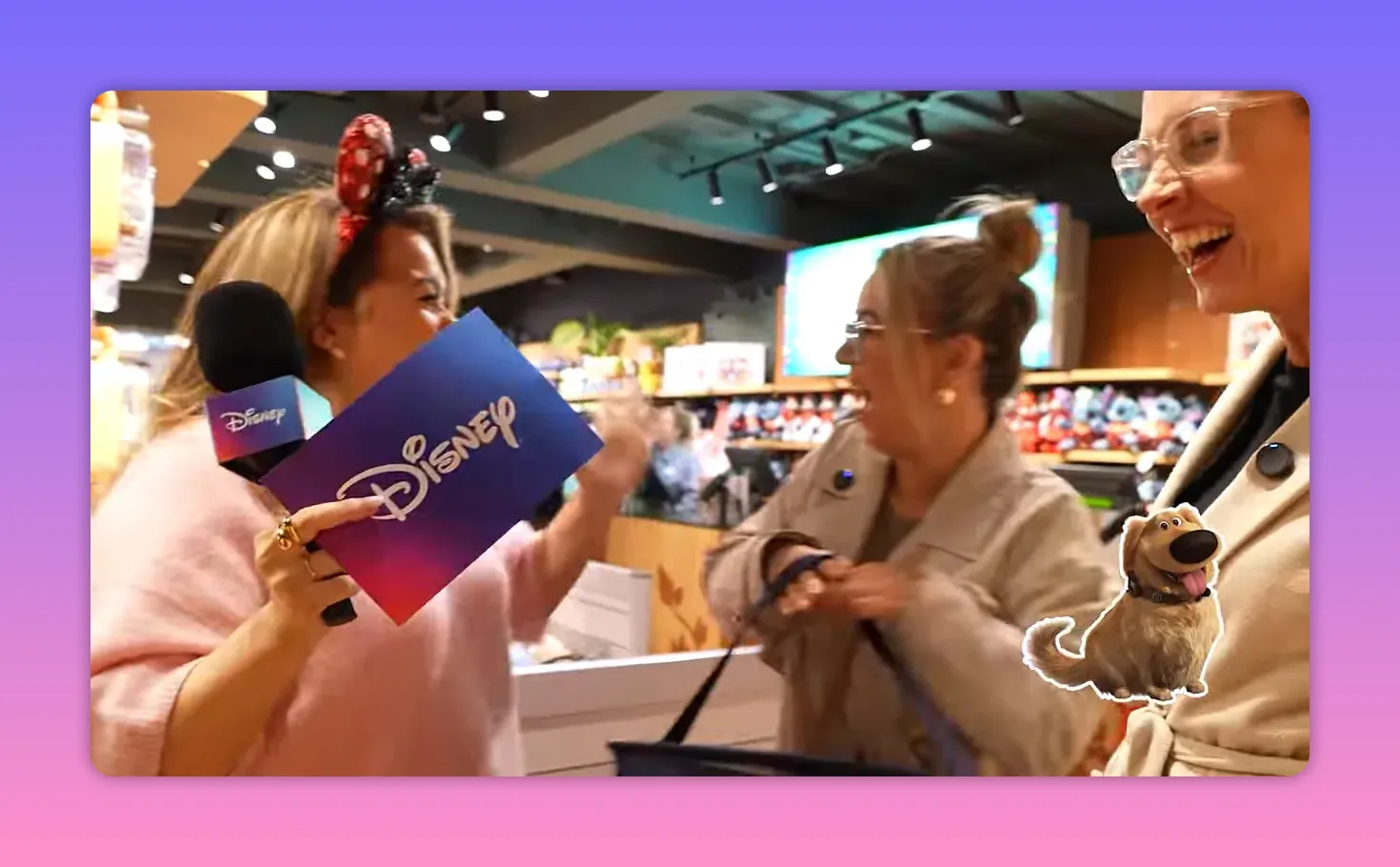
During the day I heard everything from confident one-word answers to delightfully offbeat guesses. The questions I used were intentionally simple and universal: things almost everyone who has grown up with Disney could recognise. They made the perfect bridge between strangers.
- “What does she give a spoonful of to make the medicine go down?” — A classic Mary Poppins question. The instant answer: sugar. You can see how quickly smiles unfold with answers like that.
- “How many fingers and thumbs does Mickey Mouse have on one hand?” — A seemingly trivial visual question that sparks instinctive answers. Most people shout four without overthinking it.
- Quick mimicry and call-and-response lines from The Lion King and other Disney moments landed brilliantly because familiarity breeds enthusiasm.
How personality fuels interaction
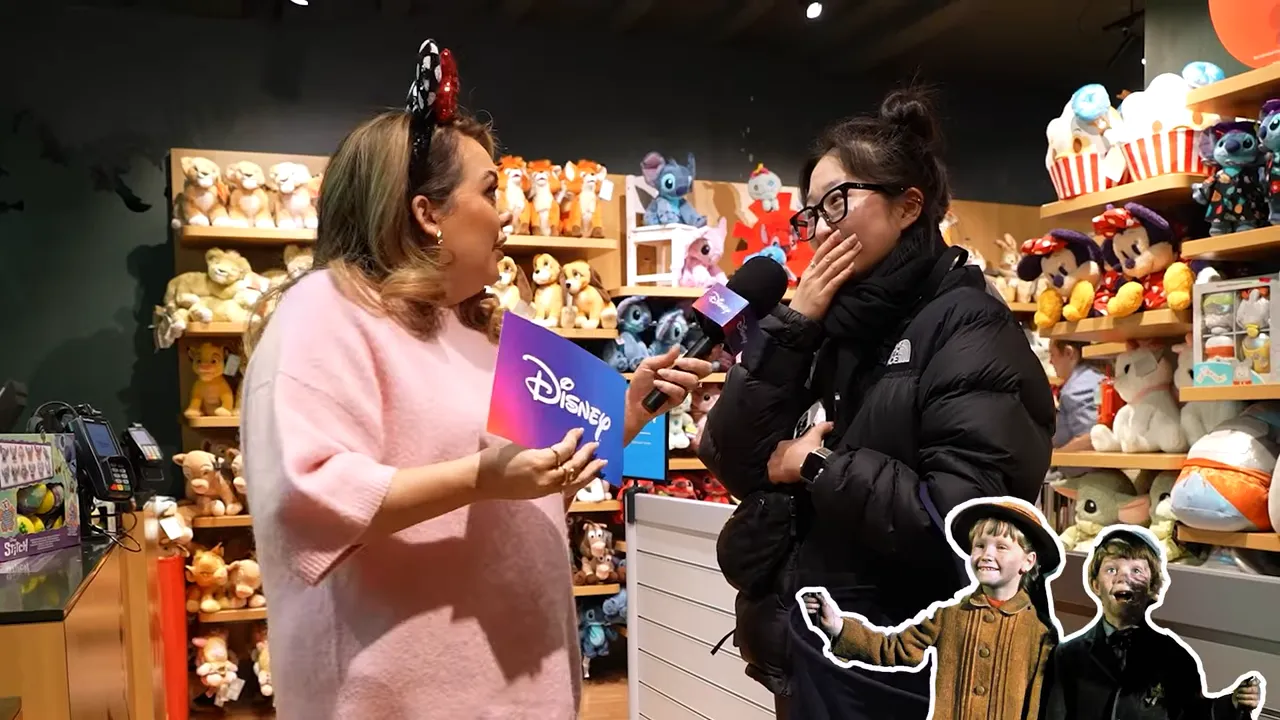
I purposely leaned into a playful, slightly chaotic energy. That tone invites people to let their guard down. When someone says they are “80 percent confident” and I crank it to “100 percent,” what I’m doing is handing them permission to be bold. People respond to being invited into a game — especially when that invitation is silly and safe.

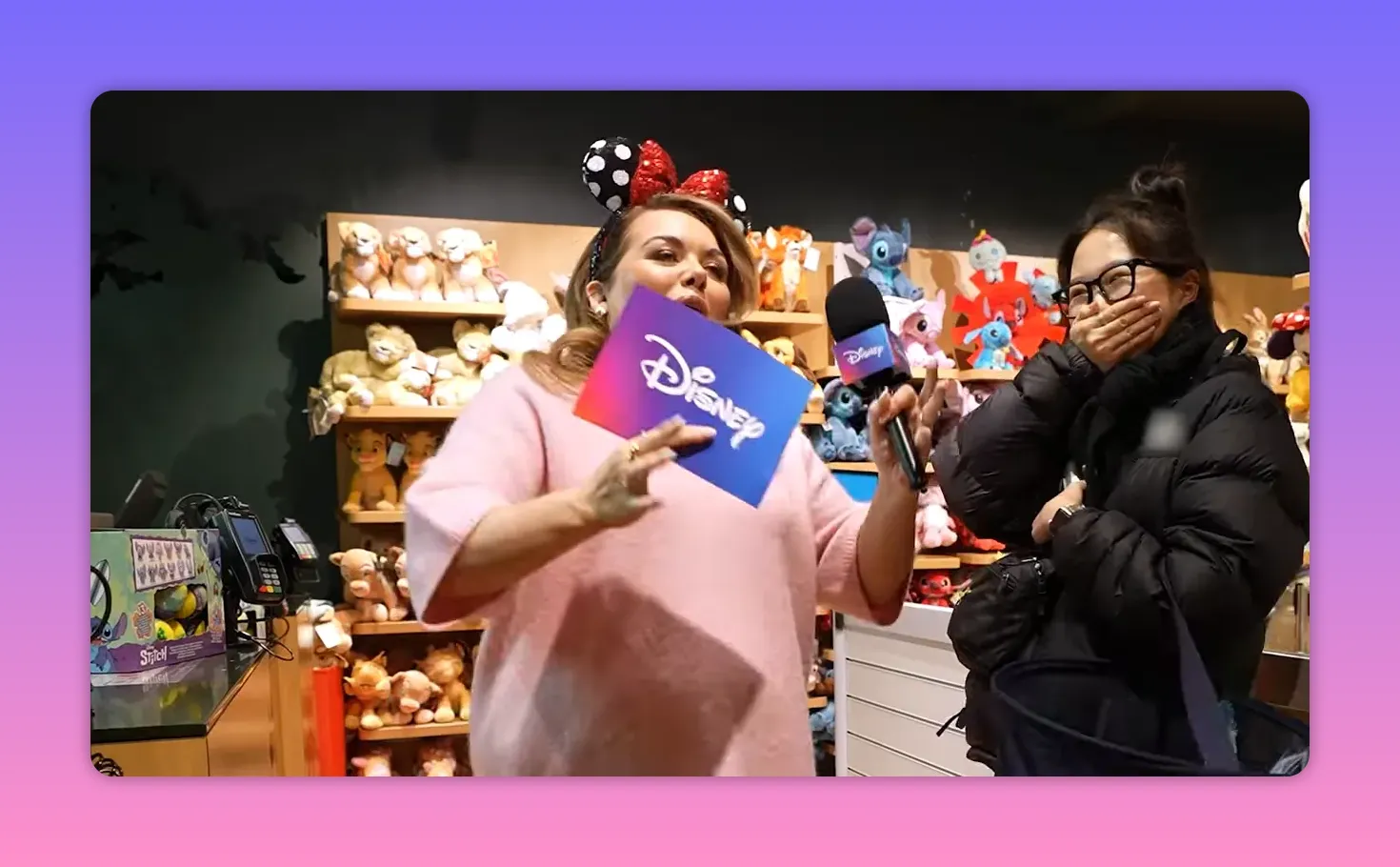
Small quirks matter. A dramatic pause, a faux-serious face, or a mock-stern look at an obviously incorrect answer becomes part of the entertainment. The moment someone answers “Dog” to a rapid-fire question and then bursts into laughter, the game becomes less about right answers and more about a shared experience.
Timing and pacing: the secret sauce
Retail spaces are dynamic. You need to respect people’s time while still creating excitement. Here’s how I kept the momentum:
- Keep interactions under a minute — Quick games mean more people can join and fewer shoppers feel blocked.
- Use countdowns — Giving someone ten seconds to answer focuses attention and produces honest, instinctive answers.
- Manage crowd flow — If someone gathers a little crowd, swap to a new format like a single, spectacle question to avoid bottlenecks.
- Know when to step back — If a shopper signals they’re in a hurry, the best play is a friendly “maybe next time” and a quick thank you.
Creating shareable reactions
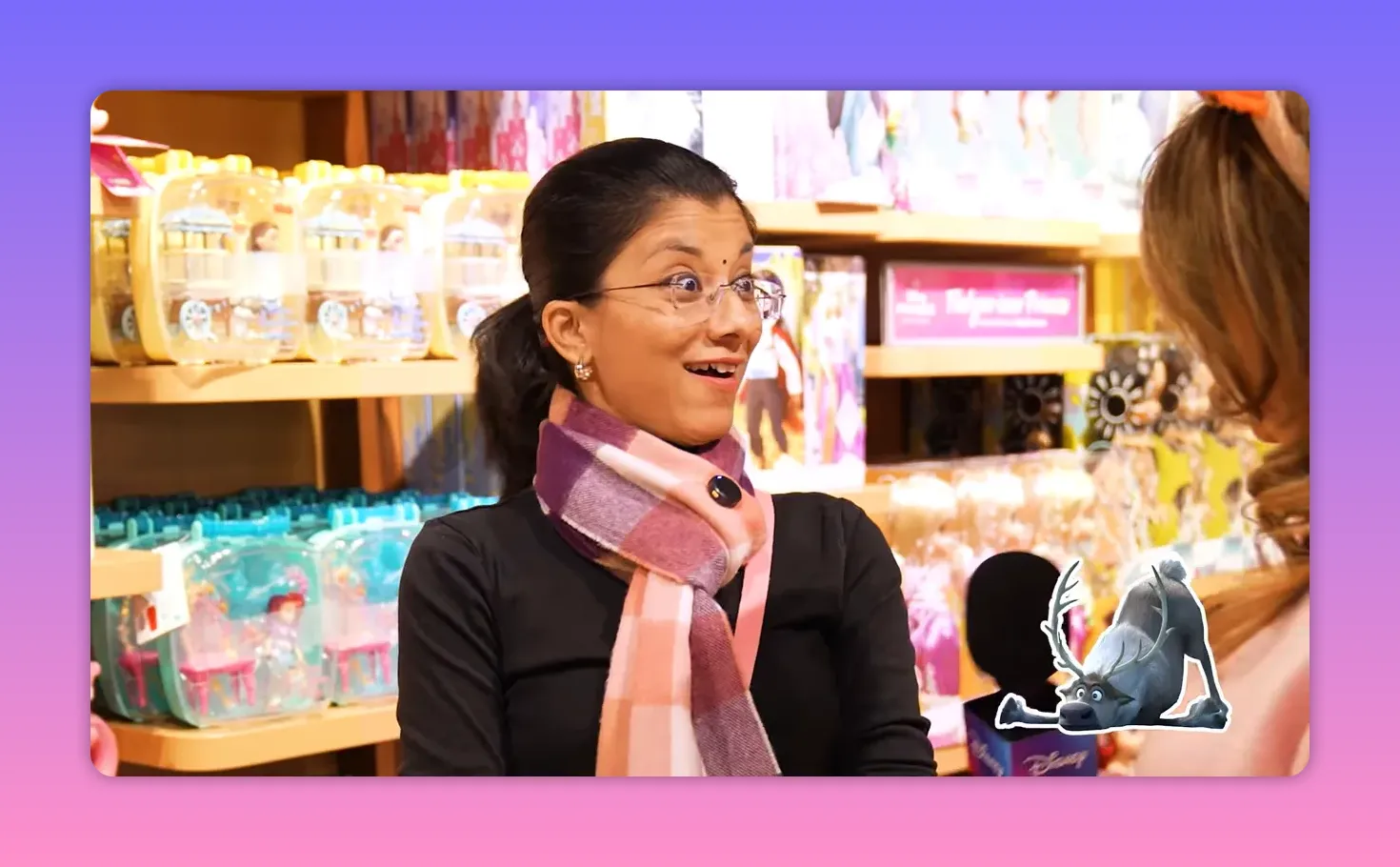
My favourite moments were the reactions — the shrieks, the proud looks, the little “I knew that” wink. These are micro-content gold. A genuine reaction is more valuable than a perfectly played clip. To encourage organic sharing, keep these points in mind:
- Make it photo- and clip-friendly — Bright costumes, bold questions and clear prompts make it easier for people to capture and share.
- Offer a tangible reminder — Stickers or small tokens are a physical trigger that ties back to the experience.
- Encourage tagging — A casual line like “If you post, tag us!” is all it takes to boost online reach without feeling pushy.
Building rapport fast
Everything I did hinged on three simple human skills: active listening, humor and validation. In practice that looked like this:
- Listen to the first few words the person gives you. If they are shy, tone things down. If they’re chatty, lean into it.
- Always respond to answers with warmth. Even a wrong answer can become funny and endearing.
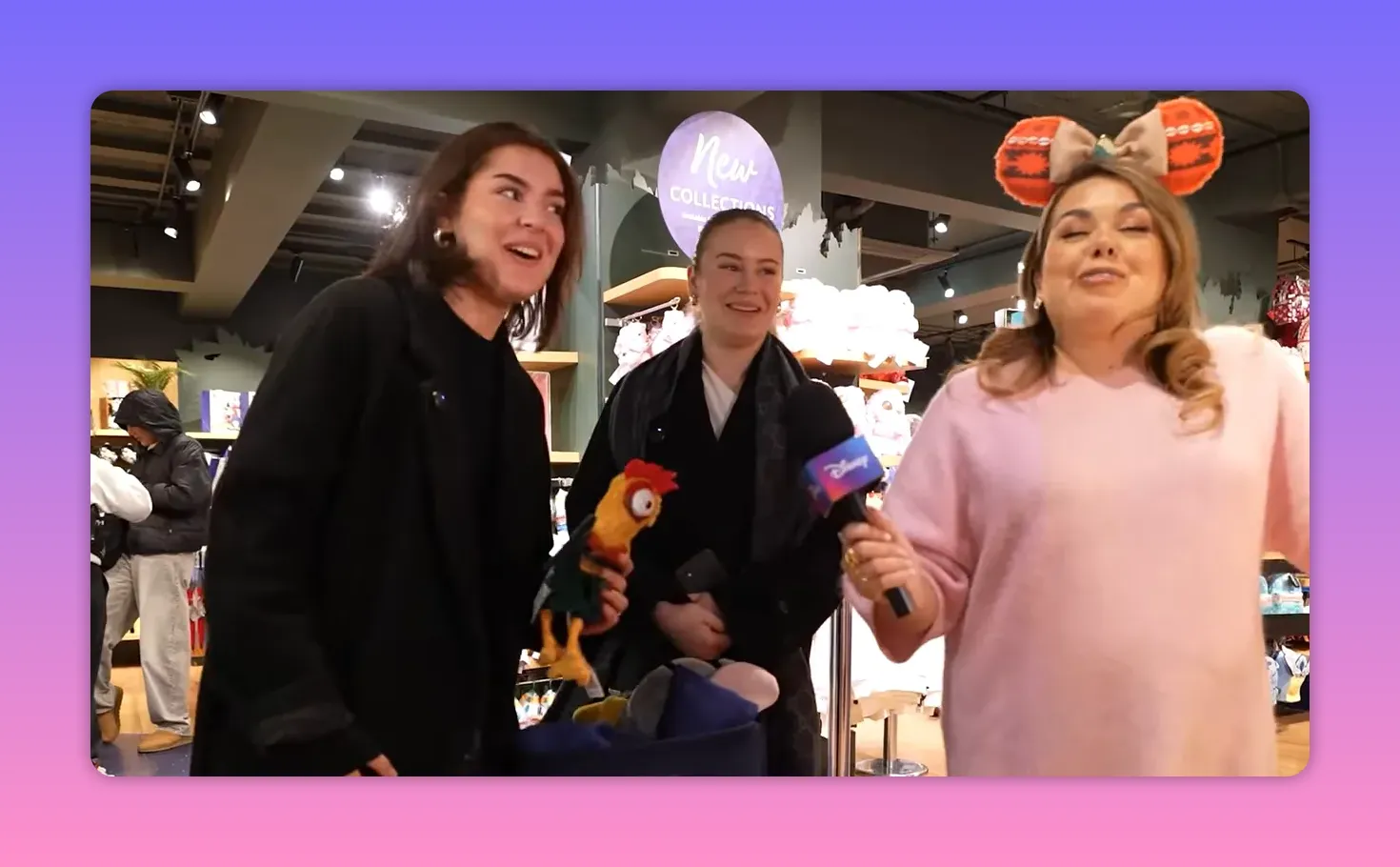
- Use the environment to connect. If someone is carrying a Mary Poppins toy or humming a song, riff on that to extend the conversation.
These things are quick to do and easy to learn. They make any interaction feel like a reunion instead of a transaction.
Props, costumes and little touches
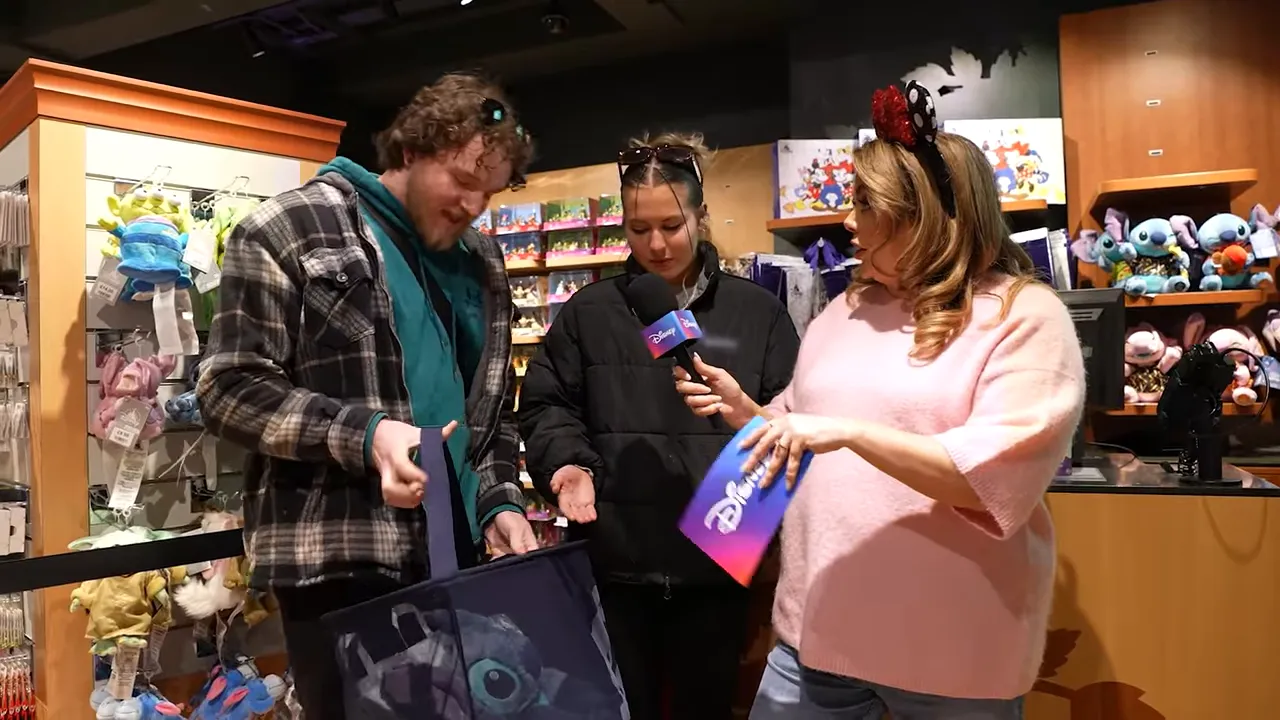
Props are an easy way to amplify fun. A basket full of small items, a themed hat, or a printed question card adds theatricality without much effort. I had a simple basket and a few Disney-themed items, and that was enough to spark interest.
Costuming does not have to be elaborate. A simple accessory — a pair of ears, a scarf that references a character, or a badge — can create immediate recognition and communicate “this is playful” before a single word is spoken.
When things don’t go to plan
Not every interaction will be a home run. People are busy, nervous or simply not in the mood. That is fine. The goal isn’t to convert every person but to create high-quality moments where possible. I had a few aborted attempts: someone who looked unsure, a shopper with a toddler in arms, or a brief, awkward silence. Each one was handled with a smile, a sincere “thanks anyway” and a quick pivot to the next person. That economy of effort keeps the day light and friendly.
Using iconic questions to spark joy

The best questions are those that tap into shared cultural memory. Disney offers a huge advantage here because many references are so widespread they act as shorthand for connection. Questions about Mary Poppins, Mickey Mouse or The Lion King are instantly accessible. They are inclusive by design.
Here are a few principles for crafting those questions:
- Keep them visual — Asking about a character’s look or a specific prop encourages instant recall.
- Lean on classics — The older and more iconic the reference, the broader the audience.
- Make them playful — A bit of silliness invites participation. For example, “How many fingers does Mickey have?” is absurd but fun.
Converting curiosity into engagement
Every micro-game can be a conversion opportunity if you do it right. That means turning a delightful interaction into a next step, whether it is following a social channel, entering a competition or simply picking up an item. Keep these conversion tactics gentle and natural:
- Offer value — An entry into a giveaway or a sticker for participation makes saying yes low-cost and high-reward.
- Make the next step effortless — If you want someone to enter a competition, help them do it then and there with a quick line or an app scan.
- Respect privacy — Never push for information beyond what is necessary. Most people will share an email if the prize is compelling and the signup is easy.
Giveaways: best practices
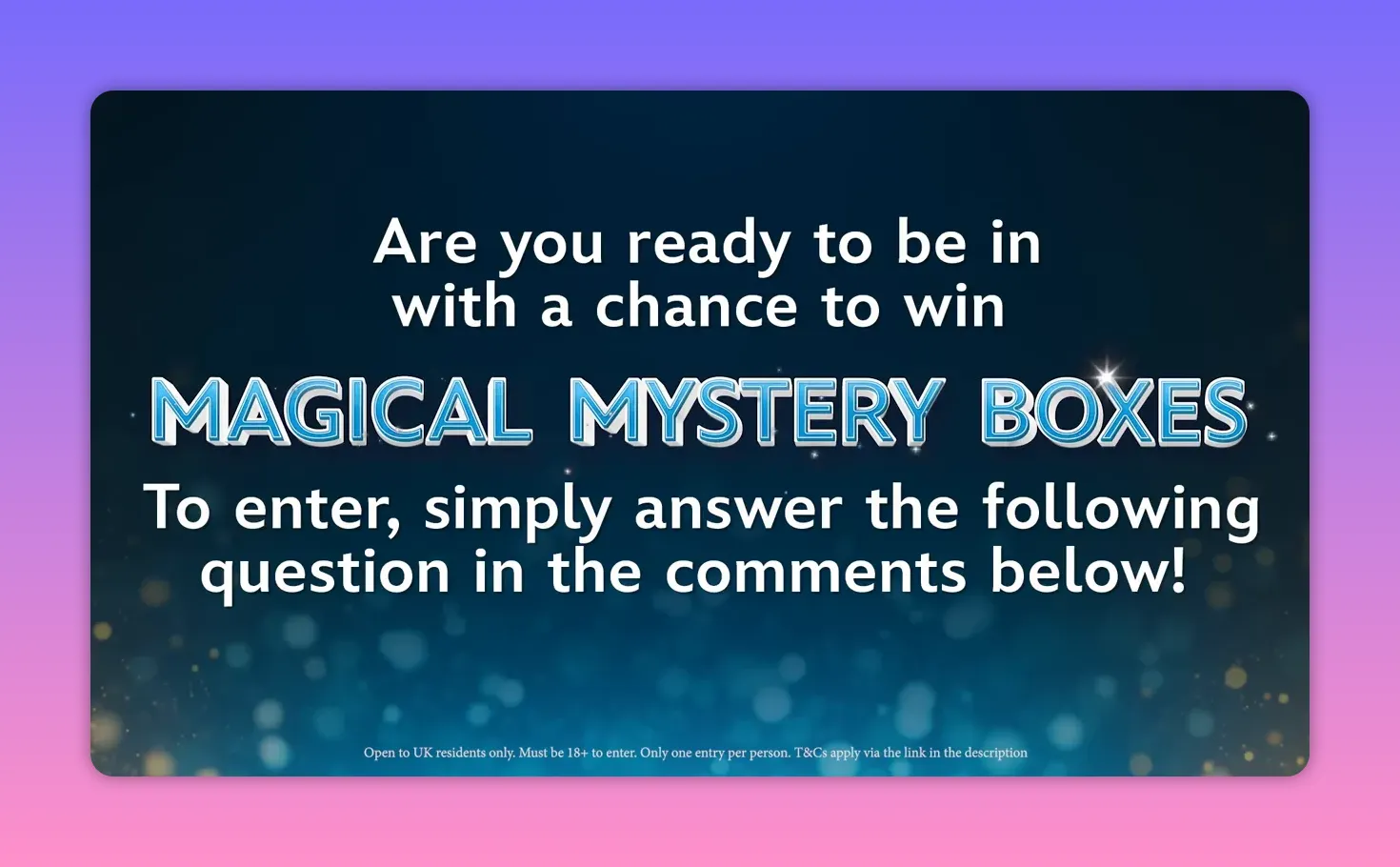
Simple giveaways can supercharge engagement, especially around seasonal moments. Here are tips for running them responsibly and effectively:
- Clearly state eligibility and deadlines — Avoid confusion by being transparent about who can enter and when the contest closes.
- Limit entries — One entry per person reduces abuse and keeps things fair.
- Provide an official channel for contact — Announce winners only through an official account; never ask winners for bank details or sensitive information.
- Keep prizes meaningful but manageable — A curated mystery box or a themed bundle creates excitement without logistical nightmares.
Measuring success in real-world activations
Numbers matter, but the way you measure success should match the goal. If the aim is brand love, qualitative metrics like recorded reactions, social shares and follow-up messages are crucial. If the aim is signups, track entries and conversion rate. If the aim is footfall, measure store traffic during activation windows.
Examples of useful metrics:
- Number of participants
- Average interaction time
- Social posts and tags generated
- Giveaway entries
- Incremental sales lift during the activation
Practical tips for anyone running a live retail activation
Whether you are a brand marketer, a store manager or a creative lead, here are practical guidelines that will save time and increase impact.
- Plan for crowd management — Have staff positioned nearby to guide people and keep traffic flowing.
- Train hosts on tone — Hosts should be briefed to keep things upbeat, inclusive and concise.
- Test a few questions — Pilot questions on a small staff group to spot any ambiguous wording or unexpected answers.
- Equip hosts with small rewards — Physical tokens create a tactile memory of the experience.
- Make signups painless — Use a simple QR code or a one-tap entry form to collect entries.
Inclusive design and accessibility
Good activations are accessible to everyone. Think through the experience for people with mobility constraints, sensory sensitivities and those who may not speak the language fluently.
- Have quiet options for people who cannot handle loud interactions.
- Use large, clear signage for instructions.
- Offer alternatives to verbal responses, such as pointing or holding up cards.
Safety and consent

Always ask before filming or photographing someone and explain how images will be used. A friendly, “Can I take a quick clip for the page?” goes a long way. If someone says no, respect it immediately. Consent builds trust and encourages future participation.

Turning small moments into long-term loyalty
A single delightful encounter may not make someone a lifelong fan, but repeated positive experiences will. Use activations as a touchpoint in a broader relationship-building strategy. Follow up with participants via a newsletter, offer them an exclusive discount, or invite them to future events. The aim is to translate emotional resonance into meaningful connection.
Case study takeaways
From my day on the shop floor, the biggest lessons are these:
- Be boldly human — Warmth trumps polish every time.
- Design for low friction — Short interactions scale better in busy environments.
- Use shared cultural touchstones — Familiar references unlock instant participation.
- Celebrate everything — Wrong answers and funny reactions are content gold.
Ready-made question prompts
Here are some tested prompts to use in retail activations. They are short, familiar and provoke quick, instinctive responses.
- What does she give a spoonful of to make the medicine go down?
- How many fingers does Mickey Mouse have on one hand?
- Complete this line: “Hakuna ___.”
- Name the nanny who flies with an umbrella.
- Who says, “You’ve got a friend in me”?
Final thoughts
Live activations do not need huge budgets to be effective. What they do need is heart, clarity and an understanding that people are craving human moments. A well-timed question, a silly prop, and a host who genuinely enjoys the interaction create memories that linger far longer than any discount code. Keep things short, kind and surprising. Encourage laughter. Celebrate mistakes. And remember to hand people something small to remember the moment by.
How do you create a quick retail game that people want to join?
Create a one-sentence invite, include three to five familiar questions, add a short countdown and offer an immediate reward. Keep interactions under a minute and ensure the atmosphere is playful and non-judgemental.
What are the best types of questions to use in a Disney-themed quiz?
Use visual and iconic references that many people recognise. Classic characters, memorable lines and simple visual trivia work best. Examples include questions about Mary Poppins, Mickey Mouse and famous song lines from The Lion King.
How can brands measure success from on-floor activations?
Measure both quantitative and qualitative metrics: participant count, average interaction time, social posts and tags, giveaway entries and any incremental sales during the activation window. Record reactions to assess emotional impact.
What should hosts avoid when running live interactions?
Avoid lengthy or complicated instructions, pushing people for personal information, filming without consent and creating bottlenecks in-store. Keep interactions inclusive and respect those who decline to participate.
What are safe ways to run a giveaway in-store?
Clearly state eligibility, limit entries to one per person, announce winners only through an official channel and never request sensitive information like bank details. Make the entry process quick and the prize meaningful.


