
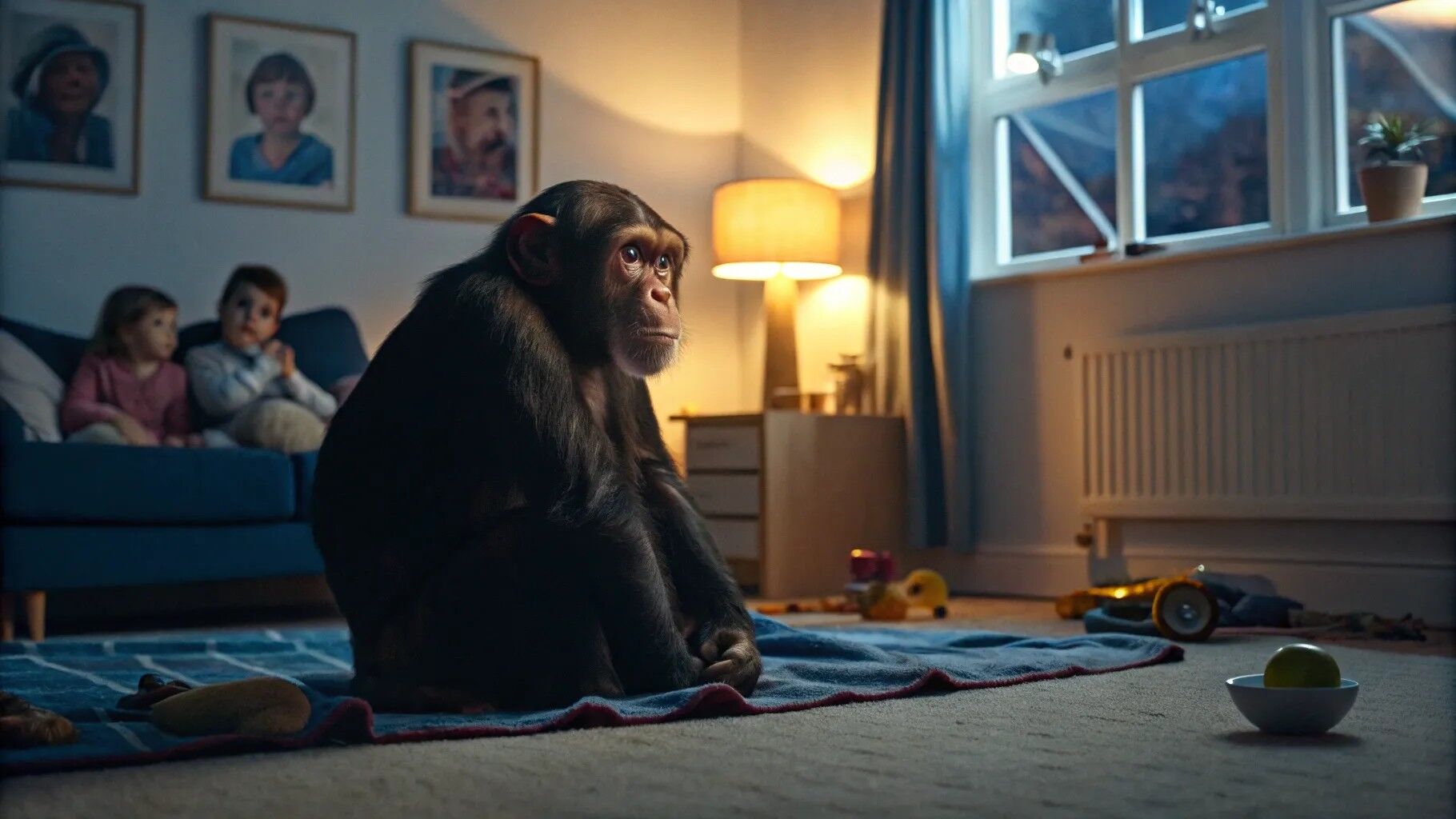
Ben is a chimpanzee who is the heart and soul of the family. That simple line captures the emotional anchor of the story: a creature welcomed into a household, treated like kin, and loved like a child. That closeness makes what follows more unsettling. When the animal you trust becomes unpredictable, the stakes shift from heartbreak to survival.

From family member to threat: the turning point
Ben arrives as more than a pet. Lucy’s mom, a linguistics professor, brings him home and there is an immediate bond. He is described as a “little brother” and a true part of the Pinborough family. That domestic intimacy is what makes the later transformation so effective: the audience already sees Ben as family, not as an object or a wild threat.
But there is a crucial moment when Ben changes. Simple lines like “He’s definitely not his usual self” and “When he starts to lose his mind” signal a shift that goes beyond mood. The story uses small behavioral departures to ratchet tension. An affectionate chimp becomes erratic, and erratic quickly becomes dangerous.

Why the transformation feels so terrifying
Two elements combine to create horror here: emotional betrayal and physical power. On the emotional side, people around Ben treat him as family. On the physical side, the description is stark: “you have this incredibly powerful teddy bear that can just rip you apart limb from limb.” That contrast — the softness of a teddy bear and the raw strength of a chimpanzee — makes every affectionate moment precarious.
The story leans into primal fear. When an animal you love begins to behave with aggression, it forces characters to reconcile memory with danger. That internal conflict produces suspense that no jump scare could match.

Characters, relationships, and emotional weight
At the center of the tension is Lucy and her relationship with Ben. Lines like “Ben, it’s me. Lucy. It’s okay.” show how characters try to restore trust with reassurance and familiarity. Those attempts reflect real-world responses: when loved ones act out of character, we appeal to the known connection.

The family dynamic is essential. Ben is not introduced as an outsider. He is embraced by a household whose routines and affections normalize his presence. That normalization deepens emotional investment and raises the cost of the threat when Ben changes.

Lessons about animal behavior, control, and limits
There are practical and thematic takeaways embedded in the story. Beyond the horror, the narrative prompts reflection on how humans treat wild animals, and what happens when wild instincts surface in domestic settings.
- Respect instincts: Even animals that appear tame can retain strong, unpredictable instincts.
- Watch for subtle changes: Behavioral shifts — a change in appetite, increased aggression, or withdrawal — often precede more obvious danger.
- Emotional closeness is not control: Loving an animal does not eliminate risk. Bonding increases heartbreak if things go wrong.
- Prioritize safety: If an animal shows uncharacteristic aggression, create distance and seek professional intervention.
Thematic takeaways: family, betrayal, and survival
The story uses the intimate setting of a family to explore broader themes: the fragile line between domesticity and wildness, the illusion of control, and how quickly safety can flip into danger. These themes are universal and give the horror emotional texture. Survival is not just about physical escape; it is about reconciling love with the need to protect oneself and others.
Where this leads
The narrative sets up a primal tale of horror and survival. A group of friends on a tropical vacation finds that familiarity is not protection. Instead, it becomes the reason the threat stings harder and lingers longer. The combination of emotional ties and raw physical danger makes for a story that stays with you.
FAQ
Who is Ben and what role does he play?
Ben is a chimpanzee who is treated like a member of the Pinborough family. He functions as both a beloved companion and, after his transformation, the central source of danger that drives the plot.
What triggers the horror element in the story?
The horror emerges when Ben shows uncharacteristic aggression. The contrast between his role as a family member and his sudden, violent behavior creates emotional and physical peril.
What themes does the story explore?
Key themes include the unpredictability of nature, the limits of human control, the cost of emotional attachment, and the instinct to survive when those attachments are threatened.
What practical safety lessons can be drawn?
Pay attention to behavioral changes in animals, prioritize safety over sentiment when aggression appears, and seek professional help rather than assuming familiarity will calm the situation.
When is the film released?
The film opens in theaters on January 9.