

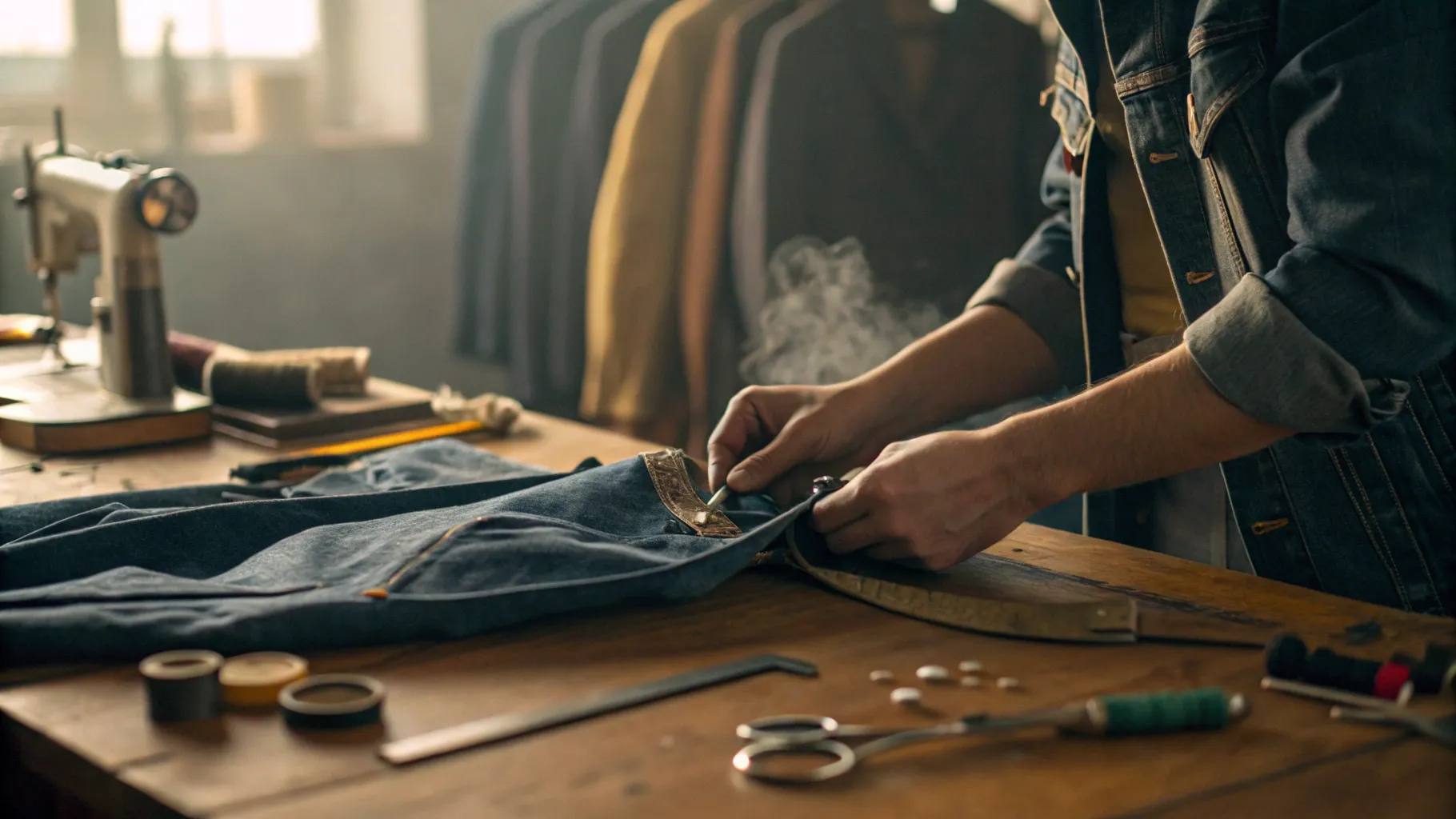
Introduction: a love for making things feel lived in
Working in film wardrobe is equal parts craft, organization, and quiet storytelling. Clothes do more than cover actors; they tell history, reveal character, and make an imaginary world feel real. That idea landed early and stayed true. A fascination with movies as a child turned into a career built on technical skill and curiosity — starting as an assistant ager and growing into the role of on-set principal costumer on a major feature.
Making a garment read as lived in is one of the first lessons most people in wardrobe learn. An aged seam, a softened hem, a subtle fade across a cuff — those details register on screen and subconsciously inform a viewer about who a character is. The job is to engineer those details while keeping clothing practical, durable, and ready for the unpredictable pace of production.
How wardrobe shapes a scene: practical responsibilities of an on-set principal costumer
On-set principal costumers sit at the intersection of design, maintenance, and continuity. Their work is both preemptive and reactive: prepare meticulously, then respond fast when things inevitably change.
Here are the core responsibilities that define the role:
- Prep the line — Organize and stage every outfit for the day so actors and crew can move quickly.
- Steaming and finishing — Ensure garments look crisp on camera or have the correct level of wear.
- Marking rehearsals — Attend rehearsals to identify what will be needed on set and to coordinate with other departments on movement and props.
- Wiring and mic placement — Dress actors around microphones and hidden wiring while maintaining the silhouette and integrity of the costume.
- Continuity monitoring — Watch monitors and note details so every take matches the previous one unless a change is called for.
- Construction and alterations — Build or modify pieces on short notice, from repairs to full costume builds for specific scenes.
Those tasks happen in a high-tempo, collaborative environment where timing matters as much as technique. A successful on-set principal costumer balances a craftsman’s attention to detail with a production-oriented mindset.
Morning on set: rituals that keep a wardrobe department running
There is a kind of choreography that happens before the camera rolls. The day starts with the basics that set the tone for everything that follows.

Steamer on, line prepped. Steaming is deceptively simple: remove wrinkles, shape collars, and reset pleats so garments read correctly under the lights and camera. But a steamer is also a diagnostic tool. Textures reveal themselves when steamed; stains, hidden alterations, and weak seams become visible. That means steaming is both finishing and quality control.
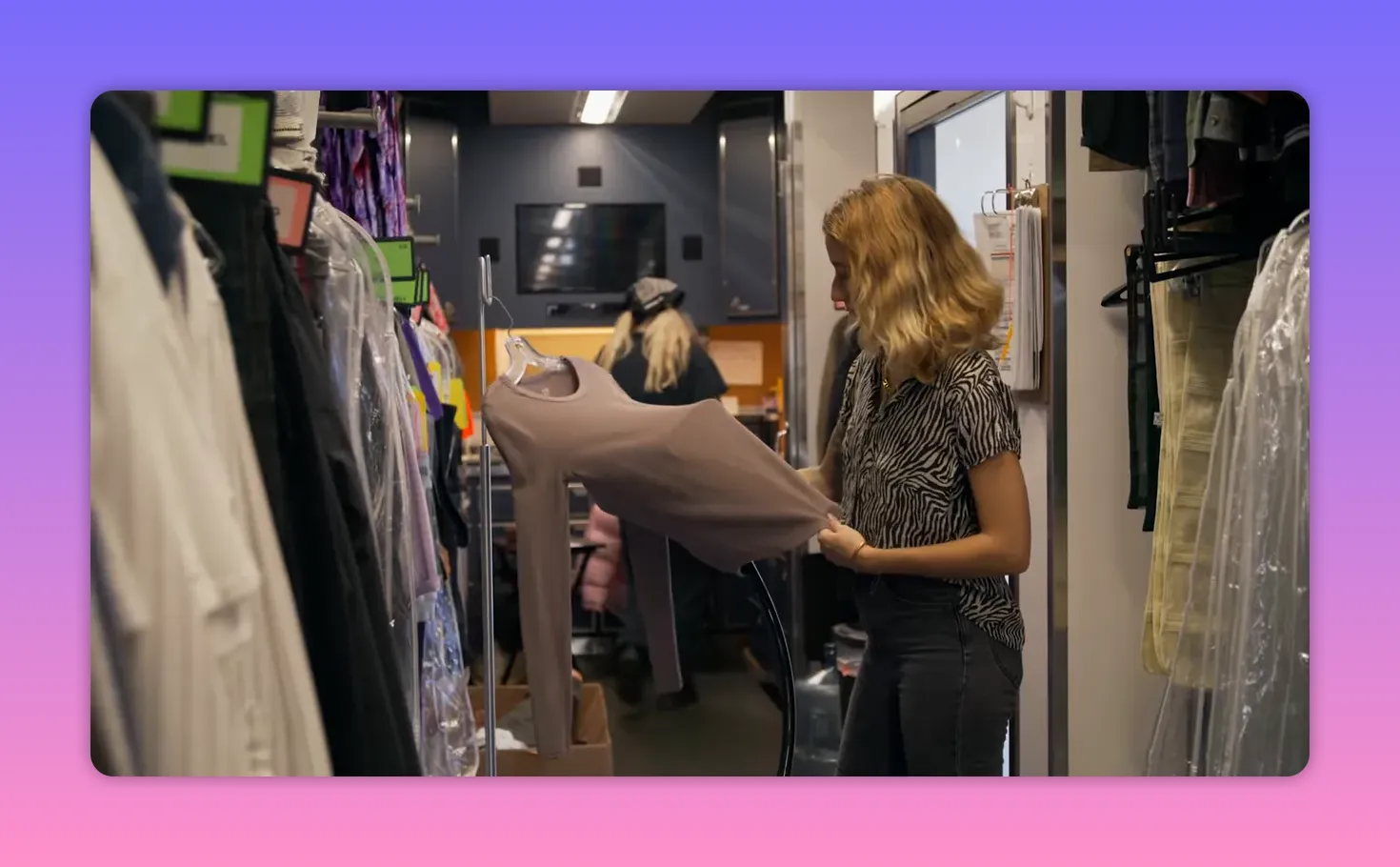
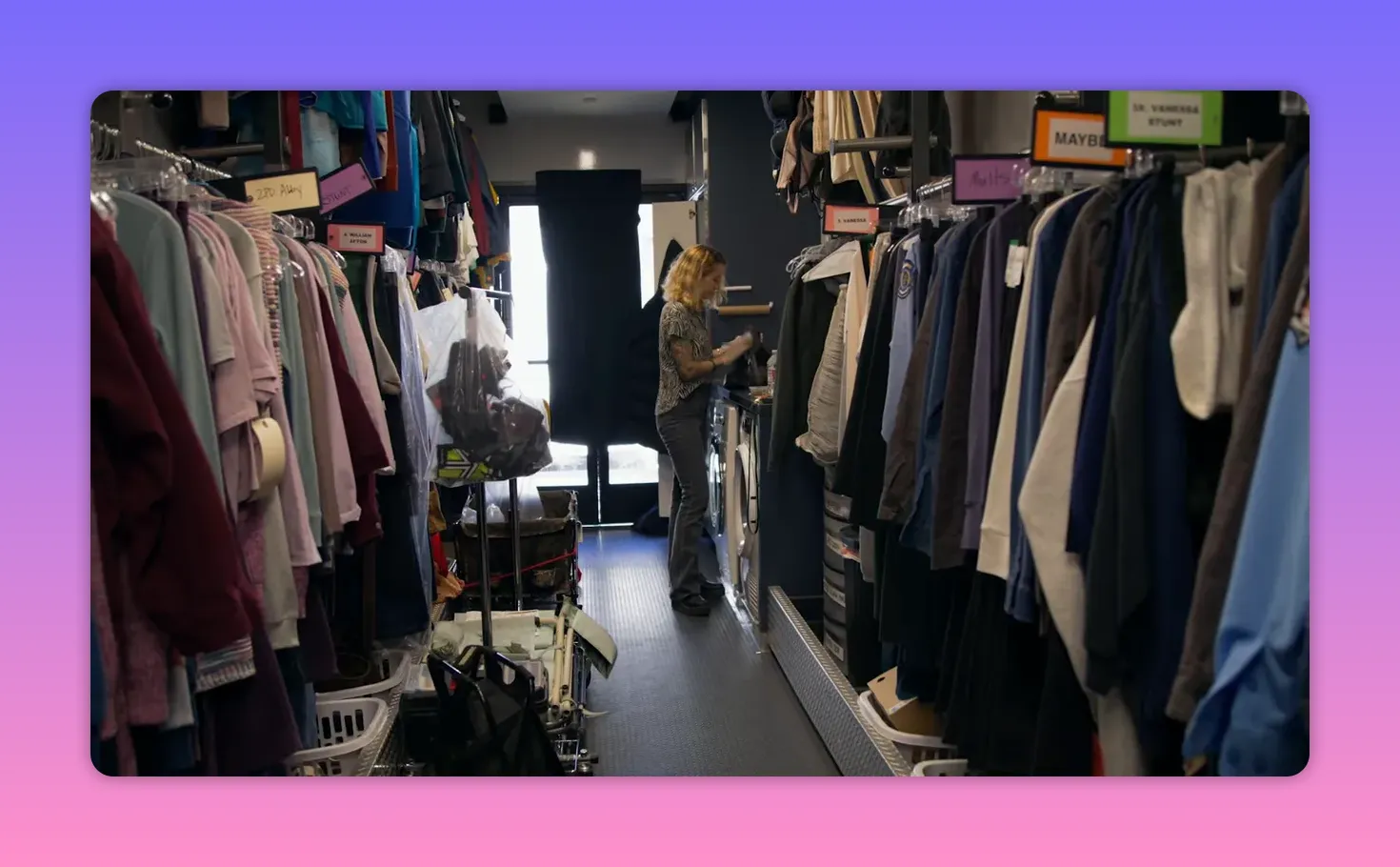
Prep the line. Organizing outfits for each actor and each scene — often called “the line” — saves time when wardrobe needs to be quick. Labels, order of changes, and backup pieces are part of this prep. The line also includes notes on accessories, undergarments, and any special considerations like prosthetics or animatronic elements.
When a wardrobe team is disciplined about prep, on-set crises shrink. When something unexpected happens, well-prepared teams recover quickly without disrupting production flow.
Marking rehearsals and why they matter
Marking rehearsals is where observation turns into action. This is the moment to see blocking, camera movement, and how costumes will interact with the set and props.
Key focus areas during marking rehearsals:
- How costumes move with the actor and whether seams or hems will need reinforcement.
- Where microphones and radio packs must sit to remain invisible but functional.
- Moments that require a quick change or a second take with a slightly adjusted look.
- Lighting and camera angles that reveal details not evident in design sketches.
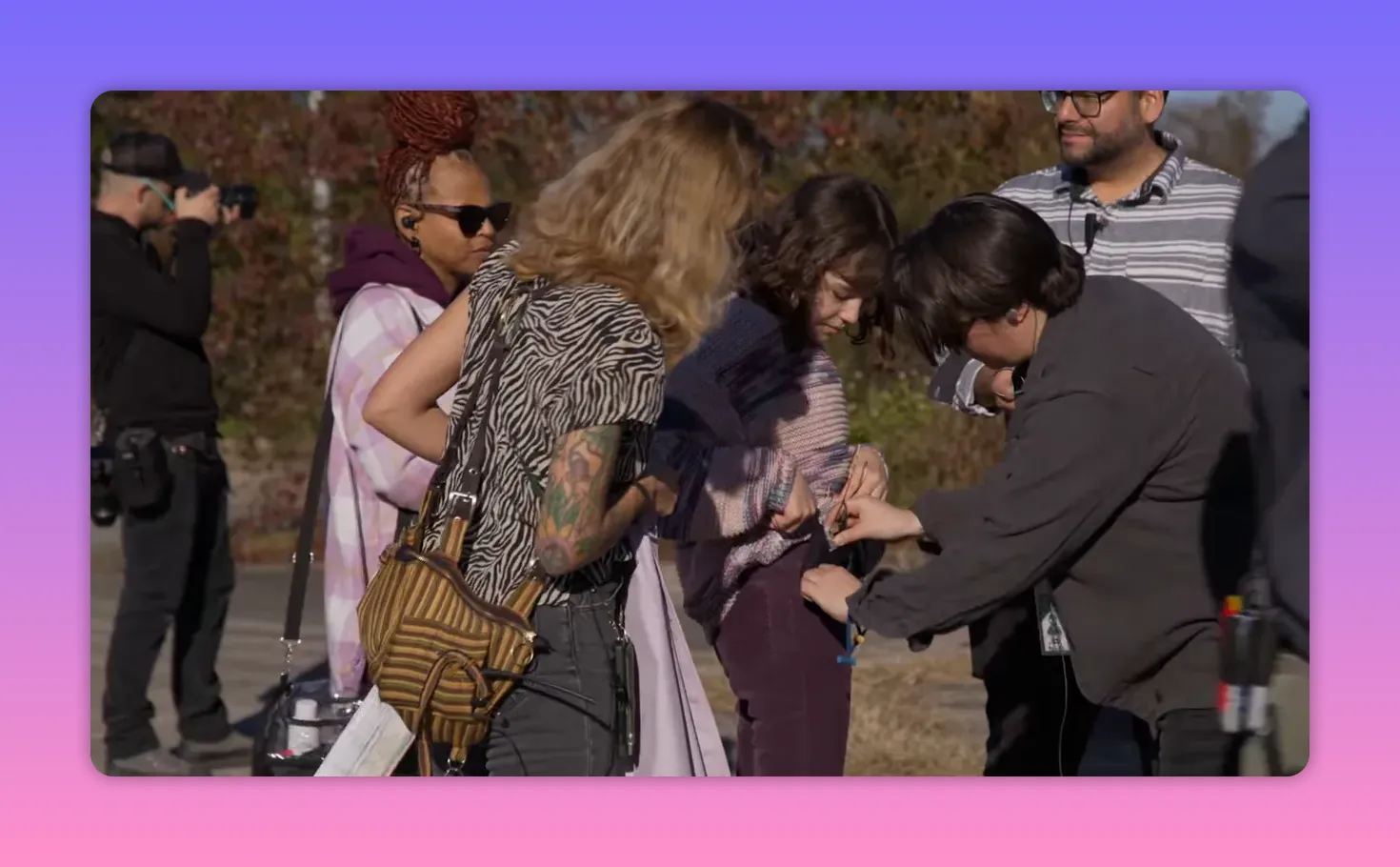
Rehearsals are also the time to communicate with other departments. Sound needs access to body-worn microphones. Stunts require costumes that can be torn away or protected. Production design might need to modify set pieces to accommodate period garments. The wardrobe lead translates all of these needs into actionable changes before filming begins.
Wiring the cast: balancing function and form
Hidden microphones and wireless packs are essential to capturing clean dialogue, but they can also compromise a costume’s look or the actor’s comfort. Wiring is a precise skill that requires both technical understanding and sensitivity to the actor’s needs.
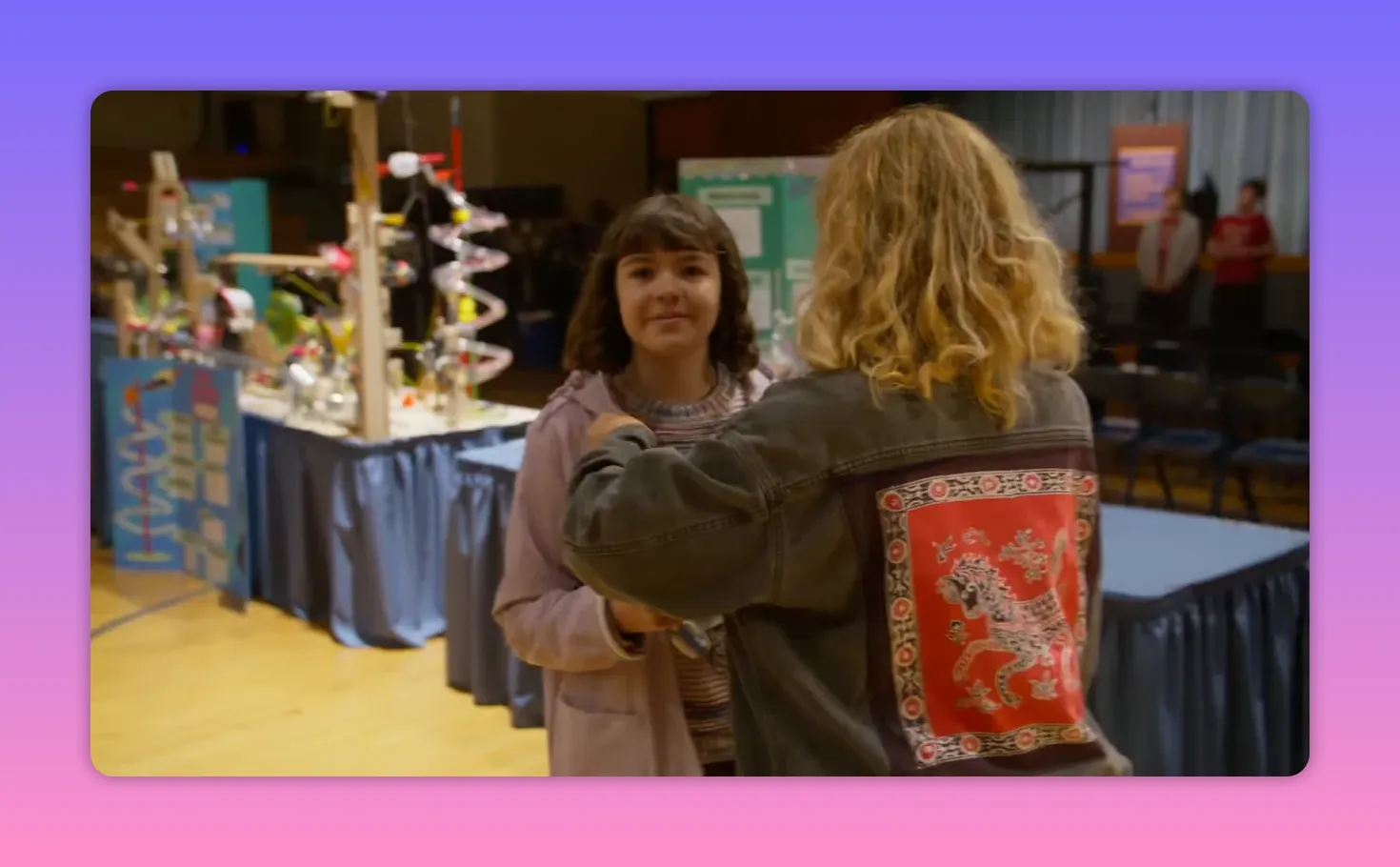
Typical wiring considerations include:
- Choosing microphone types and pick-up placements based on costume layers and hair styling.
- Routing wires and packs so they are secure during movement and unseen by camera.
- Creating discreet access points in seams or linings for adjustments.
- Ensuring quick removal or replacement during fast changes or stunt-heavy scenes.

It is common to sew small loops, add Velcro tabs, or insert hidden channels in a lining to keep wiring tidy. Those little engineering solutions preserve the silhouette and make the actor feel confident on set.
Watching for continuity: protecting the story with small details
On-screen continuity is a silent craft. Even minor changes in how a sleeve is rolled, the placement of a collar, or the presence of a pocket square can break the illusion of seamless time and space.
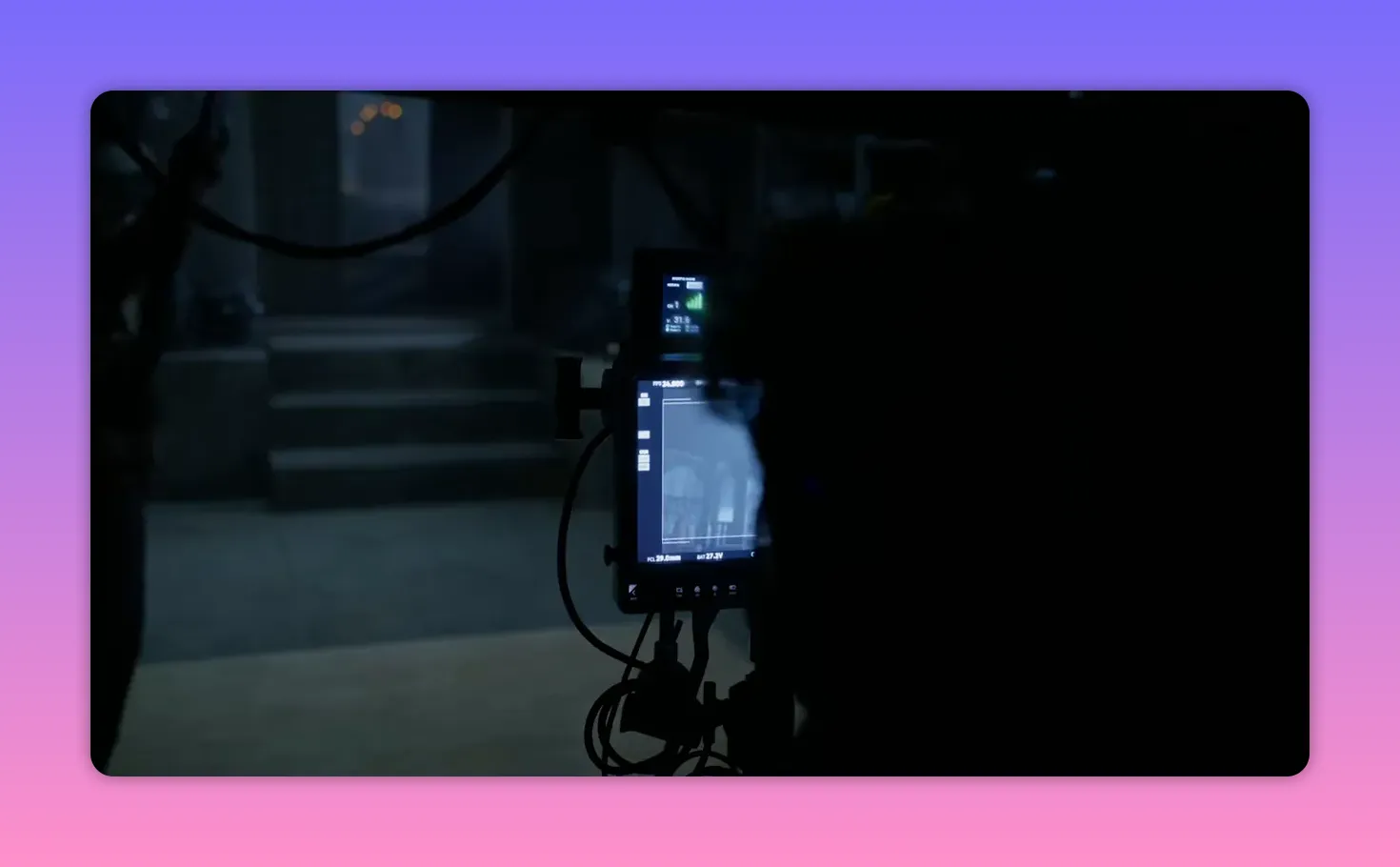
On-set costumers monitor continuity through a combination of tools and instincts:
- Watching video monitors to compare the current take to previous ones.
- Taking detailed photos and notes after each take.
- Maintaining continuity books with labeled images and shot descriptions.
- Working with script supervisors to align costume continuity with props and actor performance.
These small records protect the narrative. If a character has a tear in their sleeve in one take, the costume must match that tear in subsequent takes. Continuity is not about perfection; it is about preserving the internal logic of the story.
Building costumes for specific scenes: the cosplay example
Some scenes demand more than maintenance and minor adjustments — they require building. A cosplay scene illustrates how a wardrobe team can create a large volume of distinct looks that still read as cohesive and purposeful on camera.
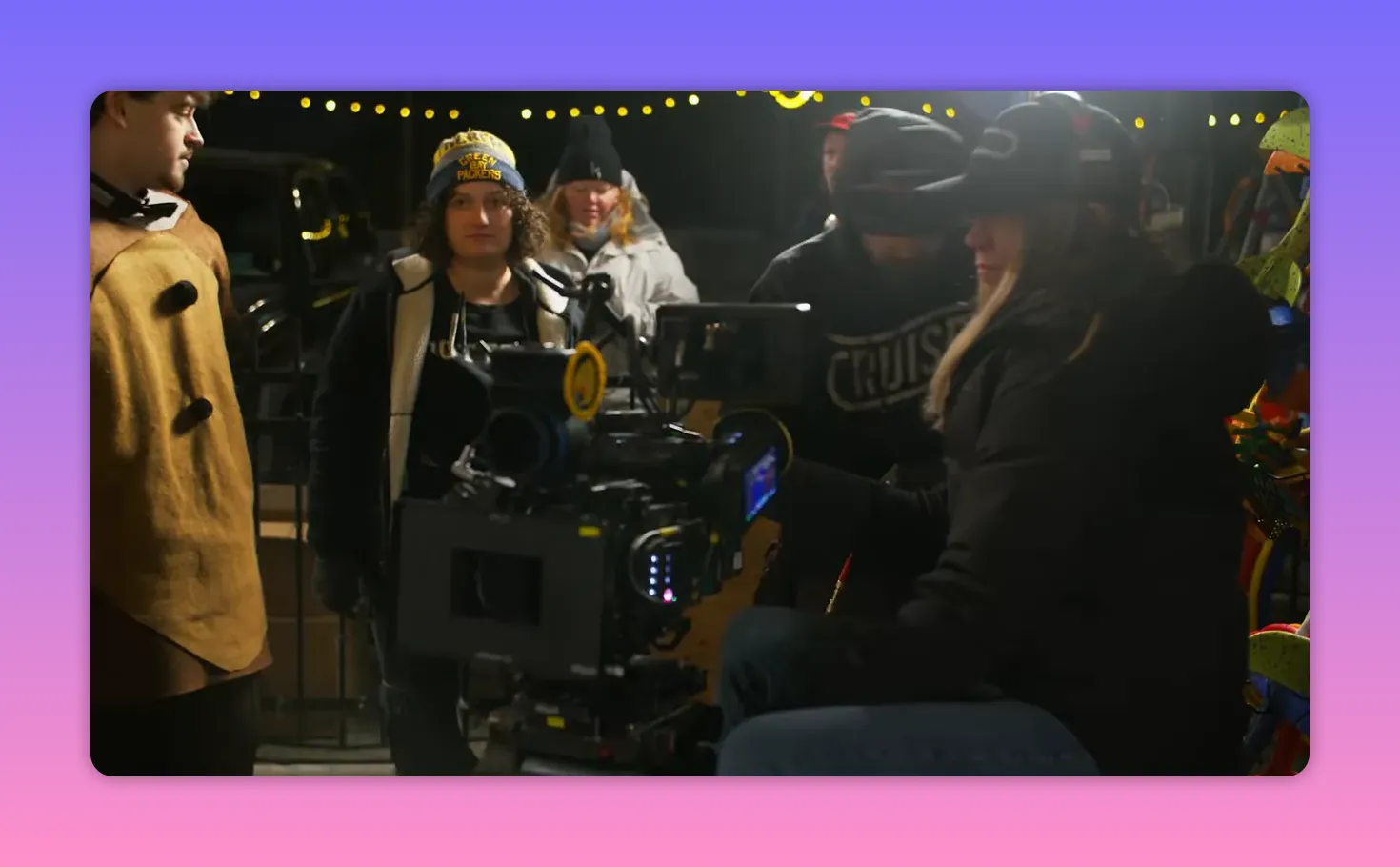
When building for a scene like that, priorities include:
- Scale — Creating multiple costumes that are visually interesting from a distance but also hold up to closeups.
- Speed — Constructing many pieces within tight production timelines.
- Durability — Ensuring fabric and construction hold through repeated takes and crowd movement.
- Variety within constraints — Giving each character a unique silhouette or color palette while keeping the overall scene readable.
Building for a cosplay scene often involves a mix of sewing, fabrication, dying, and creative repurposing. Costume builders lean on a broad toolset: industrial sewing machines, adhesives, foam shaping tools, and quick dyeing techniques to deliver a wide range of textures and effects.
Technical craft: aging, dyeing, sewing, and finishing
The phrase assistant ager/dyer captures a set of techniques that are fundamental to making clothing believable on screen. Aging and dyeing are not about destructing clothing for its own sake; they are about placing human history on fabric.

Common aging and dyeing methods:
- Heat fading — Controlled sun or heat exposure to lighten dye in natural ways.
- Staining — Using diluted paints, dyes, or household substances to create localized discoloration.
- Rub and abrade — Sandpaper, pumice, or wire brushes to soften high-wear areas like elbows, knees, and hems.
- Layered dyeing — Applying multiple dye baths or washes to create depth of tone.
- Patch and repair work — Visible mending or invisible reinforcement depending on character requirements.
Sewing remains the backbone of costume work. Tailoring for camera is a different discipline from fashion sewing. Fit must allow an actor to perform and be replicated take after take. Seams are reinforced in high-stress areas. Alterations are documented carefully so that a look can be recreated on a different day or in reshoots.
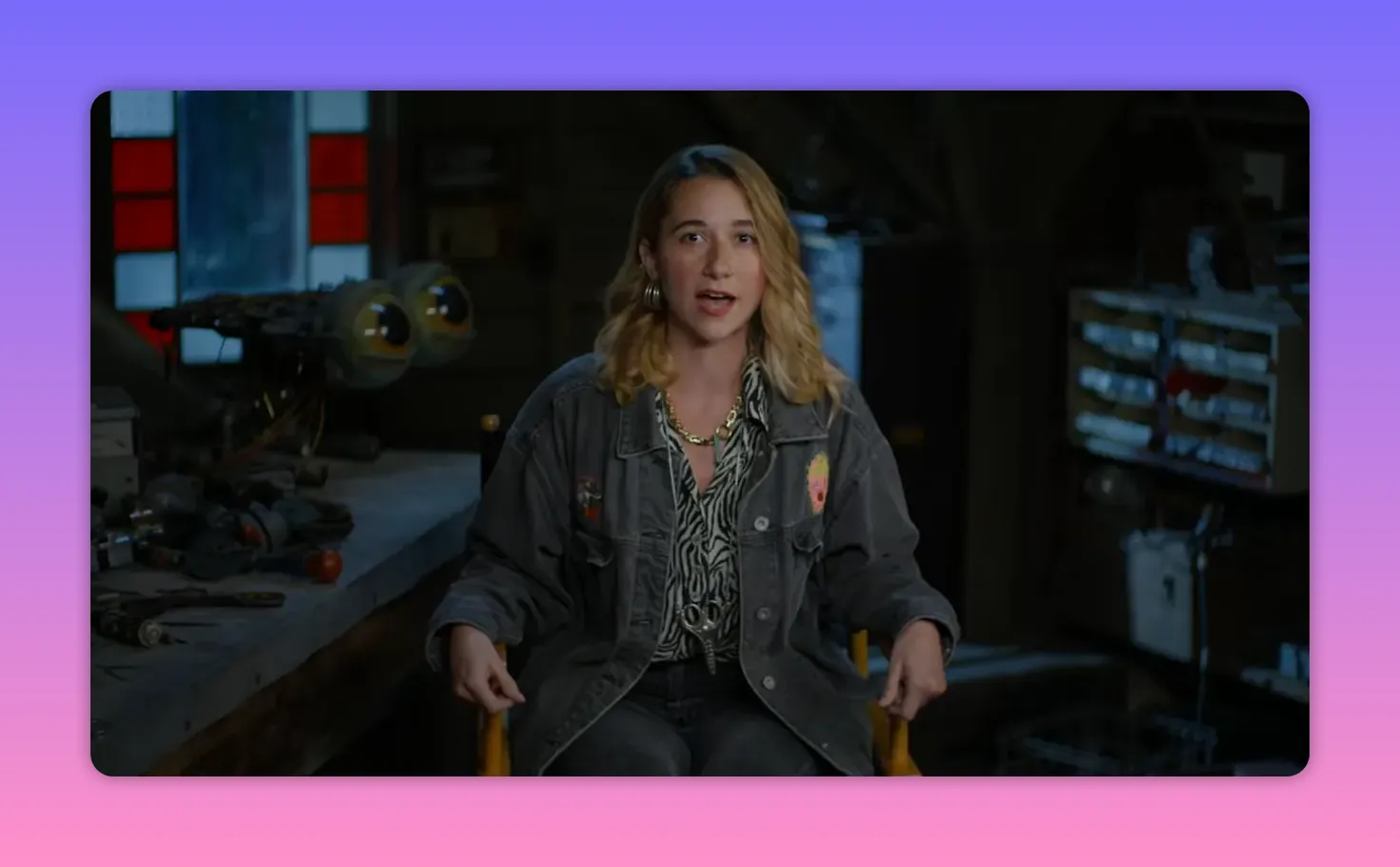
Finishing techniques, like pressing, seam sealing, and attaching trims, are small touches that prevent distractions. A stray thread or an unsecured seam can become a continuity problem or a visible error in a closeup.
Learning and mentorship: every job teaches something
Progression in wardrobe is built on curiosity and a willingness to learn every job on the department roster. Starting as an assistant ager/dyer gives a person exposure to the breadth of costume work: fabrication, maintenance, and the practical consequences of design choices.
On-set mentorship tends to be hands-on. Watching a costumer wire an actor, seeing how a principal costumer organizes a day, and stepping in on small builds are the formative experiences. Those moments build not only practical skill but also confidence to make decisions under pressure.
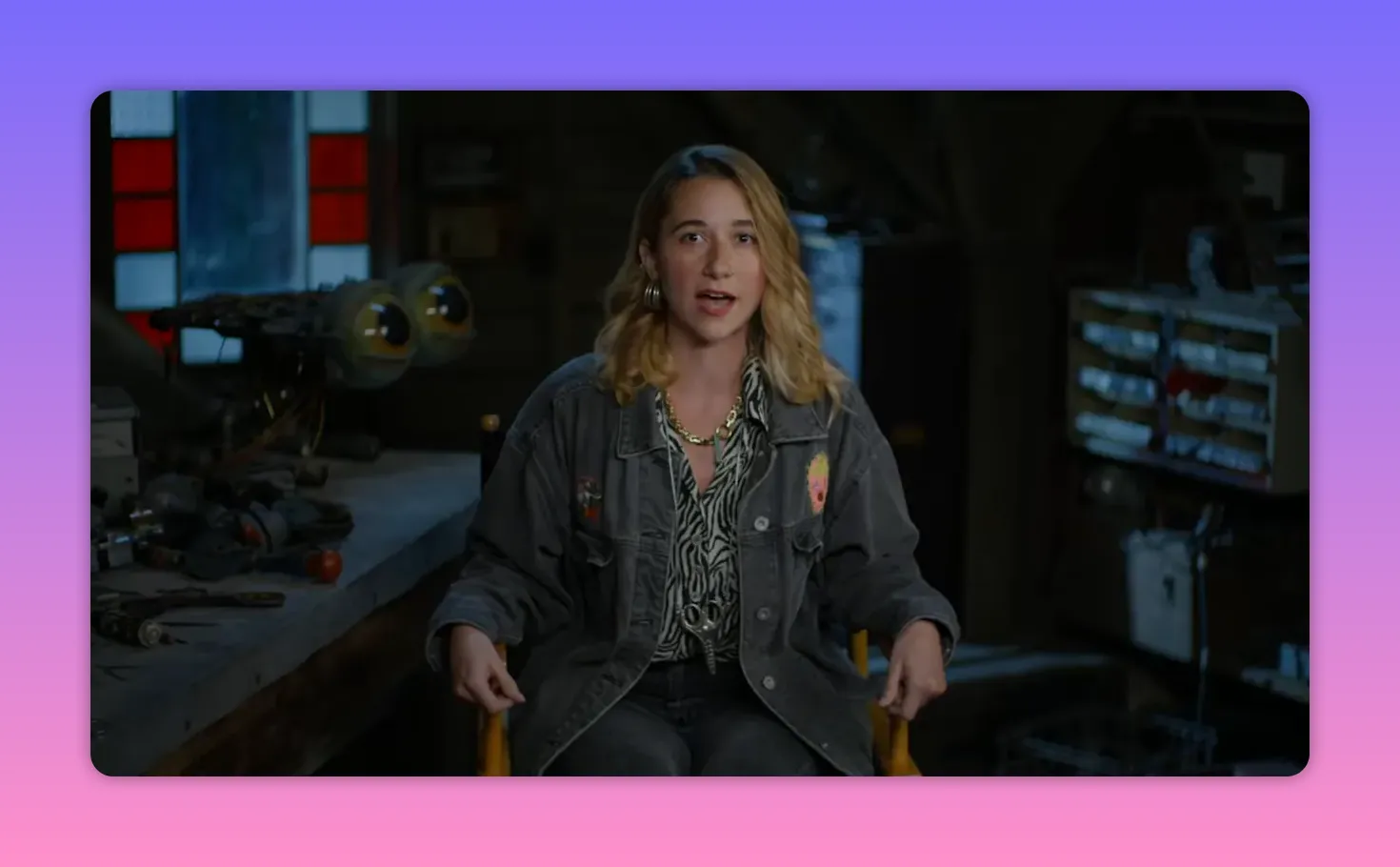
One useful mindset is to approach each task as an experiment. If a technique works, document it. If it fails, note why and how it could be improved. That habit of reflection accelerates craft development and helps junior team members become leaders.
Climbing the ladder: career stages in a wardrobe department
Film wardrobe departments have clear roles, each with distinct responsibilities and opportunities for growth. Understanding the ladder helps aspiring costumers plan a path forward.
- Wardrobe assistant / runner — Entry-level role focused on errands, laundry, and basic prep. Opportunity to observe and assist.
- Ager/dyer — Specializes in making garments appear used and appropriate for the story’s time and environment.
- Costume buyer / shopper — Procures garments from stores, vintage shops, and costume houses, matching design briefs and budgets.
- Standby / on-set assistant — Works on set during production to maintain costume continuity and handle quick changes.
- On-set principal costumer — Leads the on-set wardrobe team, coordinates with production, and ensures costume continuity across filming days.
- Costume designer — Conceptualizes the wardrobe, creates the visual language of clothing, and directs construction and sourcing.
Each stage offers new responsibilities. Moving up requires a combination of technical skill, communication, and the ability to lead a small team under pressure. The climb is as much about reliability and temperament as it is about sewing ability.
Collaboration: working with other departments

Great costume work is never created in isolation. Wardrobe must sync with hair and makeup, sound, production design, stunts, and the camera department. Early and frequent communication avoids conflicts and creates cohesion.
Examples of collaborative problems and solutions:
- Sound and costume clash: If a particular fabric rustles, the costumer and sound mixer may experiment with alternatives or add lining to minimize noise.
- Stunts and costuming: For a fall, a costume may need breakaway seams or hidden reinforcements. Stunt coordinators and costumers work together to balance safety with appearance.
- Period accuracy: Production design and costume designers share reference materials so sets and clothing feel historically aligned without contradicting each other.
These collaborative solutions require flexibility and creative problem solving. Often, the best fixes are simple: a small stitch here, a different trim there, or a re-ordered shooting schedule to allow repair time.
Problem solving under pressure: realistic examples
Film sets are dynamic. Clothes tear, weather changes, and actors improvise. The wardrobe lead must think quickly and prioritize tasks to keep the production moving.
Real-world scenarios and typical remedies:
- Unexpected stain moments before a closeup — use localized dyeing or a photographed reference for continuity and swap to a backup item that matches the worn-in look.
- Fast change scene with dozens of extras — pre-rig outfits with snaps and Velcro for speed and assign assistants to specific actors for consistent handling.
- Wardrobe malfunctions during stunts — design removable or replaceable sections that allow for quick post-stunt repairs without full costume removal.
These practical solutions come from experience and a willingness to design for failure as much as for success.
Design thinking for costumers: making choices that support story
Costume decisions need to reflect character, story, and practical constraints. Good design thinking starts with questions:
- What does this character do in the scene and how will movement affect the silhouette?
- What era, location, and socioeconomic status does clothing need to convey?
- What lighting and camera choices will highlight certain textures or colors?
- How often will this costume be used and how should it age over time in the narrative?
Answering these questions leads to choices about color palettes, fabric selection, and the level of visible wear. A costumer must also think about maintenance: how the garment will be laundered, patched, and stored through shooting. These operational decisions are as important as aesthetic ones.
Tools of the trade: what to keep in your kit
A costumer’s kit is curated for speed and versatility. It should cover basic repairs, quick alterations, finishing, and emergency fixes.
- Sewing kit — Heavy-duty needles, a range of thread weights, safety pins, and a small sewing awl.
- Adhesives and tapes — Fabric tape, double-sided tape, and a fast-setting glue for trims and small attachments.
- Steamer and irons — Portable steamer, travel iron, and a heat-resistant mat.
- Fasteners — Snaps, hooks, Velcro strips, elastic, grommets, and basic hardware.
- Microphone accessories — Wire clips, thin Velcro, small bags for transmitters, and spare mic tape.
- Stain and dye supplies — Fabric dye, color correctors, dilute paints for aging, and cleaning solvents.
- Measuring and marking tools — Tape measures, tailor’s chalk, and fabric pens that disappear under heat.
Organizing this kit so it is portable and logically arranged makes a huge difference when changes are time-sensitive.
Mindset and habits that lift a wardrobe career
Technical skill is important, but there are softer qualities that define success in on-set wardrobe roles.
Essential habits include:
- Curiosity — Learn new materials, techniques, and tools. The craft evolves constantly.
- Attention to detail — Noticeingsmall inconsistencies can prevent large problems later.
- Calm under pressure — Maintain a steady approach when rapid decisions are required.
- Documentation — Photograph, label, and record everything so changes are reversible and reproducible.
- Willingness to teach and learn — Every job in wardrobe has something to offer; pass that knowledge on.
These habits blend into what colleagues call reliability: the person the production knows will get the job done quickly and well when it matters most.
Advice for people starting out
Breaking into film costume work is less about formal credentials and more about experience and reputation. Here are practical steps to begin and grow:
- Start on small productions, student films, or community theater to learn basics and build a portfolio.
- Volunteer in costume houses or vintage shops to develop a feel for different eras and fabric performance.
- Learn the tools: sewing machines, steamers, and basic dye techniques. Online tutorials can supplement hands-on practice.
- Network respectfully — offer to help on set and be the person who does the small tasks consistently well.
- Document your work with before-and-after photos and process notes to show decision making and technique.
Progression follows interest and initiative. Someone who starts as an assistant and demonstrates both skill and professionalism will find opportunities to advance.
Why the craft matters: the power of small choices
It feels really cool to see your creations come to life.
That satisfaction is more than pride; it is proof that costume work changes how an audience perceives a character and a story. A well-aged jacket can suggest a lifetime of experiences. The way a collar sits can hint at personality. The cumulative effect of maintenance, aging, and fit is an invisible language that supports performance and director intent.
Costume work is storytelling through fabric. That is why the role of an on-set principal costumer matters — they protect that language and translate vision into wearable reality.
Examples of on-set decisions that shaped scenes
To illustrate, consider a few brief scenarios where costume choices altered audience perception:
- Choosing a slightly faded, oversized sweater for a character immediately softens their visual presence and suggests a practical, lived-in life compared with a brand-new sweater that could signal prosperity or care.
- Adding hidden patches and mending to a costume implies longevity and thrift without explicitly stating it in dialogue.
- Selecting matte fabrics instead of shiny ones prevents unexpected glare under lights, keeping the viewer focused on performance rather than reflections.
These choices are subtle, but they are the kind that anchoring a scene in authenticity depends on.
Documentation and continuity: the unsung cornerstones of repeatability
Every costume department develops a system of documentation tailored to its scale. The goal is the same: make every garment reproducible, repairable, and consistent across time.
Common documentation practices:
- Photographs of each costume from multiple angles with labeled notes about cuts, trims, and distressing.
- Continuity books grouped by scene, shot, and actor with frame references.
- Checklists for washing, repair intervals, and backup items.
- Digital files stored with production paperwork for rapid access during reshoots.
These systems protect both the creative vision and the production’s investment in time and materials.
On artistry and growth: keep climbing the ladder
There is a pragmatic optimism that comes with a career in wardrobe: you can reach a high level of craft and still find new things to learn. The department’s hierarchy is not just a series of titles; it is a sequence of responsibilities that expand your influence on how stories are told.
Continuing education — through apprenticeships, workshops, and collaborative projects — keeps skills fresh. Participating in different genres exposes costumers to new construction methods and aesthetic choices. The world of costume work rewards persistent curiosity.
Final thoughts: the craft is ever-evolving
Costume making and care for film is a living practice. It borrows from fashion, theater, visual art, and engineering. Whether the task is making a garment look like it has been lived in for years or constructing a whole range of looks for a single crowded scene, each job is an opportunity to shape the story in a meaningful way.
Becoming a trusted member of a wardrobe team means being technically prepared, emotionally steady, and always ready to learn. Those who bring these qualities find that the ladder of experience leads not only to advanced titles but to deeper impact on the work they love.
FAQ
What does an on-set principal costumer do?
An on-set principal costumer organizes and maintains costumes during production. Responsibilities include prepping daily outfits, steaming and finishing garments, attending rehearsals to anticipate needs, wiring actors for microphones, monitoring continuity through photographs and notes, and leading quick repairs or alterations on set.
What is an assistant ager/dyer and why is it important?
An assistant ager/dyer specializes in making garments look worn or lived in through techniques like staining, fading, abrading, and layered dyeing. These treatments convey character backstory and help clothing read correctly on camera, making the fictional world feel authentic.
How do you prepare a costume line for a shooting day?
Preparing the line involves organizing outfits in sequence with labels, backing up critical pieces, steaming and finishing garments, and noting accessories and undergarments. The prep should include contingency plans for stains or damage and clear instructions for quick changes.
What tools should every costumer carry on set?
Essential tools include a compact sewing kit, a portable steamer, fabric tape, Velcro, snaps, thread assortment, spare fasteners, stain and dye supplies, wire clips for microphones, and measuring and marking tools. Portability and logical organization are key.
How do you handle wiring microphones without compromising costume design?
Wiring is managed by creating discreet access points in linings, sewing small loops or channels to route wires, and using thin Velcro or clips to secure packs out of sight. Collaboration with the sound department ensures microphone placement balances audio quality with visual integrity.
How can someone start a career in film costume work?
Gain experience on student films, community theater, or independent productions. Volunteer or work in vintage shops or costume houses to learn fabric behavior and period details. Build a portfolio of before-and-after photos, learn essential tools like steamers and sewing machines, and network by offering reliable help on set.
How important is documentation in costume work?
Documentation is critical. Photographs, labeled notes, continuity books, and digital files ensure looks can be reproduced, repaired, or adjusted consistently. Good documentation saves time and preserves creative intent, especially across long shooting schedules or reshoots.
What makes a costume successful on camera?
A successful costume supports character and story, reads correctly under lighting, withstands the demands of production, and maintains continuity across takes. Attention to fit, texture, aging, and functional needs like wiring or stunt compatibility are all part of success.
Why is collaboration with other departments necessary?
Costumes interact with hair, makeup, sound, stunts, and production design. Early collaboration prevents conflicts like noisy fabrics, incompatible prosthetics, or unsafe stunt garments. Cross-department communication ensures cohesion in visual storytelling and practical safety.
What mindset helps you grow from an assistant role to a leadership position in wardrobe?
Adopt curiosity, be dependable, document your work, learn continuously, and remain calm under pressure. Demonstrating these habits builds trust and opens opportunities to lead small teams and manage on-set responsibilities effectively.


