


There is a rare kind of film that asks to be experienced, not merely consumed. Avatar: Fire And Ash is one of those films. Arriving as the latest chapter in a cinematic universe built on scale, imagination, and technical innovation, it brings audiences back to Pandora — a world so rich and singular that people say, “They like being on Pandora. They like traveling to this planet.” That sentiment captures why this release matters: it is less a movie night and more a return voyage to a place that feels alive.
Why the London premiere matters
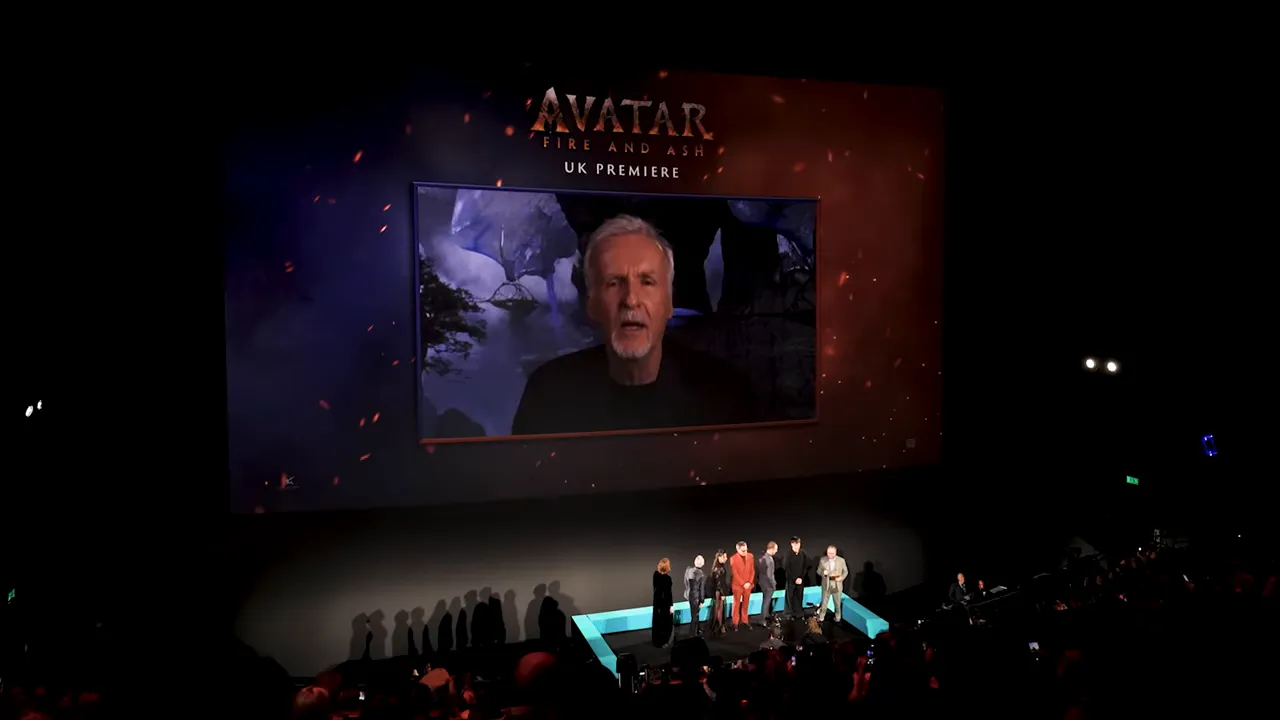
Premieres are more than publicity; they are communal rituals that amplify the promise of a film. The UK premiere in London acted as a reminder that Avatar is not just a franchise but a cultural event. London has been a home base for many of the cast and creators, and the city’s filmgoing tradition made it the perfect setting for a celebration of scale and spectacle. A cast member summed it up simply and warmly: “It’s beautiful to be here in London. I feel at home here. I live here for 15 years and I’m really excited to share the movie with everyone.”
That sense of home and excitement translates into the energy in the room — fans, filmmakers, and creatives converging with one shared expectation: to be astonished. A premiere like this sets the tone for how audiences will approach the film in the weeks that follow.

Pandora as a place, not just a setting
What sets this series apart is not only technical bravura but worldbuilding that invites exploration. Pandora has been carefully cultivated across multiple films into a landscape that rewards attention. It is vast and layered, populated with ecosystems and cultures that demand curiosity. The simplest praise often says the most: “There’s nothing like Avatar.” That is not just brand loyalty. It is recognition that Pandora functions as a destination, a planet viewers willingly return to.
Worldbuilding at this level functions on multiple fronts. Visual design, sound, language, flora, and fauna all combine to make the environment persuasive. Imagination becomes a tangible asset; audiences step into an ecosystem that feels coherent and lived in. Small details — the way light filters through foliage, the unique physiology of a new creature, the cadence of an alien language — are not window dressing. They are the scaffolding that allows emotional investment to take hold.
The appeal of traveling to a different world
Escapism here is not a retreat from reality but a recalibration of it. Traveling to Pandora means being offered a new point of view, one that reframes familiar human concerns in an unfamiliar context. That shift creates space for wonder while still resonating emotionally. Fans talk about the journey with sincerity: the joy of discovery, the thrill of spectacle, and the comfort of returning to characters and places that feel meaningful.
New characters, new stakes

Returning to a beloved world carries the burden of expectation: new stories must feel fresh while remaining faithful to the spirit of the original. The promise here is clear and simple: Pandora is expanding. “They’re going to be astounded to meet some of the new characters.” Introducing new faces in an established world requires careful balance. Each new character should illuminate the setting, open up thematic possibilities, or complicate existing relationships in interesting ways.
When new characters are well conceived, they do more than populate scenes. They broaden the moral and emotional geography of the film. They can serve as mirrors, antagonists, or allies to familiar protagonists, and their aesthetic design often reveals as much about the world as any exposition. Well-handled additions can make Pandora feel larger and more capacious while deepening audience engagement.
Why you should see this on the biggest screen possible
The case for seeing Avatar: Fire And Ash in a cinema is not just promotional hyperbole. This is a film engineered for scale. The director has constructed sequences and images that are calibrated to the big screen, leveraging aspect ratio, depth, and sound in ways that a handheld device simply cannot replicate. The message is clear and direct: “You have to see this in a big screen.”
It has to be, you know, something that’ll takes us all back to the cinema.
That phrase captures what this release aspires to do: to reignite the communal, sensory pleasures that make cinema a unique form of entertainment. Immersive visuals, intricate soundscapes, and carefully crafted 3D or IMAX presentations transform passive viewing into an event. Smaller displays compress the visual field and flatten the sense of depth that the filmmakers intended. If the goal is to be transported, the environment in which the film is experienced matters tremendously.
What the big screen adds
- Scale: Larger-than-life vistas and intricate set pieces read as intended only when given the room to breathe.
- Depth: Advanced 3D and projection techniques create dimensionality that a TV or tablet cannot reproduce.
- Audio: Surround mixes and IMAX sound systems reveal subtleties in the score and environmental design that a home speaker misses.
- Communal energy: Shared gasps, laughter, and silence amplify emotional beats and create a social memory around the viewing.
Technical craft: where imagination meets innovation
Few contemporary filmmakers blend storytelling and technical invention as ambitiously. The production of these films builds on a lineage of innovation while pushing into new territory. Techniques that once seemed futuristic become tools for emotional expression. Performance capture, volumetric lighting, advanced water work, and refined rendering pipelines all contribute to an image whose fidelity serves the narrative rather than overwhelming it.
The franchise has continually shown an appetite for technical risk. From new methods for capturing underwater performance to progressive advances in texture and hair simulation, the goal has been to make Pandora feel physically present. This is not spectacle for spectacle’s sake; it is spectacle harnessed to atmosphere, character, and theme. The result is a cinematic language that feels immersive without losing clarity.

Underwater filmmaking and the evolution of craft
One of the technical hallmarks of recent entries has been sophisticated underwater capture. Mastering the logistics of performance in a submerged environment required not only technological adaptation but also creative problem solving. When filmmakers resolve how to capture breath, gesture, and gaze below the surface, they unlock new emotional possibilities. The way water becomes a character of its own — refracting light, distorting sound, altering motion — invites audiences to experience the familiar in novel ways.
Jim Cameron’s imaginative scaffolding
A recurring refrain about this work is the director’s vision. Calling Pandora “a remarkable place that Jim Cameron has imagined” acknowledges the singular role of directorial imagination in shaping a world. That imagination operates like an architect’s blueprint, defining the rules, the color palette, and the emotional geography that all collaborators then translate into filmic language.

Imagination at this scale is not solitary. It requires a synthesis of design, performance, music, and technology. The director’s job becomes one of orchestration: setting parameters and inviting the team to expand the boundaries. The invitation to audiences is simple: “Put on your glasses and buckle up and let’s head back to Pandora.”
The social dimension of a premiere night
Premiere nights are a social mirror. They reflect how a film positions itself culturally and how audiences respond to that positioning. On a personal level, the excitement at the UK premiere — the mingling of cast, crew, and fans — signals a shared anticipation that carries into general release. The red carpet and applause matter not because they are gilded rituals, but because they convert a film into a live event.
For fans in attendance, that live event confirms the film’s promise. For those watching at home, the images and reports from a premiere help shape expectations. But the most direct effect is felt by those who take part in the cinema itself: the physical proximity, the soundtrack enveloping the room, the projected image stretching beyond the edge of vision. Those experiences create memories that last longer than a single viewing.
Practical advice for making the most of the experience
If the intention is to be fully present for this film, a little preparation goes a long way. Below are practical tips to maximize both comfort and impact:
- Choose IMAX or premium large format when possible. The increased screen size, higher resolution, and upgraded audio will preserve the scale and detail the filmmakers designed.
- Select seats toward the center and a little back. This gives a balanced field of view that maintains depth without forcing your eyes to dart excessively.
- Reserve tickets in advance. Major releases in premium formats can sell out quickly; booking early ensures the best seats.
- Time your visit. Avoid late-night commuters and choose showtimes that let you arrive relaxed and focused.
- Arrive with curiosity rather than expectation. Even as a fan, allow the story and visuals to surprise you instead of trying to predict every beat.
- Consider 3D if available. If the film is presented in stereoscopic 3D and you are comfortable with the format, it will enhance dimensionality and depth cues.
Why cinematic event films matter now
In an era of streaming convenience and high-quality home setups, why do certain films still require theatrical space? The answer lies in scale, spectacle, and shared emotion. Event films like Avatar: Fire And Ash are engineered to deliver multi-sensory experiences that rely on scale and sound. They are also cultural touchstones that prompt conversation and communal memory.
These films encourage audiences to make time for the ritual of going out, buying a ticket, sitting in the dark with strangers, and letting themselves be moved. There is a social contract implicit in that choice: viewers agree to invest attention and to recalibrate expectations accordingly. What they receive in return is a heightened encounter with story and aesthetic that is hard to replicate alone.
The responsibility of spectacle
Scale comes with responsibility. Filmmakers must ensure that spectacle supports meaning rather than obscuring it. When technical prowess and narrative clarity align, the spectacle elevates emotional stakes. Audiences leave with images lodged in memory and ideas that continue to resonate. That balance between craft and heart is what turns curiosity into something resembling affection.

How the franchise has evolved
From the earliest iteration to the present, the franchise has expanded both narratively and technically. Each new installment offers a refinement of what made the originals memorable while introducing fresh elements that respond to contemporary expectations. Whether through character development, an expanded mythos, or advances in cinematic technology, the goal has always been to make Pandora feel more lived-in and thematically complex.

Evolution need not mean replacing what worked. Often it means enriching it: deeper cultural detail, more nuanced moral choices, and greater sensory richness. The result is a franchise that grows organically, giving both newcomers and returning fans reasons to invest their time.
Preparing younger audiences and new fans
For many, this film will be their first return to Pandora or their first introduction to this world. The best way to approach it is with curiosity and patience. There is no prerequisite to appreciate the spectacle, but an openness to immersive storytelling helps. Younger viewers will find wonder in the designs and creatures; older viewers may appreciate the thematic threads that connect across films.
One practical suggestion is to arrive with a mindset that privileges discovery. Let the film unfold without the pressure of immediate comprehension. Some films reward second viewings; this is the kind that likely will too.
What to expect from the UK release
The film is set to reach audiences in cinemas and IMAX on December 19. Expect a theatrical rollout that prioritizes premium formats and event-level marketing. If the UK premiere is any indication, the release strategy will emphasize the communal and sensory aspects of cinemagoing, leaning into the immersive qualities that make the franchise distinct.

Final thoughts: returning because these films reward presence
There is a specific kind of satisfaction that comes from surrendering to a cinematic world intentionally created to receive you. Returning to Pandora feels less like revisiting a franchise and more like stepping into a shared dream. The imagery and narrative architecture are designed to be absorbed slowly, to be felt, and occasionally to astonish.
As one cast member put it in a moment of candid enthusiasm: “Put on your glasses and buckle up and let’s head back to Pandora.” That invitation is both literal and figurative. If you accept it in the right setting, the payoff is cinematic pleasure at its most elemental: awe, emotion, and the sense that a fictional world has become, for a time, almost tangible.
Frequently Asked Questions
When will Avatar: Fire And Ash be in cinemas?
Experience the film only in cinemas and IMAX on December 19.
Why should I see Avatar: Fire And Ash in IMAX or a large format?
The film was created with scale, depth, and immersive sound in mind. IMAX and premium large formats preserve the visual detail, dimensionality, and audio design intended by the filmmakers, making the experience significantly more immersive than smaller screens.
Do I need 3D glasses to see the film?
If the film is presented in stereoscopic 3D and you choose that format, 3D glasses will be provided by the cinema. 3D enhances depth cues and can increase immersion, but premium 2D formats like IMAX still deliver a powerful experience.
Is it necessary to have seen earlier Avatar films before this one?
Prior knowledge can enhance appreciation of recurring characters and long-term story arcs, but the film is designed to deliver spectacle and emotional beats that new audiences can enjoy. Approach the film with curiosity and you will find accessible entry points.
What technical innovations does the film feature?
The production continues to advance performance capture, underwater filming techniques, lighting and rendering pipelines, and immersive audio design. These innovations are used to create a more convincing and emotionally resonant depiction of Pandora.
Where was the UK premiere held and what was the atmosphere like?
The UK premiere took place in London, drawing cast, filmmakers, and fans. The atmosphere combined celebration and anticipation, emphasizing both the personal connection many of the cast feel to the city and the communal excitement for returning to Pandora.
How can I make the most of my cinema visit?
Book early for premium formats, choose seats toward the center and slightly back for optimal viewing, arrive relaxed and focused, and consider 3D or IMAX if available. Bring curiosity rather than fixed expectations to allow the film to surprise you.
Will this film introduce new characters and expand Pandora?
Yes. The film introduces new characters that broaden the world and deepen narrative possibilities. These additions are designed to expand Pandora’s cultural and ecological landscape while opening fresh emotional and thematic directions.


