

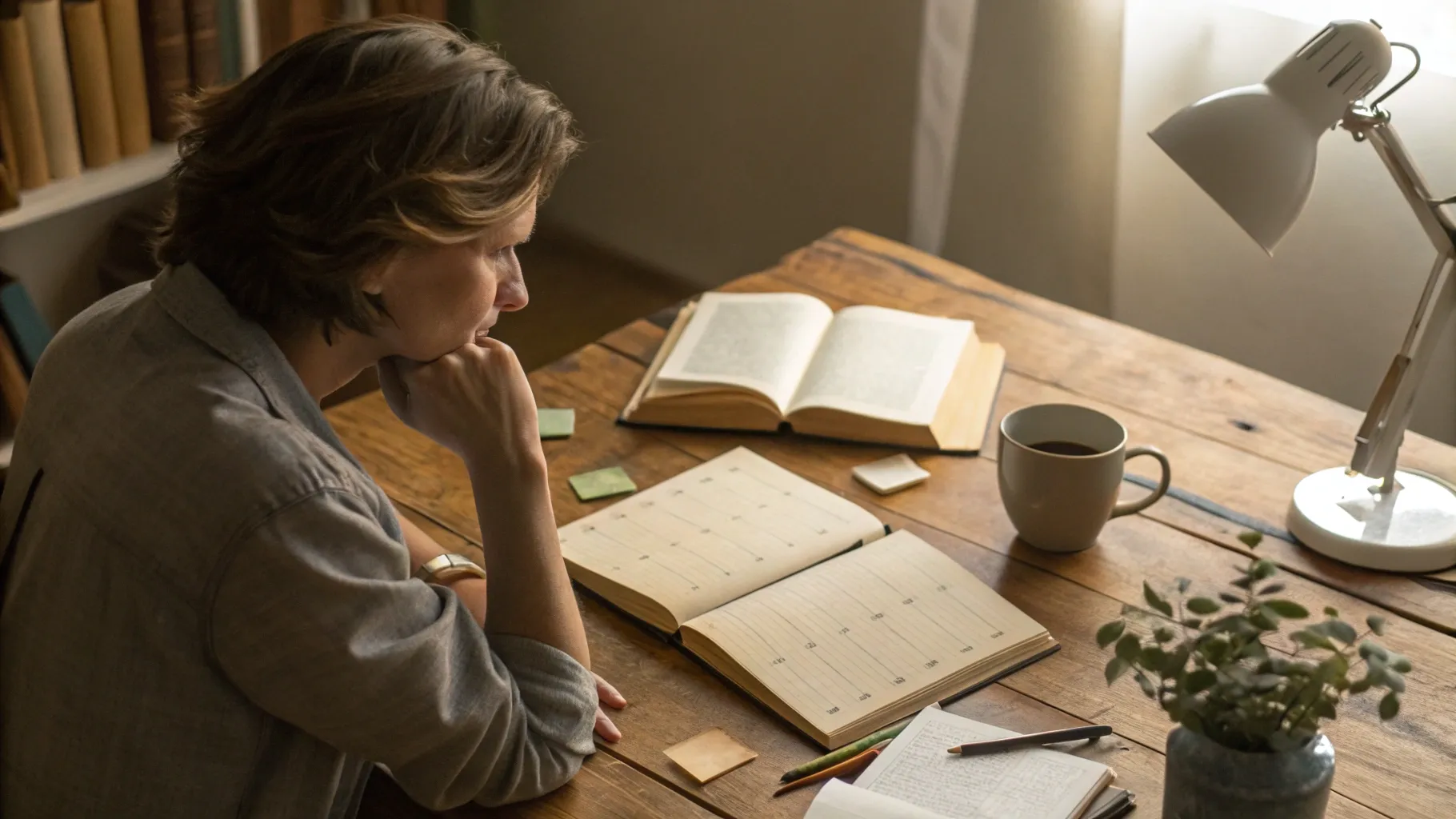
Why we examine what went wrong
Every year offers a mix of wins and things we could have done better. Celebrating success is important, but honest reflection is where real improvement starts. Being self-critical is not about dwelling on mistakes or beating ourselves up. It’s about recognizing patterns, adjusting systems, and making deliberate choices that help us do better next time.
We don’t label every missed goal a catastrophe. Some plans simply shift when life or new priorities arrive. Still, a few recurring missteps stood out in 2025, and laying them out helps us design practical fixes for 2026.
Reading plans that slipped—and how we’ll fix them
1. Overambitious reading schedules
We committed to several mini-series, standalone spotlights, and new series launches this year—pallet cleansers, multiple standalones, and brand-new series arcs. Four pallet cleansers and two new series didn’t make the cut. The culprit wasn’t lack of interest but poor contingency planning. When unexpected reads like multiple Ronald Malfi books landed on the TBR, the more elective items were the first to go.
The lesson: build flexible buffers into reading plans. Instead of fixed lists of four or five items, prioritize three with two backups. If a surprise book arrives, we can swap rather than drop.
2. Review copies became a lower priority
Receiving review copies is a privilege. We asked for several and were fortunate to receive big titles, yet they didn’t always get the timely attention they deserved. Reviews for new releases perform well and are time-sensitive. Letting those slip cost engagement and missed relevance.
Fix: carve out a dedicated review slot each month. When a review copy arrives, bump it to that slot or the next available one. Treat review copies as calendar commitments, not optional items.
3. The urban fantasy hunt still ongoing

We tried a few urban fantasy series this year—titles that many consider cornerstones of the genre. Three attempts didn’t click: Alex Verus, Mercy Thompson, and Rivers of London. None resonated the way we wanted a new long-term series to. That’s disappointing because we’re looking for a successor to the long-standing favorites that shaped the channel.
Urban fantasy can be a love-or-lose genre. The fix is to broaden the search criteria: instead of leaning on best-of lists alone, look at voice, pacing, and protagonist alignment. Try short sample arcs or the first two books before committing. Keep a rotating list and treat the first book as an audition.
4. Neglecting science fiction
The channel advertises a mix of horror, sci-fi, and fantasy, but this year sci-fi coverage shrank dramatically. Sun Eater was a highlight, but beyond that, sci-fi was virtually absent. That creates a content imbalance and misses out on readers who lean toward science fiction.
Solution: schedule at least one sci-fi focus every quarter. Commit to a few specific titles—both near-future and space opera—to diversify our offerings. Next year we’ll try VA’s War and build from there.
5. Falling off One Piece
We meant to get back into One Piece but stalled after an arc that didn’t land for us. Instead, other manga projects and sagas took priority. That hiatus became longer than intended, and now other creators have passed us in the read-through.
The remedy: set a small, consistent reading cadence for long serial works. Even two chapters a week keeps momentum without overwhelming time. Treat long-running series like a long-term subscription rather than a sprint.
6. DNFs climbed—and why that can be okay
We had three DNFs this year, a rare number. Historically we avoid DNFs because we value finishing books; this year we embraced putting down titles that no longer sparked interest. That’s healthy—there are too many books and too little time.
Next step: refine the selection process so fewer unsuitable books get started. Use quick pre-read checks: first 50 pages, tone, and character connection. If those aren’t working, move on without guilt.
Video content and production—misses we’ll repair
1. Unfinished device reviews

A significant gap this year was an incomplete review of a color e-reader. The device sat unused in the review pile after a brief trial, and that’s not a helpful review for readers deciding whether to replace their primary e-reader. A half-hearted test that leads back to the old device isn’t useful to anyone.
Our approach: commit to a minimum testing period for any hardware review. Use the device for two weeks as the primary reader, test all notable features, and produce a clear verdict: who is this for and who is it not for.
2. Collaborations that didn’t happen
Invited authors and creators sometimes decline or schedules collide. Collaboration is a two-way street and not always in our control. Still, some planned appearances fell through and communication could have been clearer.
We can get better at expectations management. When inviting a guest, clarify the format, time commitment, and follow-up steps. If someone backs out, have a plan B in place so content momentum continues.
3. Live stream disasters and pre-recording
Live streaming author interviews is high reward but high risk. One particularly embarrassing livestream ended with the host knocked offline, leaving a bestselling author moderating the chat until we reconnected. It was mortifying but instructive.
Pre-recording author chats and live premieres solves the worst tech risks but removes some spontaneity. A hybrid model works well: pre-record the main interview and then host a short live Q and A afterwards. That preserves safety while offering real-time engagement.
Channel growth, social media, and audience expansion
1. Dwindling growth and soft ceilings
Growth plateaued for a third straight year. Hitting a soft ceiling can be demoralizing, but it’s usually a sign that tactics need refreshing. Some of the stagnation likely results from platform algorithm changes, inactive subscribers, and a broader saturation of content.
What we can control is relevance. That means fresh formats, timely reviews, and occasional risk-taking. Keeping routine is comfortable, but growth requires pushing beyond comfort zones occasionally.
2. Overstretching with multiple platforms

Trying to populate YouTube, TikTok, Instagram Reels, and shorts creates a replication treadmill. We gained traction on TikTok quickly but couldn’t sustain the output. Editing everything twice and reshaping content for different platforms burned time and energy.
The fix is focus. Pick one or two platforms to grow intentionally while maintaining the core content schedule. Outsource or delegate repurposing when it makes sense, or create short, native-first content that doesn’t require re-editing the long-form asset.
Community and patrons—giving back better
Patrons provide tangible support and deserve meaningful value beyond small tokens. Interest in former perks like monthly calls and movie nights faded, but patrons still want ways to connect and receive exclusive content.
We should ask patrons what they want. Consider tiered offerings that scale without consuming the core creator’s time: exclusive monthly short essays, behind-the-scenes reading lists, patron-only polls to shape the TBR, or quarterly Q and A letters. Micro-perks—like early access to certain reviews or digital bookmarks—can feel personal without overwhelming logistics.
Events, conventions, and missed opportunities
1. Not capturing special event content
Hosting events for bestselling authors was a highlight, but failing to capture and share those moments was a missed opportunity. We chose to live in the moment and avoid recording, but leaving nearly zero documentation meant the channel missed valuable content and reach.
Balance matters. Enjoying the lives in person is important, but so is preserving once-in-a-lifetime access. Record key segments, capture short interviews, or write reflective pieces afterward. The presence and the coverage are not mutually exclusive.
2. Credentialing and attendance
We were approved as a panelist for a major convention but couldn’t make the schedule work. Missing a convention where we had credentials is painful because it’s one of the best ways to connect with peers and expand audience reach.
When credentials come through, we’ll block the calendar early, involve family where possible, and set contingency plans for work coverage. If attendance still fails, we’ll at least aim for post-event content: recaps, interviews with attendees, and takeaways for people who couldn’t be there.
Personal factors that influenced performance
1. Seasonal mood and creative energy

Seasonal shifts can drag creativity down. Shorter days, more rain, and less sunlight affect mood and motivation. We’ve talked about safeguards but didn’t act consistently. That left a few months of lower energy and fewer creative risks.
Practical steps: get a small UV light for work sessions, design a “bright” reading list for the darker months, and schedule lighter production tasks during low-energy periods. Preventive measures beat recovery.
2. Job changes and life transitions
Facing job loss or major career transitions at midlife is heavy. It changes financial priorities and emotional capacity. We’re not immune to that. Preparing for a first-quarter job loss was on the horizon and it colored energy and focus.
Action items: treat the channel like a safety valve and not the sole plan. Update professional networks, sharpen resume and interview materials, and allocate uninterrupted time to job-hunting while protecting creative output with a smaller, sustainable content plan.
Concrete plan for 2026
Reflection without action is procrastination. Here is a pragmatic, prioritized plan that addresses the failures of this year.
Reading and review process
- Prioritize three core reads each month and two backups. Backups replace the core reads only when surprises arrive.
- Block review-copy slots on the calendar and treat those slots as firm commitments.
- Adopt pre-read checks: test the first 50 pages. If the book doesn’t connect, put it aside without guilt.
- Schedule quarterly sci-fi and urban fantasy months to rebalance the genre mix.
Content production and tech
- Define minimum testing periods for hardware reviews so recommendations are decisive and useful.
- Pre-record high-stakes interviews and host short live Q and As for community interaction.
- Run tech checks before any livestream—and have a wired and wireless fallback plan.
Audience growth and social media
- Pick one platform to expand on externally and focus on it for six months. If TikTok is chosen, tailor native content instead of reformatting long-form posts.
- Consider delegating repurposing tasks or training a small team member to handle short-form edits.
- Experiment with one new show format each quarter to keep existing subscribers engaged and attract new viewers.
Community and patron engagement
- Survey patrons about preferred perks and time windows for live interaction.
- Offer scalable perks such as monthly behind-the-scenes notes, early access to reviews, and patron polls that shape the TBR.
Events and conventions
- Plan travel and coverage early when credentials are approved. Treat it as a professional obligation.
- Capture key moments even if we keep most of the experience phone-free for ourselves.
How we’ll measure progress
Plans are only useful when measured. We’ll track these metrics monthly:
- Number of review copies read and published within the scheduled month
- Number of sci-fi or urban fantasy features per quarter
- Patron engagement rate on polls and exclusive posts
- Number of successful collaborations completed versus planned
- Audience growth rate across primary and chosen expansion platforms
These metrics won’t capture everything, but they will reveal whether our new systems are working.
Mindset: how to treat failure constructively
We treat failure the same way we treat DNFs: acknowledge quickly, learn, and move on. Failing fast on a tactic saves time and energy for something better. Self-critique should be practical, not punitive.
Some reminders to keep us grounded:
- Context matters. Life changes and platform shifts are real. Adjust expectations accordingly.
- Celebrate small wins to avoid letting a few missteps define an entire year.
- Iterate, don’t overhaul. Small, regular improvements compound into big change.
Examples and small course corrections
A few concrete examples of small changes with outsized impact:
- From reactive to proactive with review copies: add a “review copy received” calendar event. If not scheduled within two weeks, send a reminder to prioritize or respectfully decline to maintain integrity.
- Pre-scripting collaborations: create a one-page brief for each guest that outlines goals, questions, and technical needs. Send and confirm one week ahead.
- Short-form content efficiency: develop a 60-second template for TikTok or Reels; repurpose the main talking points rather than re-editing full videos.
Final thoughts
The year held many positives. Some experiments worked and others didn’t. We learned where our systems were fragile—reading planning, review prioritization, livestream reliability, social media scope, and patron offerings. Those are all fixable.
Changes for next year are realistic and focused. We’ll protect creative energy, build better guardrails for time-sensitive reviews, diversify genre coverage, and be smarter about live events. We’ll also remember that life throws curveballs, and resilience means planning with both optimism and contingency.
If there’s one commitment we make, it’s to keep improving in small, measurable ways. Growth is not a straight line, and course corrections are part of the journey. We’ll take these lessons into 2026 with intention and with an eye for things that truly move the channel and our community forward.
FAQ
How will reading priorities change next year?
We’ll prioritize three core reads per month with two backups. Review copies get calendar slots. Each quarter includes a dedicated sci-fi pick and an urban fantasy experiment to rebalance genre coverage.
Will review copies be prioritized differently?
Yes. Review copies will be treated as calendar commitments. When received, we’ll assign a slot within four weeks to ensure timely reviews and relevant discussion.
Are livestreams still part of the plan after tech failures?
Livestreams are still valuable, but high-risk interviews will be pre-recorded with live premieres or short live Q and A segments to preserve the audience experience and reduce tech risk.
Will the channel try to grow on TikTok again?
We’ll pick one external platform to focus on for a six-month trial. If TikTok is chosen, content will be native-first to reduce duplicate editing workload.
How will we handle patron perks going forward?
We’ll survey patrons for preferred perks and offer scalable options like early access to reviews, exclusive monthly notes, patron polls to influence the TBR, and occasional digital perks that don’t require heavy time investments.
Will there be more sci-fi coverage next year?
Yes. We’ll include at least one sci-fi feature each quarter and begin the year with a planned read like VA’s War to reset balance across the channel.
How will we approach conventions and author events differently?
When credentials are approved, we’ll block the calendar early and plan coverage. We’ll capture select moments to share while still protecting the in-person experience.
How should creators handle seasonal dips in energy?
Use preventive measures like a UV light, a “bright” reading list, and lighter production tasks during low-energy months. Plan lower-effort content that still adds value rather than stopping entirely.
What metrics will be used to judge progress?
We’ll track review copies read on time, genre balance per quarter, patron engagement, completed collaborations, and growth rate on the primary and expansion platforms.
How do we avoid repeating the same mistakes?
Build systems: calendar commitments for time-sensitive items, pre-flight tech checks for live events, brief templates for collaborations, and a focused social strategy to limit burnout. Small systems reduce the chance of repeat failures.


