


Stories live or die on the strength of their central problem. Over years of writing, teaching, and consulting, I settled on seven elements that together make an idea viable for screen, stage, or fiction. I organize them into a simple acronym: PROBLEM. Each letter points to a quality every story needs to hold an audience’s attention and deliver payoff.
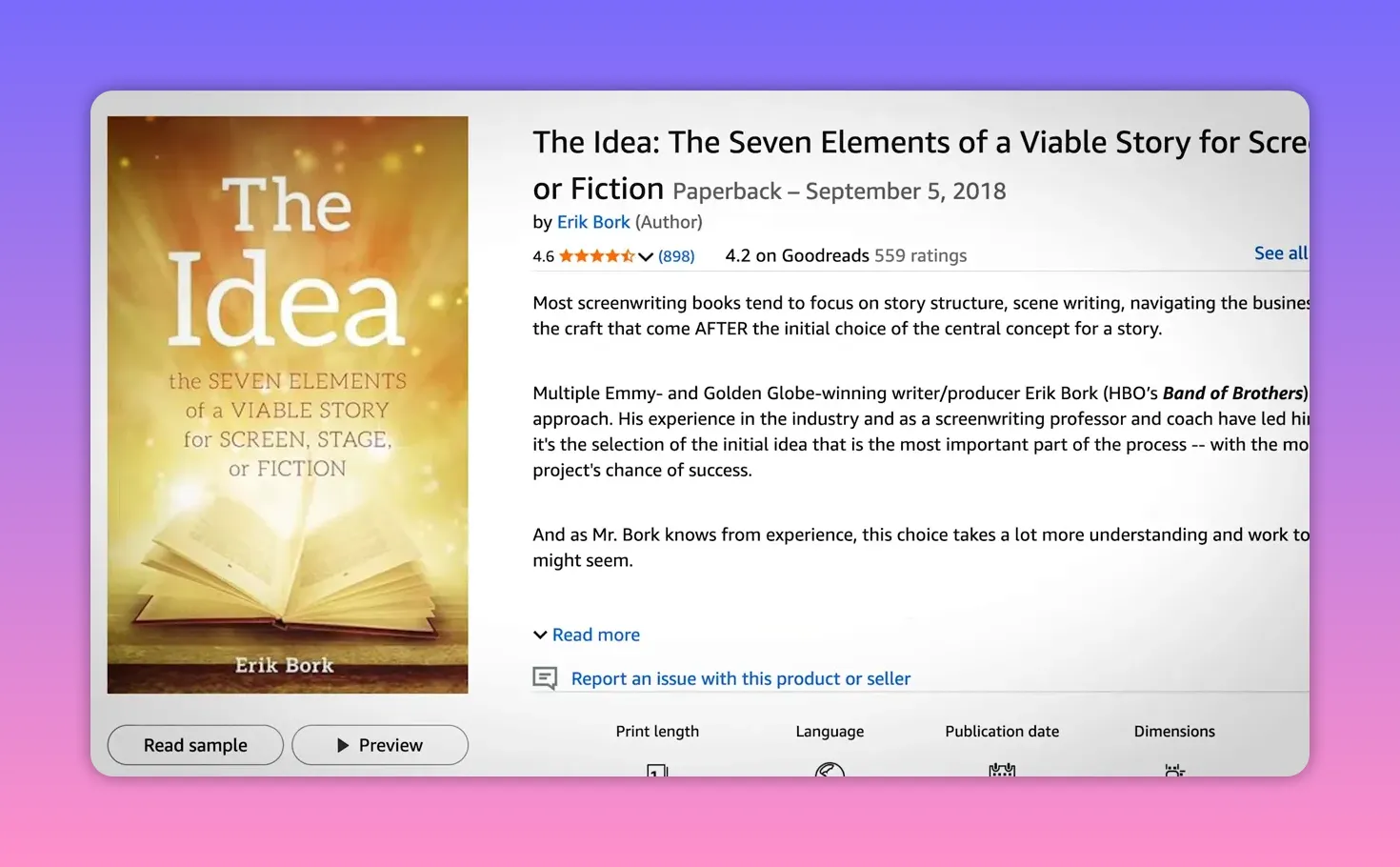
When I set out to write The Elephant in the Room, a romantic comedy set in the fraught months after the 2020 election, I used those seven elements as a constant checklist. I wanted a romcom that felt fresh and pitchable, but also honest about a real source of pain in people’s lives: political polarization. The result is what I call a “red-blue romcom” — a love story where the obstacle is not a misunderstanding or an ex, but fundamentally opposing political identities.
Why the PROBLEM framework matters
Good story ideas are not random. They need shape and pressure. The letters in PROBLEM — Punishing, Relatable, Original, Believable, Life-altering, Entertaining, Meaningful — are not boxes to check for the sake of it. They are lenses that sharpen an idea and help you predict whether an audience will invest in the central question your story poses.
One of the best ways to test an idea is to ask: will people root for this to be solved? In romance, that means rooting for a relationship. In drama it might be rooting for justice or survival. If the audience does not care about the outcome, the story will feel thin. If it cares but the obstacle is too easily overcome, the payoff will be hollow. PROBLEM helps you thread that needle.
How the framework shaped a romcom about politics
The premise of The Elephant in the Room is intentionally simple and specific: a woman in her early 30s, recently single in December 2020, meets a man she likes and with whom she has chemistry. Then she discovers he voted for the same candidate she despises. The stakes get ratcheted up by the timing: the election is contested and it culminates in the January 6 events. Politics becomes the dealbreaker.

On paper, that premise is instantly pitchable because it answers a question: what happens when love collides with political identity at a volatile moment? But premise alone does not make a viable story. Each of the seven elements had to be addressed in the writing, casting, and editing to make the central problem compelling rather than preachy or gimmicky.
PROBLEM, letter by letter
P — Punishing

A problem must be punishingly difficult. If the obstacle is trivial or easily negotiated, the story lacks tension. In a romcom, the obstacle must be capable of denying the relationship until the very end, if the story follows the classic arc.
For The Elephant in the Room, the political divide is not a casual disagreement about taste. It is rooted in identity, fear, and moral judgment. The protagonist tries to probe his views only to encounter moments that make reconciliation harder: the man says things that shock her, and she learns his grandmother might attend the January 6 rally and he considers taking her. Complications like that puncture any naïve hope of a quick reconciliation.

When you build a punishing problem, you layer complications so that a reluctant compromise feels earned rather than contrived. Each new piece of information should raise the cost of resolution. That cost can be emotional, social, or moral, but it must matter to your characters.
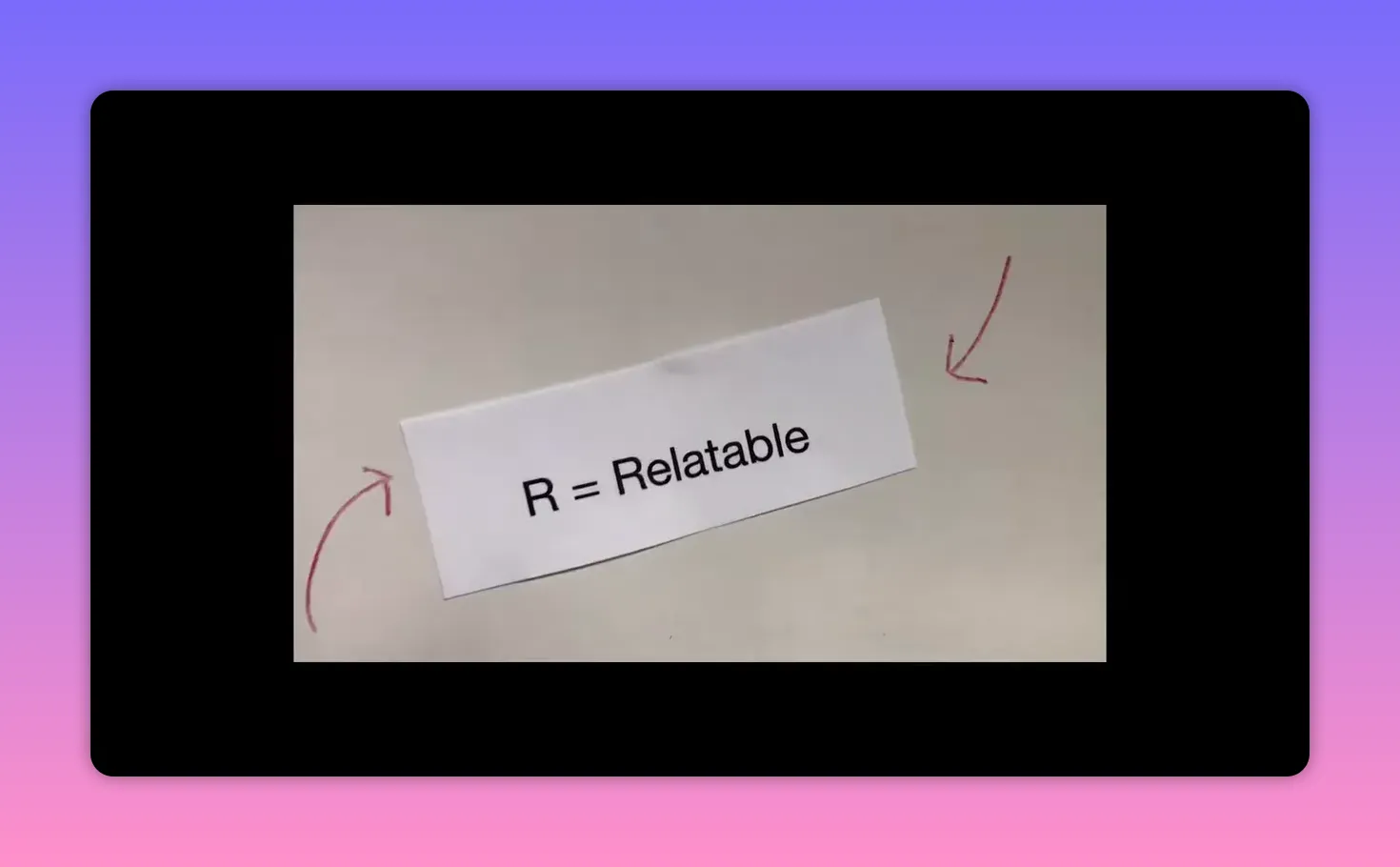
R — Relatable
Relatability is essential. Audiences need to bond with the characters enough to care about what happens to them. In romance that often requires liking both people and seeing how they could be right for each other.
Relatability does not mean characters must be mirrors of the audience. It means they must reveal motivations and vulnerabilities that make their choices comprehensible. In my film, the protagonist is a liberal who cannot fathom how someone she likes could vote for a candidate she views as dangerous. To get the audience on board with her, the story shows why her response is heartfelt rather than performative. At the same time, the man must be humanized: giving him small, specific traits and moments of warmth makes it possible to see him as more than a political label.
When you write, ask: what do people understand instinctively about this character? What anchors them to human needs—love, safety, belonging, validation? If you can tap into those needs, you create empathy even with characters the audience might disagree with politically or morally.
O — Original
Originality is about freshness in premise, character dynamics, or execution. It does not require invention ex nihilo—few stories are completely new—but it demands a recognizable twist that makes the idea pitchable.
A romcom where politics is the central obstacle felt original to me because the Trump era altered the social fabric in a way previous presidencies did not. The stakes and the emotional temperature of political disagreements became an intimate, everyday problem for millions. That historical specificity is what made the film feel timely and marketable.

Originality can be created by context as much as concept. The same romcom setup in 2002 would have different implications than in late 2020. When you set a story against a particular cultural moment, you can mine those details for conflict and texture.
B — Believable
Believability is often underestimated. Writers sometimes assume audiences will accept whatever the script proposes. They will not. To buy into your premise, audiences need authenticity in psychology, behavior, and cause and effect.
In The Elephant in the Room, believability meant making political convictions feel lived-in rather than theatrical. It meant the characters react to news cycles the way real people do—angrily, defensively, ashamed, or hopeful—rather than performing an ideological stance for the camera. It also meant crafting scenes that show how attraction can coexist with fundamental disagreement, a psychology that is messy and true.
Tricks for increasing believability: tighten cause and effect; show small details that reveal history; let characters contradict themselves; avoid tidy speeches that explain rather than show. When you do these things, the audience suspends disbelief because the behavior feels earned.
L — Life-altering
Life-altering stakes do not necessarily mean death or apocalypse. In romantic comedy the stakes are life-changing if the relationship in question could transform the protagonist’s future and sense of self. The genre’s stakes are often emotional and existential rather than physical.
A potential life partner can change a character’s world: who they are, who they become, where they live, what values they negotiate. If the audience senses the relationship could be that valuable, then refusing it or risking it carries weight.
Ask yourself: if this relationship fails, what is the magnitude of the loss? Will the protagonist be worse off? Will their worldview ossify? Will a character lose a chance for growth? If the answer is yes, your stakes are likely high enough for the genre.
E — Entertaining
Entertaining means the story delivers the emotions expected by the genre. In a romantic comedy that breaks down into two things: heart and laughter. A romcom should make audiences feel a genuine romantic connection alongside comedic relief.

Comedy does not have to undermine the drama and neither does drama have to suffocate the comedy. The Elephant in the Room has three characters who contribute humor: the protagonist, the male lead, and her housemate. The housemate was written as a foil to many romcom tropes. He is gay, but intentionally not a caricature of the “gay best friend.” He resists getting drawn into romantic advising, which creates a comic tension that complements the more serious political conflict.

Entertaining scenes are frequently about contrasts: tone shifts between a heartfelt confession and a comedic aside, or between public spectacle and private awkwardness. The contrast creates texture and keeps the audience emotionally engaged.
M — Meaningful
Meaning anchors the story to something that lingers. A meaningful story leaves an impression that feels personal or universal. It should give the audience something to think about after the credits roll.
For this project, the central meaning arises from the way political polarization affects close relationships. It is not about prescribing a solution. It is about illuminating the human cost of living in a highly polarized moment and raising questions about empathy, compromise, and the limits of persuasion.

When meaning is implicit rather than didactic, it invites discussion. After screenings, conversations often centered less on whether the film had a political stance and more on how people negotiated political differences in their own lives. That kind of response, where audiences use the story as a mirror for their experience, is a sign that meaning found purchase.
Practical steps to apply PROBLEM to any idea
PROBLEM is a checklist and a tool. Here are practical ways to test and strengthen an idea using each letter:
- Punishing: List the barriers your protagonist faces. For each barrier, ask how it deepens the difficulty rather than offers a quick exit. Create at least three escalating complications.
- Relatable: Write a paragraph explaining why an audience would care about your protagonist. Tie that caring to universal needs and concrete vulnerabilities.
- Original: Write the logline and then ask: what one detail makes this different from other stories in the same category? If you cannot name the detail, keep digging.
- Believable: Map cause and effect. Does each choice follow from previous behavior or objective facts? Add a detail that demonstrates authentic lived experience.
- Life-altering: Define what “life” means for your protagonist. How would getting what they want change that? Equate the desire to a possible transformation in identity or circumstance.
- Entertaining: Identify emotional beats the audience expects and ensure you deliver them—laughter, empathy, tension. Think in scenes: which scenes will elicit each emotion?
- Meaningful: Articulate the question the story asks about the human condition. Keep it elemental; something the audience can paraphrase after the film ends.
These steps are not a rigid formula. They are a way to interrogate an idea early, when the cost of change is low and the benefits are high.
From page to screen: problems that emerge during production
Writing is only the beginning. When a script becomes a film, new issues surface: casting, editing, performance nuance, and the cultural moment. A screenplay that reads powerful can play differently once you see actors inhabiting it. That is why I stayed conscious of relatability during editing as much as during drafting.

Actors bring their own humanity to roles. Sometimes what reads as a political statement on the page becomes a sympathetic human being on screen because of a small gesture, a look, or a choice of line reading. Editing allows you to accentuate those human moments and mute the ones that feel preachy or alienating.
Another production challenge is balancing tone. Political conflict has real stakes and can pull a romcom toward moralizing. To maintain genre expectations, I leaned into the comedic relationship between the protagonist and the housemate as a counterweight. That dynamic gave the audience permission to breathe and laugh while still honoring the seriousness of the core obstacle.
How to humanize a character whose beliefs the audience may reject
One common writerly fear is that an audience will reject a character because of their political views. You cannot control everyone’s moral compass, but you can make characters three-dimensional. Here are concrete techniques:
- Give them small, specific pleasures and embarrassments. These are nonpolitical things that create intimacy.
- Show their context. People inherit beliefs from family, geography, trauma, or survival strategies. Reveal the backstory through action and detail, not paragraphs of exposition.
- Let them demonstrate care. Characters who hurt others can still love a pet, help an elderly neighbor, or show awkward affection. Those moments complicate simple judgment.
- Avoid demonization. If the story demands moral clarity, give it through conflict and consequence, not caricature.
- Write scenes where the character is vulnerable or uncertain. Certainty is easy to hate; doubt invites curiosity.
These approaches help the audience see the person behind the label. When humanity wins out, the political difference becomes a truthful dramatic obstacle rather than a sermon delivered from the podium.
Balancing comedy and gravity
Political conflict can be heavy. That does not mean it cannot be funny, but the humor must come from character and situation rather than from trivializing real hurt. Comedy works best when it emerges naturally from human foibles and relationships.
In craft terms, use contrast: place a comedic scene after a charged argument so the audience can exhale. Use the housemate to provide comic commentary that is empathetic rather than scornful. Let the audience laugh at shared absurdities—awkward dating apps, cringe family texts, polarized dinner-table silences—so the humor feels like a release valve rather than a shutdown.
On authenticity and audience suspension of disbelief
Believability relies on the audience accepting your micro-truths. You can stretch big-picture plausibility if the small details are honest. For example, a scene where two people with different political identities still find a way to connect over a burned pie is believable because of the sensory detail and emotional logic, even if the overall premise is startling.
Carefully chosen props, specific dialogue, and behavioral truth will buy you latitude on larger narrative choices. When the audience trusts your world, they will follow you farther.
When meaning is not the same as messaging
Meaningful does not mean instructing the audience on what to think. It means giving them a story that resonates. Stories that deliver meaning tend to be ambiguous in productive ways, asking questions rather than handing down answers.
If your story’s meaning can be reduced to a single piece of political advice, you have likely lost nuance. Instead, aim for scenes that complicate easy moral answers: show the cost of uncompromising righteousness, show the pain of capitulation, and allow characters to make mistakes that have consequences. That kind of messy moral ecology is what stays with people.
Examples of scene-level application
Below are hypothetical scene moves that illustrate how the PROBLEM elements can be applied at the scene level. These are not detailed beats but rather pattern ideas you can adapt.
- Scene pattern for Punishing: reveal a secret belief, escalate with a public incident, then compound it with a family obligation that forces the protagonist to reengage.
- Scene pattern for Relatable: begin with a small domestic vulnerability—a breakup text, a messy apartment—and use that to anchor the character’s larger fear of loneliness.
- Scene pattern for Original: introduce an unconventional location or ritual that frames the relationship, such as a midnight parade of porch lights that only one character appreciates.
- Scene pattern for Believable: include a contradiction that reveals complexity, such as a character who supports a politician but volunteers at a soup kitchen.
- Scene pattern for Life-altering: stage a fork-in-the-road choice that forces the protagonist to imagine a different life—moving, marriage, or public renunciation.
- Scene pattern for Entertaining: punctuate emotional beats with comic relief through a secondary relationship or recurring motif.
- Scene pattern for Meaningful: close with an image that lingers—an empty seat at a dinner table, a pair of shoes left on a front step—that invites reflection.
Common pitfalls and how to avoid them
Writers often trip on the same snares when attempting to marry big ideas with genre expectations. Here are some traps and workarounds:
- Pitfall: Idea overwhelms character. When the concept is sexy, the characters can become mouthpieces. Fix it by giving each character a private need unrelated to the idea.
- Pitfall: Didactic climax. Avoid scenes where characters deliver ideology-packed speeches. Let the climax be driven by choice rather than debate.
- Pitfall: Tone collapse. Mixing heavy drama with broad comedy can create whiplash. Anchor tone in character reactions so shifts feel earned.
- Pitfall: Thin antagonism. If the obstacle is only external (a policy, a social movement) without a human face, audiences may disengage. Personify the obstacle through relationships.
How to know when your idea is ready
An idea is ready when it survives honest critique and keeps revealing new depths. Use these informal tests:
- Explain it in one sentence; if people ask clarifying questions that reveal ambiguity, that is useful feedback.
- Describe the stakes in one line. If you cannot answer the question “Why does this matter?” with a clear emotional cost, the stakes are fuzzy.
- List three scenes that would be in the first act and three scenes in the last act. If those scenes are vivid, you probably have enough to start a draft.
- Share the idea with someone who is not in the industry. If they can see the emotional logic and care about the characters, you are on the right track.
On craft: why constraints sharpen creativity
Giving your story a specific, punishing problem is a kind of constraint. Constraints force inventive solutions. When writing The Elephant in the Room, the political obstacle constrained the romcom beats in useful ways. It forced me to invent scenes that explored persuasion, humility, and the small acts of intimacy that survive ideological friction.
Constraints are not limitations; they are creative engines. They turn the writer’s job from making things up into choosing the most resonant path among many.
Final thoughts
I wrote the book and used the same principles to shape a film about a particular kind of modern heartbreak: the fracture of relationships by politics. The seven elements of PROBLEM are practical and portable. They helped ensure the romantic comedy could carry both laughs and emotional consequences, specificity and universality.
If you are developing a story, keep the acronym visible. Test each element honestly. When you design a punishing obstacle that still feels human and believable, when you make the stakes life-altering and anchor them in empathy, you give your audience a reason to care and a reason to stay until the last moment.
Frequently Asked Questions
What does PROBLEM stand for?
PROBLEM is an acronym that stands for Punishing, Relatable, Original, Believable, Life-altering, Entertaining, and Meaningful. Each element identifies a quality a viable story idea should possess to engage an audience and sustain dramatic momentum.
How do I test if my story idea is sufficiently punishing?
List the main obstacles your protagonist faces and then layer at least three escalating complications that make resolution more costly emotionally or practically. If those complications would realistically force the protagonist to change goals or risk something important, the problem is likely punishing enough.
How can I make a character with unpopular beliefs relatable?
Humanize them with specific, nonpolitical details: small pleasures, vulnerabilities, relationships, and contradictions. Show context that explains their beliefs without excusing harmful behavior. Let them demonstrate care and doubt, which invites empathy even when the audience disagrees.
What counts as original in a genre that has many tropes?
Originality can come from context, timing, or an unexpected relationship dynamic. It does not require inventing a wholly new genre. In many cases, placing a familiar trope in a fresh historical moment or pairing characters in an unusual way creates an original hook that is marketable and resonant.
How do I balance comedy with heavy themes like political polarization?
Use contrast and character-based humor rather than trivializing the theme. Create comic counterpoints—secondary relationships or recurring motifs—that allow the audience to breathe. Ensure comedic moments emerge organically from character behavior and do not undermine the emotional truth of heavier scenes.
How do I make the stakes feel life-altering in a romantic comedy?
Define what the protagonist’s life would look like with and without the relationship: identity, belonging, future plans, and values. Make the potential relationship transform the protagonist’s trajectory in a meaningful way so losing or gaining it feels consequential.
How should meaning be handled so it does not feel preachy?
Aim for questions rather than answers. Allow characters to wrestle with moral ambiguity and show consequences for choices. Encourage reflection by closing on images or situations that linger, rather than scenes that spell out a single moral conclusion.
When is an idea ready to become a screenplay?
An idea is ready when you can articulate the stakes clearly, describe vivid first-act and last-act scenes, and explain why an audience should care. If external readers can summarize the emotional core and ask engaging follow-up questions, you likely have enough to begin a draft.


