


There is something undeniably joyful about watching people come together, crack under pressure in the best possible way, and come away with a grin — sometimes clutching a soft toy or a Lego set. This is a closer look at a light-hearted, three-stage Disney challenge that blends teamwork, communication, and just enough silliness to make it memorable. Hosted with trademark charm, the challenges are short, deceptively tricky, and designed to reward people who can think and move together.

Why this kind of challenge works
Short-form, public-facing challenges succeed because they compress drama, reward, and personality into a few minutes. They ask very simple things — move this, untangle that, decide whether to let go — but the real test is how people interact. When stakes are small but tangible (a Disney prize, a shout-out, or simply the joy of winning), the pressure sparks genuine reactions: teamwork, mistakes, improvisation, banter.
These encounters also tap into a familiar formula that audiences instantly understand: give contestants a rule set, introduce a handicap (a blindfold, a time limit, or a requirement not to communicate), and watch how those constraints reveal strengths and weaknesses. The result is the same mix of suspense and delight whether the prize is a plush toy or simply the right to keep bragging rights for the next family gathering.
Meet the crew and the prizes
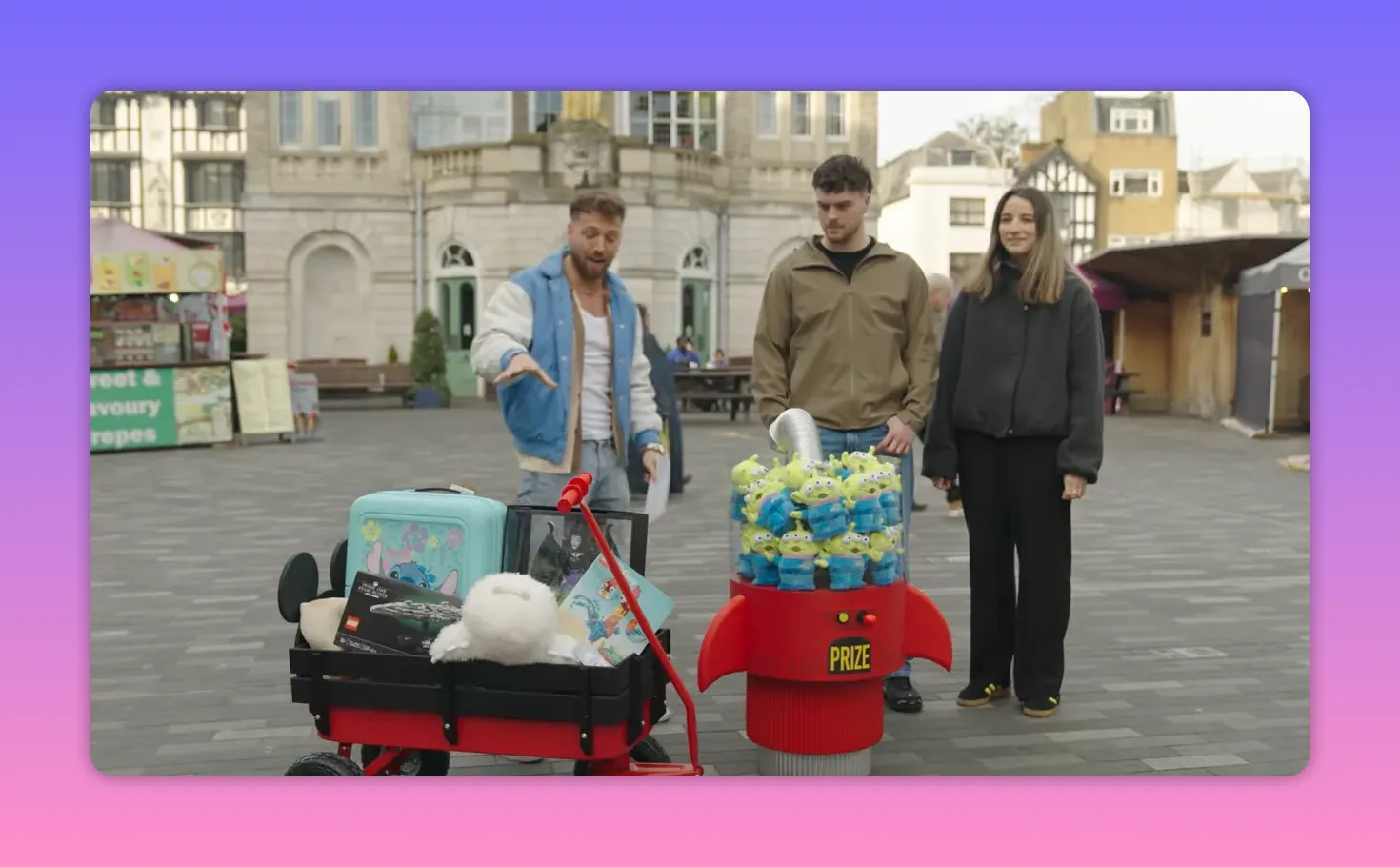
Every game needs characters. Here the host brings big energy, a truckload of Disney prizes, and a few playful barbs — and the contestants bring personality and a clear sense of which prizes they want. One contestant is immediately drawn to an Ariel toy; another is eyeing a suitcase. There is even a last-minute change of heart that turns the chicken into the coveted choice.
What makes this set-up effective is how quickly personalities show through. A mullet, a laugh, a quick decision: these are the details that create stakes without needing a long backstory. The prizes themselves are familiar and desirable: plush characters, Lego sets, and soft travel items. Attractive rewards help focus attention and make the challenges feel worth the effort.
Challenge 1: The Claw — blind trust and clear instructions
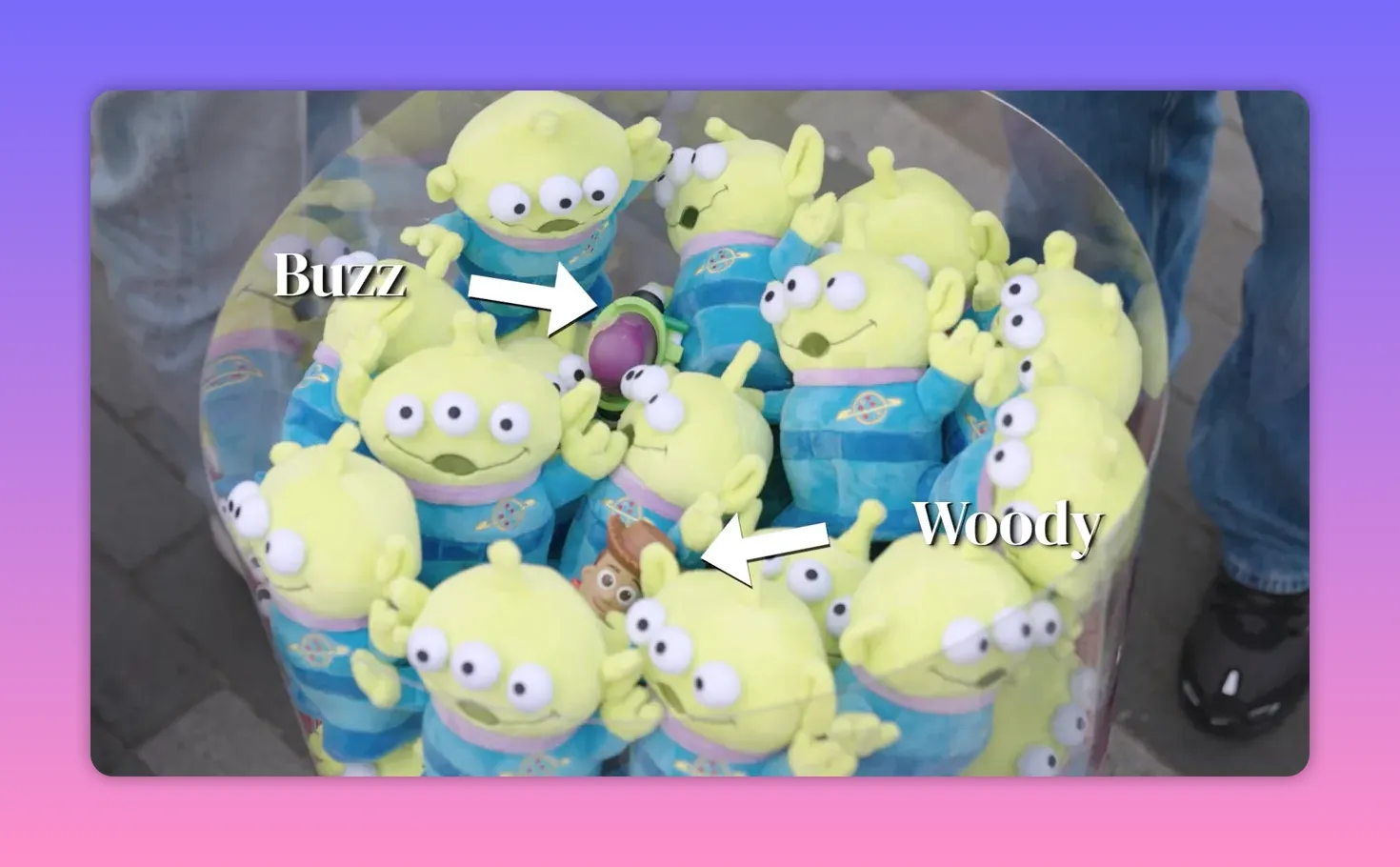
The first game is called The Claw. The premise is simple: a contestant operates a giant claw while blindfolded and must retrieve one of two characters, Buzz or Woody, from a box. The catch is this person is blindfolded and relies entirely on a partner’s verbal guidance.

This setup highlights two opposing elements: control and surrender. The operator must surrender control — their senses are limited — while the partner must provide clear, calm directions. It sounds straightforward, but when belled, blinded, and timed, complexities arise.
What to watch for in a claw challenge
- Precision of language — Left and right confusion is the most common failure mode. Specificity is everything. Use relative directions tied to the operator’s orientation: forward, back, slight left, tiny right.
- Langauge rhythm — Short, rhythmic commands beat long, winding sentences when someone can only hear and cannot see.
- Anchor points — When possible, use tactile or verbal anchor points (for example, “feel the edge of the box with your foot” or “move forward until you hear the soft toys”).
- Time awareness — Countdowns are demoralizing. Keep tone steady and maintain a calm count to avoid rushed mistakes.
In this run, the team came tantalizingly close. The operator actually secured a target, but a mistimed movement and a few miscommunications under pressure cost them the moment. It was a textbook example of how stress magnifies tiny errors. Still, the way they rallied — playful banter, quick adaptation, and the humorous self-awareness about forgotten lefts and rights — turned the failure into entertainment rather than frustration.
Challenge 2: Tangled — untangling both objects and relationships
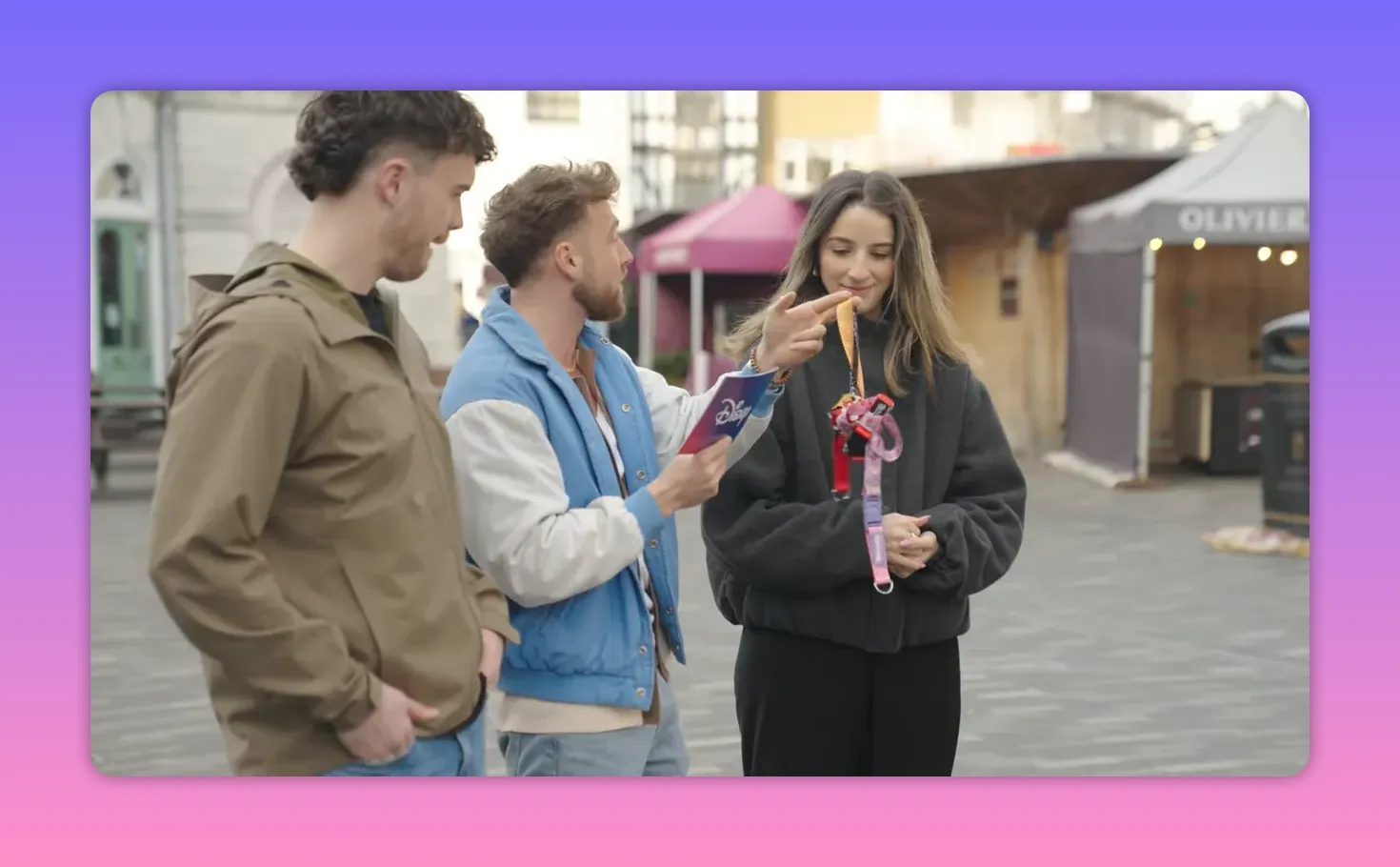
The second challenge is called Tangled. The task: untangle a cluster of Disney lanyards and place them around the host’s neck and the contestants’ necks within 30 seconds. On paper it sounds like a dexterity and time trial, but it really becomes an exercise in non-verbal coordination, pattern recognition, and emotional regulation.
Why untangling is a teamwork litmus test
Untangling requires a team to do three things simultaneously: maintain a global view, identify tight knots quickly, and assign roles without over-directing. One person can be the scanner — looking for the main tangle and pointing out which loop to free first — while another becomes the manipulator — doing the actual pulling and threading. Rapid role switching can also be useful when one approach stalls.
Time pressure changes the game. Fast decisions are better than perfect ones. In this challenge, the pair nailed their rhythm early on: one person dove in with hands and certainty, and the other supported by keeping an eye on the end goal. Their fast, coordinated movements turned the complicated knot into a solved puzzle within the time limit.
Tactical tips for untangling under time pressure
- Find the ends first — Identify which ends of the lanyards are free; having access to an end makes many knots trivial to undo.
- Loosen, don’t yank — A quick, gentle loosen often beats force, which can tighten stubborn knots.
- Keep the goal visible — Regularly check that untangling steps are actually progressing toward the objective. It is easy to get lost in small tangles that do not affect the final arrangement.
- Assign one leader — A single confident voice reduces contradictory movements. Let others assist but avoid too many simultaneous pulls.
The victory in this round came almost as much from rapport as skill. The team’s chemistry — playful jibes and quick laughter — kept the mood light and focused. The result was efficient, but with the warmth that makes winning feel good rather than robotic.
Challenge 3: Let It Go — psychology in three seconds
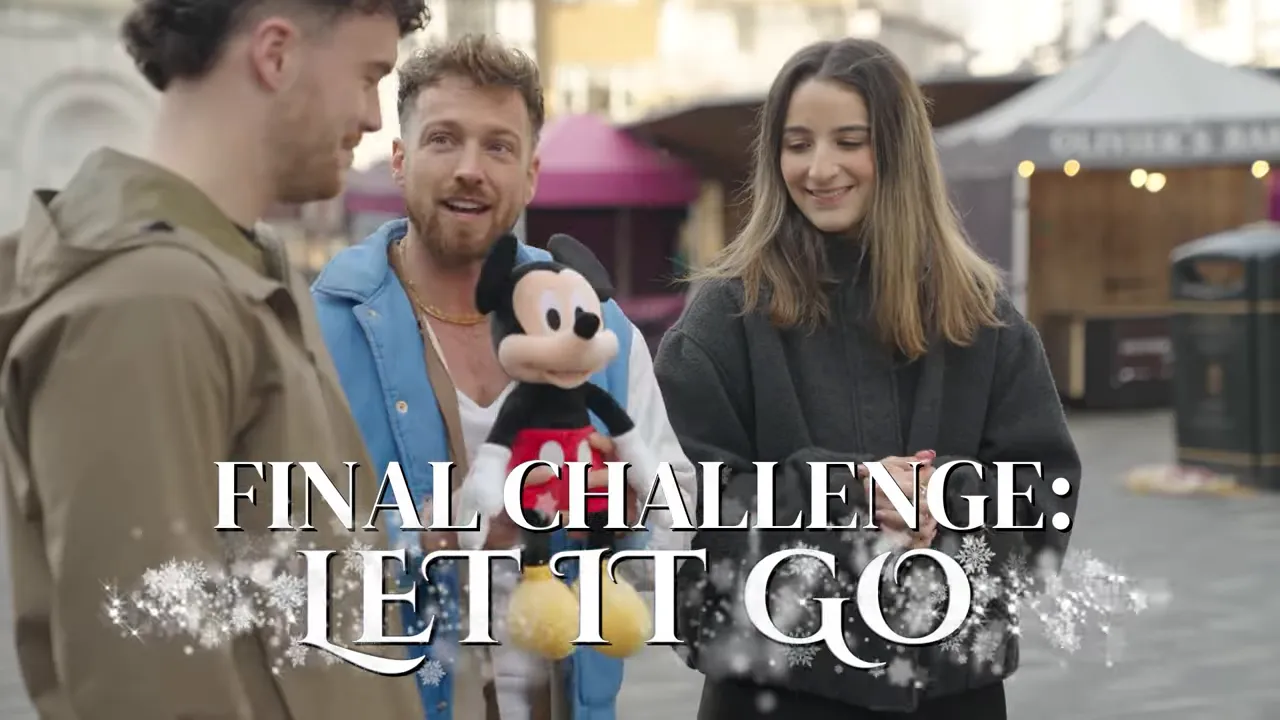
The final challenge is a deceptively simple binary decision called Let It Go. Two contestants each hold one hand of a Mickey Mouse plush. At the host’s cue, each person either keeps holding on or lets go. If they both take the same action — either both let go or both keep holding — they win. The twist: no looking at or speaking to each other from the moment the instructions begin.
This final test is the perfect distillation of social psychology problems like the stag hunt or coordination games. Without communication, contestants must rely on implicit signals, shared context, or a simple convention. The problem rewards those who can sync with a partner’s instincts.
The psychology behind a silent coordination game

Several psychological elements are at play:
- Common knowledge — Participants can use shared context to predict what the other might do. If one person is risk-averse, perhaps both assume each will play safe and keep holding.
- Salience — Making one choice more visually or mentally salient can herd both players toward the same decision. For example, letting go might feel more natural at the word “let” when in a set where “let it go” primes that action.
- Default biases — People often lean toward inaction as a default (not releasing something a hand is holding) unless primed otherwise. That bias can be leveraged if both sides expect it.
- Trust and mimicry — Couples or close friends often mirror each other unconsciously, which helps in silent coordination tasks.
In this instance the pair achieved perfect alignment. When the cue arrived, they matched moves and walked away with their reward. It is a reminder that simple coordination problems can highlight intimacy, shared heuristics, or just a lucky instinctual match.
Prizes, consolation, and keeping the mood positive
Not every attempt ends in a win, and one of the most admirable aspects of this format is the gracious handling of failure. Participants who narrowly miss out often still receive consolation prizes: a small plush, a badge, or something to remember the experience by.
Consolation prizes serve multiple purposes. They smooth the emotional fallout from losing, they provide shareable content (people like posting their prize selfies), and they reinforce goodwill toward the organizer. In short, they transform what could be an awkward loss into an enjoyable memory.
What the challenges reveal about teamwork
Across the three tasks, several themes emerge about what makes teams successful in short, high-pressure challenges:
- Communication matters more than raw skill — Clear instructions and calm direction beat frantic effort.
- Role clarity accelerates success — Assigning who leads and who supports prevents duplication and confusion.
- Shared context helps coordination — Teams with even a tiny bit of shared understanding or personality alignment often sync more effectively.
- Keep the mood light — Humor, self-deprecation, and playful banter reduce pressure and often improve performance.
- Practice rapid adaptation — The ability to change strategy quickly when the current approach stalls is a hallmark of winning teams.
How to run your own version of this three-challenge format
Hosting a small, friendly competition for friends, family, or a public event is easier than you think. The three challenges here are adaptable, inexpensive, and scalable. Below is a step-by-step guide to run your own mini Disney-style challenge night.
Setup essentials
- Location — A quiet, open area enough for a small audience and a few props.
- Props — A large box with stuffed toys for the claw, a bundle of lanyards or strings for the Tangled challenge, and a plush toy with two hands for Let It Go.
- Blindfold — Soft fabric that covers eyes comfortably and is safe.
- Timer — A visible countdown adds drama and keeps rounds tight.
- Prizes — Small plush toys, novelty items, or themed trinkets work well.
Rules and formats
- The Claw — One minute. The operator is blindfolded and must retrieve a prize from the box under partner guidance. Keep commands short and precise. Allow one practice orientation to get comfortable with the controller.
- Tangled — Thirty seconds. Pick a tangle of lanyards or cords and require them to be draped around predefined hooks or necks. The team that completes it wins.
- Let It Go — A single simultaneous decision. Two contestants each hold one hand of a plush. On the cue, both either let go or keep holding. If they match, they win.
Adjust time limits and difficulty depending on your audience. Kids might need longer, and adults may enjoy shorter, more frantic rounds.
Design principles to maximize fun
Great experiences balance fairness, accessibility, and theatrical flair. Here are a few design tips to make the games sing:
- Keep instructions tight — Read the rules once aloud, then allow a single clarifying question. This keeps momentum high.
- Use a charismatic host — A playful, empathetic host elevates even a small contest into an event. The ability to read the room and respond with humor is invaluable.
- Prioritize safety — Blindfolds should be comfortable, and all equipment should be non-hazardous.
- Reward participation — Small consolation items ensure goodwill and encourage future engagement.
- Capture moments — Photo ops with participants and prizes create memorable content and encourage social sharing.
Making learning moments out of playful failures

Failing to win a particular round is not the end of the world. In fact, it offers compressed feedback. Analyze what went wrong quickly and with kindness:
- Was the instruction unclear?
- Did pressure cause rushed decisions?
- Was there a missed chance to delegate roles?
Use each loss as a micro lesson. This turns setbacks into teachable moments and keeps the tone positive. A few quick coaching tips between rounds can dramatically change outcomes: remind teams to breathe, reduce extraneous talking, and pick one leader.
Bringing the magic home: how these games connect with Disney spirit
Part of the charm is how these challenges tap into the same elements that make Disney stories resonate: shared values, whimsical stakes, and emotional warmth. Whether chasing a toy or solving a silly puzzle, participants are invited to be playful, collaborative, and a touch theatrical — all hallmarks of the Disney ethos.
That combination is why these formats work well at events. They are inclusive, easy to understand, and allow for personality to shine. People leave with a prize, a story, and sometimes a new inside joke with whoever they partnered with. Those small shared narratives are the oxygen of long-lasting memories.
Final reflections: delight is the real prize
At the core, what these challenges reward is connection. They are charming because they spotlight human reactions: laughter when something goes right, good-natured blame when something goes wrong, and the satisfied smile of a small victory. Running these games well requires a mix of planning and improv. Keep rules simple, choose prizes that matter, and let personality lead.
When the host says “ready to win it” and contestants respond in kind, what follows is less about competition and more about the communal delight of trying. That is the secret to making a short challenge feel enchanted.
Frequently Asked Questions
What equipment do I need to run a similar three-challenge event?
You need a few simple props: a large box and stuffed toys for a claw-like retrieval task, a bundle of lanyards or cords for an untangling challenge, a plush toy with two hands for a simultaneous decision game, a blindfold, and a visible timer. Optional extras include small consolation prizes and a charismatic host to keep energy high.
How do I make the challenges fair for all ages?
Adjust time limits and difficulty. Give children longer timeframes and simplify tasks by reducing the number of items or knots. Allow one practice orientation for complicated props like a claw controller. Use lightweight, safe materials and supervise blindfolded tasks closely.
What are some good consolation prize ideas?
Small plush toys, themed keyrings, stickers, badges, or discount vouchers work well. The key is to choose items that feel desirable yet affordable so everyone walks away with a smile.
How can teams improve communication under pressure?
Encourage short, specific commands and assign a single leader. Practice using anchor points and shared language. Teach simple countdowns or cues and remind teams to keep tone steady. Quick debriefs between rounds to mention one thing that went well and one tweak to try next time can be very effective.
Can these challenges be scaled for larger events?
Yes. Run multiple simultaneous stations, rotate teams through the stations, and use a timing system to keep rounds moving. Use multiple hosts or volunteers to manage each station and consider tiered prizes for winners to maintain excitement.
What psychological lessons do these games illustrate?
They highlight coordination games, default biases like status quo favoring inaction, the power of clear communication, and how humor and rapport reduce stress. These simple games reflect complex dynamics of trust, role clarity, and decision-making under time constraints.
Closing thought
Small challenges built around simple rules can create disproportionately big moments of joy. Whether you are organizing a family game night, a community event, or a quirky office icebreaker, the principles here will help you design experiences that are playful, inclusive, and memorable. With clear instructions, friendly prizes, and a generous spirit, anyone can host a mini contest that turns strangers into teammates and ordinary minutes into cherished memories.


