
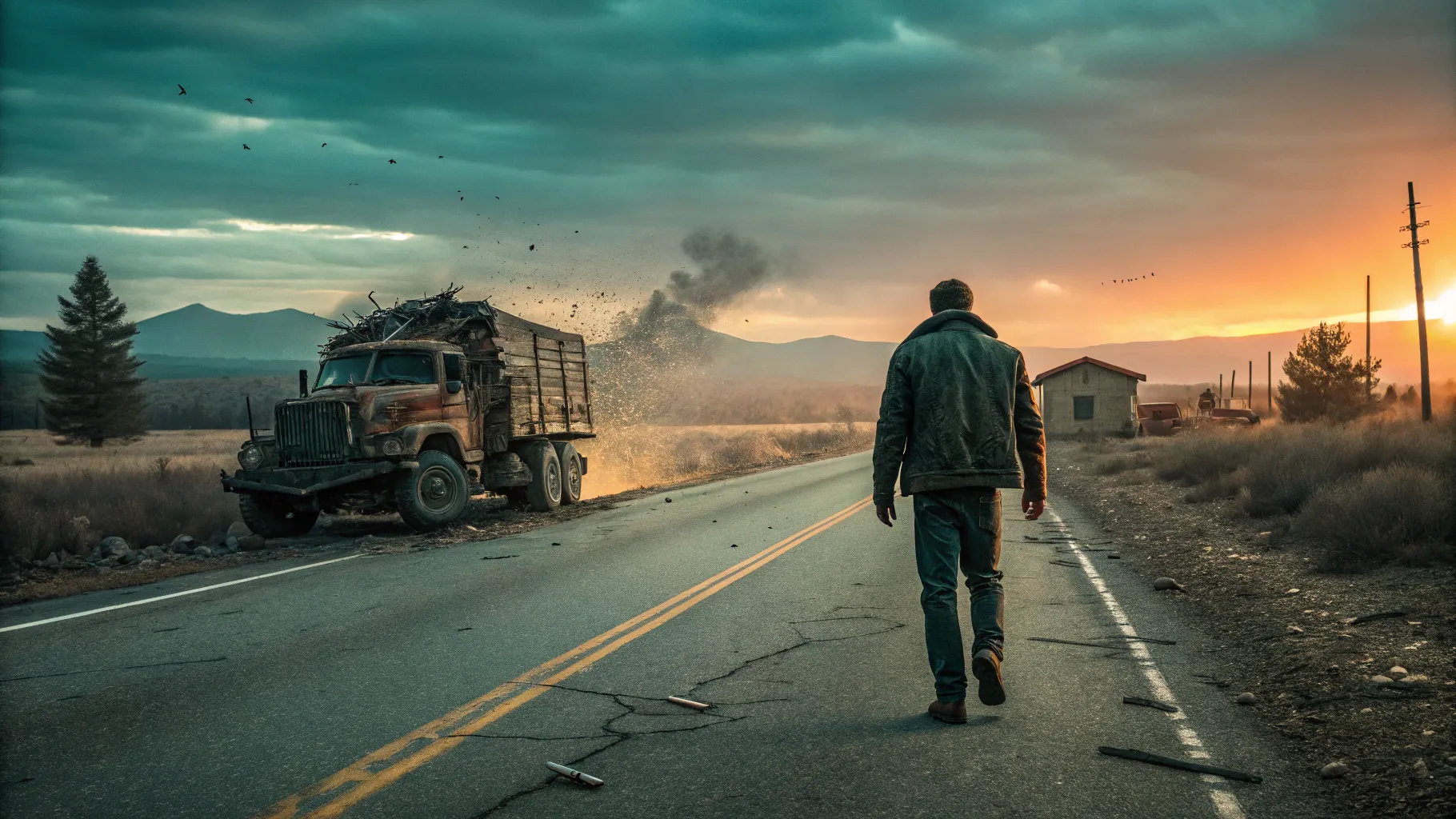
SISU: ROAD TO REVENGE returns with a relentless, pulse‑pounding promise: an unforgiving cross‑country chase, inventive action set pieces, and a protagonist who refuses to stay dead. This is not a gentle reconstruction of grief. It is a demolition of memory, a loaded truck, and a road trip turned battlefield. What follows is a close look at the concepts, craft, and cinematic appetite behind the “Fight or Flight” spirit of the film, why the premise works as an action engine, and what to watch for in the way Jalmari Helander, his cast, and production team escalate violence into spectacle.
What SISU: ROAD TO REVENGE sets out to do
At its simplest, the film trades on a single, mythic premise: an unstoppable man reconstructs his family home and becomes the target of a Red Army commander intent on finishing what he started. That premise feeds a string of escalating confrontations that are equal parts bleak folklore and kinetic stunt design. The sequel keeps the mood of the original SISU — grim, deadpan, and occasionally wry — while stretching the scale from secluded survival to nationwide chase.
The film combines these elements and sells them with stark confidence: visceral violence, high stakes revenge, and moments that read like practical stunt poetry. It treats the act of rebuilding a home as an act of defiance and frames the ensuing chase as punishment from history itself.
The central engine: revenge as motive and momentum
Revenge in SISU is not a mere plot device. It is the engine that transforms grief into territory, and territory into movement. The protagonist, described in promotional materials as the man who refuses to die, is less concerned with closure and more with rebuilding — literally taking structure and making it portable. That act turns a quiet mourning into a rolling provocation.
When a returning antagonist, a Red Army commander, seeks to complete past atrocities, the conflict shifts from a measured, interior drama to a roaming war. The chase scenes become a conversation between past violence and present resilience. Each clash reinforces the protagonist’s stubborn sense of justice and widens the film’s geography from a single ruined house to an entire country.
Fight or flight as a cinematic motif
The phrase Fight or Flight usually describes an instinctive biological response. In this story it becomes a guiding motif: the protagonist refuses to flee, weaponizing stubbornness into action. The film plays with both readings — characters literally running, hiding, and strategizing while the lead treats flight as anathema.
That deliberate inversion is where the film finds its tonal niche. Rather than glorify gore for its own sake, it places brutality in the service of narrative logic. When violence arrives, it feels earned because it is the narrative currency exchanged for a chance at rebuilding a life. That moral economy is what keeps the spectacle tethered to character motivation.
Scene architecture: how action sequences tell the story

Great action sequences are miniature narratives. They set up stakes, reveal character, escalate danger, and resolve — or complicate — the protagonist’s journey. SISU: ROAD TO REVENGE structures its scenes so each set piece is a thematic beat.
- Set up: The protagonist loads the dismantled house into a truck — an image that makes the sense of obligation physical.
- Inciting contact: The returning Red Army commander reappears, a personification of unfinished past violence.
- Escalation: A cross‑country chase ensues; obstacles compound, and desperation fuels improvisation.
- Climax: The fight to the death — brutal, clever, and eye‑popping.
- Aftermath: Consequences are considered, both materially and ethically.
Within this architecture, every stunt and camera move is an argument about who the protagonist is. If a sequence requires ingenuity to survive, that ingenuity becomes a character trait. If it requires cruelty to win, the film asks the audience to weigh whether justice can ever stay clean.
Jalmari Helander’s directing vocabulary
Helander returns as writer and director, and his fingerprints show in the film’s tonal balance: dark humor threaded through relentless action. He favors long, committed takes that let choreography breathe, but he also breaks rhythm with sudden, surgical edits when a punch or a kill must land like a gut punch.
There is an appetite for practical effects, for physicality over CGI spectacle. That choice roots every beat in tactile reality. When a truck is loaded with a house or when gravel sprays as tires bite into dirt, the camera treats those details as texture rather than mere background. That decision amplifies audience investment; the world feels lived in and dangerous.
Performances that carry brutality and nuance
Jorma Tommila returns as the embattled protagonist, and the role demands presence over verbosity. Action films of this strain rely on actors who can anchor silence with menace or compassion when needed. Tommila’s physicality supplies grit while his restrained emotion delivers a melancholy dignity: a man who rebuilds not for glory but for memory.
Opposite him, Stephen Lang plays the Red Army commander — a figure of historical violence resurrected to finish a job. Lang brings a cold, methodical cruelty that makes him an appropriately chilling antagonist. Richard Brake, also attached to the project, has an uncanny ability to embody menace with minimal affect, making every confrontation unpredictable.
Choreography and stunt work: action that feels handcrafted
Practical action carries a different energy than visual effects. When stunts are grounded in the laws of physics and staged with discipline, the peril appears authentic. SISU: ROAD TO REVENGE leans into this principle, delivering sequences that feel dangerous because they are.
Expect inventive uses of the truck, the house, and the open road as instruments of violence and strategy. The production transforms environment into weaponry, crafting moments where a seemingly mundane object becomes a tactical advantage.
- Environmental improvisation — using the landscape to funnel or trap opponents.
- Vehicle choreography — fights staged on or around moving trucks that demand timing and precision.
- Close quarters brutality — intimate fights that contrast with the sprawling chase, emphasizing raw survival.
Sound and music: building pressure and release

Sound design is often the unsung hero of action cinema. Foley, tire screeches, the reverb of metal on metal, and the sudden absence of music at crucial moments all shape viewer reaction. SISU: ROAD TO REVENGE uses sound to control rhythm: crescendos during pursuit, stark silence before impact, and a low industrial throb when the film reminds the audience of what is at stake.
Music in this context supports mood rather than dominate it. A minimal score accentuates tension and gives room for diegetic sounds — engines, breaths, boots on gravel — to carry more weight. When a kill lands, the sonic design turns it into a physical event rather than a cinematic beat.
Production design: making the home portable
At the heart of the film is an image that doubles as metaphor: the house. It is both shrine and burden. Production design treats that house as a character. Every beam, window, and nail matters because the protagonist’s devotion has elevated the structure to an emblem.
Designers faced a unique challenge: the home must be both intimate and mobile. It needs to survive traversal across diverse terrains while maintaining its symbolic integrity. That logic informs costume, props, and set dressing. The house’s battered wood and personal artifacts contrast sharply with the sterility of the antagonist’s military presence, giving the audience a textural sense of what is being defended.
Thematic undercurrents: memory, persistence, and moral ambiguity
Beyond the visceral thrills, the film engages themes that resonate long after the credits. It explores how memory anchors identity and how the act of rebuilding can be an answer to erasure. The protagonist’s refusal to flee becomes a philosophy: some things are worth hauling across borders and battlefields because they contain the last pieces of a life.
Moral clarity is never absolute here. Revenge is satisfying in a cathartic sense, but the film is willing to show the cost. Blood begets blood, and survival often requires acts that complicate the viewer’s sympathy. Those moral tensions elevate the work above a simple revenge flick; it becomes an interrogation of what defense demands.
Visual style and cinematography
The film’s visual palette favors stark contrasts. Vast landscapes are photographed to emphasize isolation, while close fights employ tight framing to create claustrophobia. The camera is rarely passive; it tracks, follows, and sometimes lets the chaos spill past the frame so the audience feels the consequences rather than merely witnesses them.
Contrast between the barren landscapes and the intimacy of the house’s interior underscores thematic friction. When the truck barrels down a highway with a house on its bed, the composition balances absurdity with grace. The cinematography often relies on practical lighting, which gives scenes a raw, textured look that enhances authenticity.
Editing: tempo as narrative choice

Pacing in an action film is a conversation between motion and time. This film’s editing oscillates between deliberate sequences that build dread and rapid cuts that sell impact. Editors choose tempo with intent — quickness where danger requires bewilderment, and steadier rhythms when strategy or character beats need to breathe.
Cutting for geography is another critical skill demonstrated here. Keeping track of a mobile house on a moving truck during a chase requires spatial clarity. Cuts must honor the viewer’s sense of where characters are in relation to one another, and this film prioritizes that clarity even as it embraces chaotic violence.
Comparisons: where SISU sits in modern action cinema
Action cinema ranges from glossy blockbuster spectacle to lean, almost documentary intimacies. SISU: ROAD TO REVENGE situates itself closer to the latter while still monumental in its ambition. Its blend of practical effects, moral complexity, and deadpan humor recalls a wave of films that seek to marry arthouse sincerity with genre thrills.
It shares DNA with films that focus on revenge and survival but differentiates itself through a unique conceit — transporting a home as a tangible representation of mourning. That subverts expectations and gives the film an original center of gravity.
Why the casting matters
Casting here is meticulous. The lead must be equal parts physical and reflective. Supporting characters, especially the antagonists, need an unsettling stillness that can be weaponized. Stephen Lang’s history of playing hardened, imposing figures allows him to channel the military threat into a personal vendetta. Richard Brake’s knack for unsettling minimalism fills in tonal gaps, offering unpredictability.
Supporting performances matter as much as leads in a film that relies on small human beats to justify large violent set pieces. A glance, a decision to spare or kill, a throwaway line — these make the action emotionally consequential rather than gratuitous.
Marketing and release strategy
The film’s marketing leans heavily on its kinetic promise. Taglines emphasize the road, the chase, and the visceral spectacle. Promotional assets often highlight one-line hooks that crystallize the premise: reconstruction as defiance, and revenge as an inevitable endpoint.
Releasing such a film in theaters is an argument for communal, sensory cinema. The design of action set pieces, practical effects, and soundscapes benefits from large screens and robust audio. The theatrical experience amplifies the film’s impact and preserves the physicality that practical effects convey.
Audience expectations and ratings

SISU: ROAD TO REVENGE is rated R for strong bloody violence, gore, and language. That rating is consistent with the film’s aesthetic and narrative aims. It does not shy away from showing the consequences of violence. Audiences should expect intense sequences where pain, injury, and moral compromise are visible and often central to the plot.
For viewers seeking catharsis through revenge, the film delivers. For those who prefer lighter fare, the blood and thematic weight may be challenging. But the film negotiates that challenge with care, making brutality purposeful rather than decorative.
Key sequences to watch for
Certain types of scenes are likely to be anchors: the house being dismantled and loaded, the first direct contact with the returning commander, a midfilm ambush that tests the protagonist’s ingenuity, and the final confrontation that resolves the arc. Watch how each sequence reframes the stakes and redefines what the protagonist is willing to do.
- Opening ritual: the act of loading the house — quiet and loaded with symbolism.
- First encounter: a moment that calibrates the antagonist’s cruelty and the lead’s resolve.
- Improvised combat: sequences that reward cleverness over brute force.
- Final set piece: a culmination where narrative, theme, and physical spectacle collide.
Production notes worth noting
Several production choices underline the film’s ambitions. Opting for practical effects over extensive CGI adds a documentary weight to the action. Designing a portable house required logistical ingenuity and informed many of the film’s stunts. Casting actors known for physical roles ensured that fights could be staged with authenticity rather than relying on camera tricks.
The collaboration between director, stunt coordinator, and cinematographer is evident in the film’s fluid action. Stunts are composed with an understanding of camera geometry and performer safety, resulting in sequences that look dangerous and are filmed responsibly.
Why this film matters
At a time when action cinema often favors rapid digital spectacle, this film stakes a claim for visceral, handcrafted spectacle tied to thematic ambition. It does not offer simple answers; it insists on the emotional roughness of defending memory through violence. That insistence is what makes it compelling: it treats spectacle as language, not escape.
It also provides a model for how sequels can expand a world: not by adding more spectacle for its own sake, but by migrating stakes across space and deepening character logic. The portable home gimmick may seem eccentric, but it is a perfect vehicle — literally and figuratively — for exploring how the past takes up space in the present.
Practical takeaways for filmmakers and storytellers
Several craft lessons emerge from the film’s approach:
- Anchor spectacle to meaning. Make every stunt justify itself narratively. Spectacle becomes richer when it reflects character motivations.
- Favor practical solutions. When possible, physical stunts and props create stakes audiences feel rather than simulate.
- Use sound as a structural tool. Sound builds rhythm and can make a small moment feel seismic.
- Design clear geography. In mobile action sequences, spatial clarity keeps the audience oriented and maintains tension.
- Let silence carry weight. Moments without music or dialogue often become the most powerful beats.
Final reflection
SISU: ROAD TO REVENGE dares to keep its center human while the world around it explodes. The film’s conceit — turning a ruined home into a mobile mission — transforms grief into action. That boldness, combined with practical stunt work and uncompromising performances, creates a cinematic experience that is both thrilling and haunting.
Whether the sequence in question is a brutal roadside ambush or the final confrontation, the film’s moral and physical stakes are unmistakable: some things are worth fighting for, even when the cost is everything. The story of rebuilding in the face of relentless pursuit is less an exercise in nostalgia and more an argument for persistence. Persistence, in this case, arrives wrapped in timber, steel, and a will that refuses to break.
FAQ
What is the basic premise of SISU: ROAD TO REVENGE
A survivor who carries the weight of his murdered family by dismantling their home and transporting it to safety becomes the target of a returning Red Army commander bent on finishing past atrocities, triggering a relentless cross‑country chase and a fight to the death.
Who directed and wrote the film
Jalmari Helander wrote and directed the film, continuing the tone and style he established in the original SISU.
Who are the main cast members
The principal cast includes Jorma Tommila as the lead, with Stephen Lang portraying the returning Red Army commander and Richard Brake in a supporting role.
What kind of action can audiences expect
Expect practical, inventive action featuring vehicle chases, improvised fight sequences, close quarters brutality, and environment-driven stunts. The film emphasizes physicality and tactile effects over heavy CGI.
Why is the house important in the story
The house functions as both a physical and symbolic anchor: it represents memory, family, and defiance. Moving it turns mourning into a public act and escalates the stakes by making the protagonist a target.
What is the film’s rating and content advisory
The film is rated R for strong bloody violence, gore, and language. Viewers should be prepared for intense scenes and moral ambiguity tied to revenge and survival.


