


I love quick, silly games that make people laugh, reveal personality, and somehow become tiny life lessons in communication. Recently I set up three street-side challenges that did exactly that: one tested clear instruction under pressure, one tested tactile recognition, and one tested pure trust and timing. The stakes were cheeky but meaningful — a granddaughter’s chance to pick a toy from a colourful trolley — and the results were messy, joyful, and revealing in all the best ways.

Why mini challenges are the best kind of public theatre
Mini challenges work because they compress emotion into a few minutes. Add a deadline, a playful reward, and a public audience, and you’ve got an instant theatre of micro-decisions: who takes charge, who hesitates, who cracks a joke when things go wrong. That mix creates laughter, empathy, and a bit of suspense — and the audience gets to cheer when people pull it off.
The three games that follow are simple to set up and perfect for family gatherings, parties, school events, or an afternoon with friends. Each one focuses on one human skill: communication, sensory perception, and coordination. Alongside telling the story of what happened, I’ll share practical tips so you can run these safely and successfully, and pull more than a few lessons out of the mayhem.
Meet the duo
Let’s sketch the players. There was Ben, a proud grandfather who had that delightful combination of calm confidence and a readiness to crack up at himself. Tegan, his granddaughter, was bubbling with energy and genuinely cheering him on. That dynamic — patience, pride, and a little generational humour — set the tone for the three challenges.

Challenge 1: Sticky Stitch — The Peanut Butter Sandwich
Rules were mercifully straightforward: one minute to assemble a peanut butter sandwich. One person cannot see and must be guided by a partner’s instructions. The sandwich must be put together by the end of the timer, it needs to be edible, and it must look like a sandwich.
It sounds trivial. It is not.

What actually happened

The grandad volunteered to be the blindfolded maker — classic move, and immediately adorable. The partner started shouting helpful but competing directions: where to put the knife, take one slice of bread, reach with the left hand, peanut butter in, pick up the top slice, put them together, cut in half. It escalated into a frantic flurry of instructions with a knife waving around and the clock ticking down.
At the buzzer the sandwich existed as a culinary approximation of the real thing. Edible? Debatable. Sandwich-like? By a very generous definition. The crowd shook their heads and laughed; everyone could see how easily communication can break down under pressure.
Lessons and practical tips
- Assign one clear instructor. Two people giving overlapping directions turns a sixty-second task into chaos. Decide who narrates and who executes before starting.
- Use short, consistent phrases. Instead of long sentences, give instruction in small chunks: “bread in left hand,” “butter with knife, small circles,” “place top slice, straight down,” “cut across.” Short instructions are faster to process, especially when the maker can’t see.
- Establish anchors. Anchors are simple reference points like “front edge,” “right corner,” or “middle.” Anchors reduce ambiguity. For example, say “put the jar at the top right” instead of “put it there.”
- Confirm actions aloud. After the maker executes something, the instructor should get a short confirmation: “Got it?” “Yes.” This prevents the instructor from assuming a step is completed before it is.
- Hands-on descriptors beat abstract language. Tell them where to place fingers: “thumb on left edge, fingers underneath.” That helps with grip and alignment.
- Safety first with knives. If you must use a blade, instruct slower and keep it away from the direction of movement. Ideally swap the knife for a butter spreader or a blunt implement when someone cannot see.
- Practice reduces panic. A short rehearsal before the timer starts reduces wasted seconds ironing out the approach.
How to run this at home
Materials: two slices of bread per team, jar of peanut butter (or jam), a butter knife or spreader, blindfold, plate, and a timer.
- Decide who will be blindfolded and who will instruct.
- Allow 10 seconds for the instructor to place hands or describe positions before the timer starts.
- Start a 60-second countdown. Instructor only; no physical touching of the hands unless pre-agreed for safety or assistance.
- Give one point if sandwich is assembled, one extra point if it looks neat, and zero if unsafe actions occur.
Variations: remove the blindfold and instead have the maker wear noise-cancelling headphones so they have to follow verbal cues only.
Challenge 2: It’s a Small World — Blind Tactile Identification
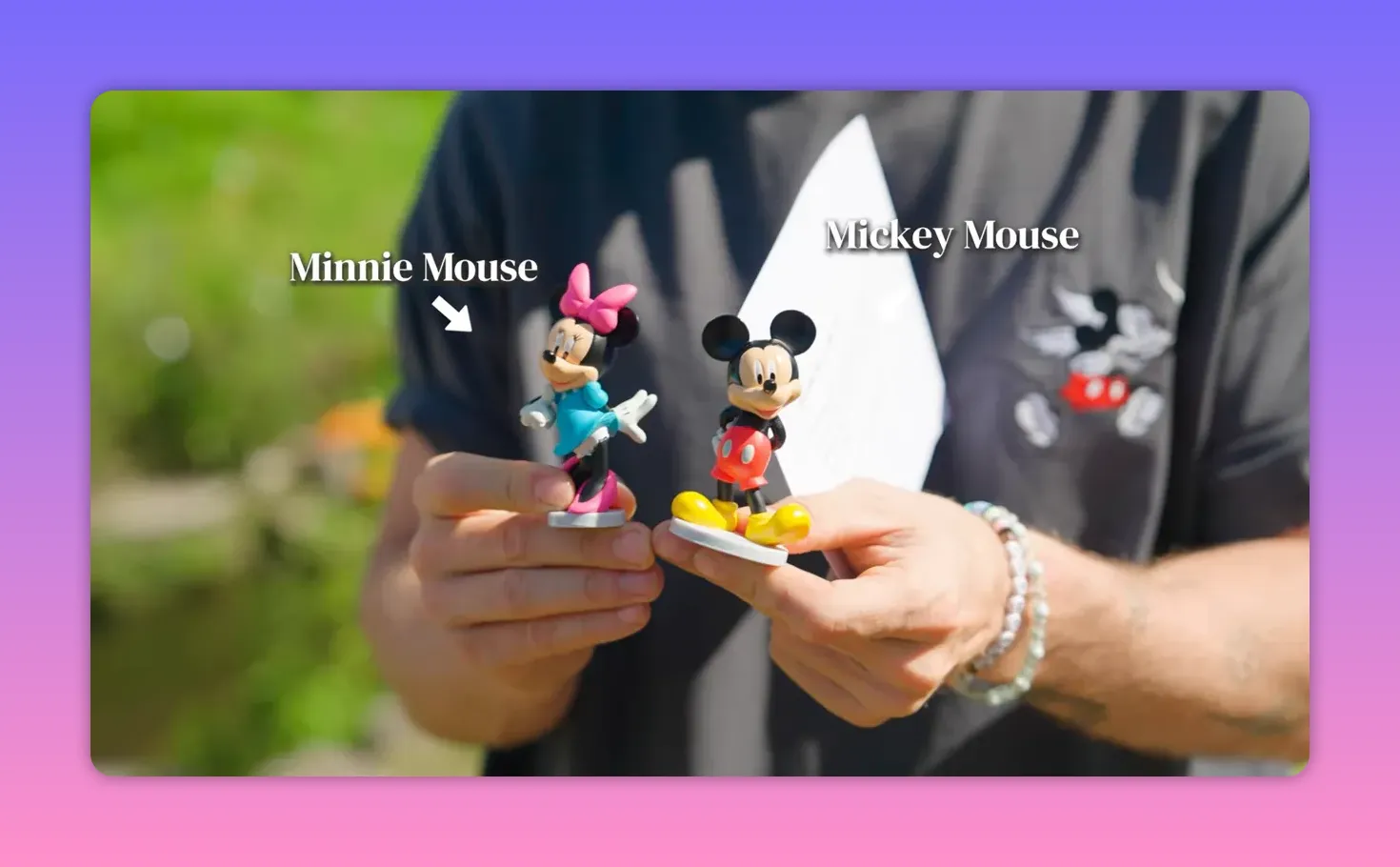
This one is elegantly simple: both players are blindfolded and handed two Disney characters to feel for 30 seconds and identify aloud. Both need to get the answers right to win.
Why it’s deceptively challenging
When sight is removed, people naturally overcompensate with either panic or flippant guessing. The trick is to slow down, catalog tactile features, and vocalize observations. In this case the pair did something brilliant: they felt for the distinct, iconic cues — Mickey’s round ears, Minnie’s bow — and answered correctly in record time.
Techniques for tactile recognition
- Start with big shapes. Identify the largest elements first: head size, ears, wings, tail. These are high-signal features.
- Move to asymmetry and accessories. Bows, hats, capes, or textured clothing are incredibly informative.
- Note texture and seams. Hair stitching, raised logos, and familiar materials create a mental fingerprint of the toy.
- Use elimination. If it doesn’t have features of character A, check for character B. Process of elimination is fast under time pressure.
- Talk through what you feel. Saying “I feel round ears” helps the partner orient their search and confirms the discovery.
Practice drills to boost tactile skill
You don’t become a touch-detection pro overnight, but short, playful drills help. Try these with kids or friends:
- Blindfolded toy match: have someone touch two hidden toys and name them by feel.
- Tactile bingo: create cards with features (bow, cape, hat) and mark them off by touching a selection of toys.
- Texture race: blindfold a player and have them find the toy with a specific texture among a cluster.
Challenge 3: Let It Go — A Trust and Coordination Game
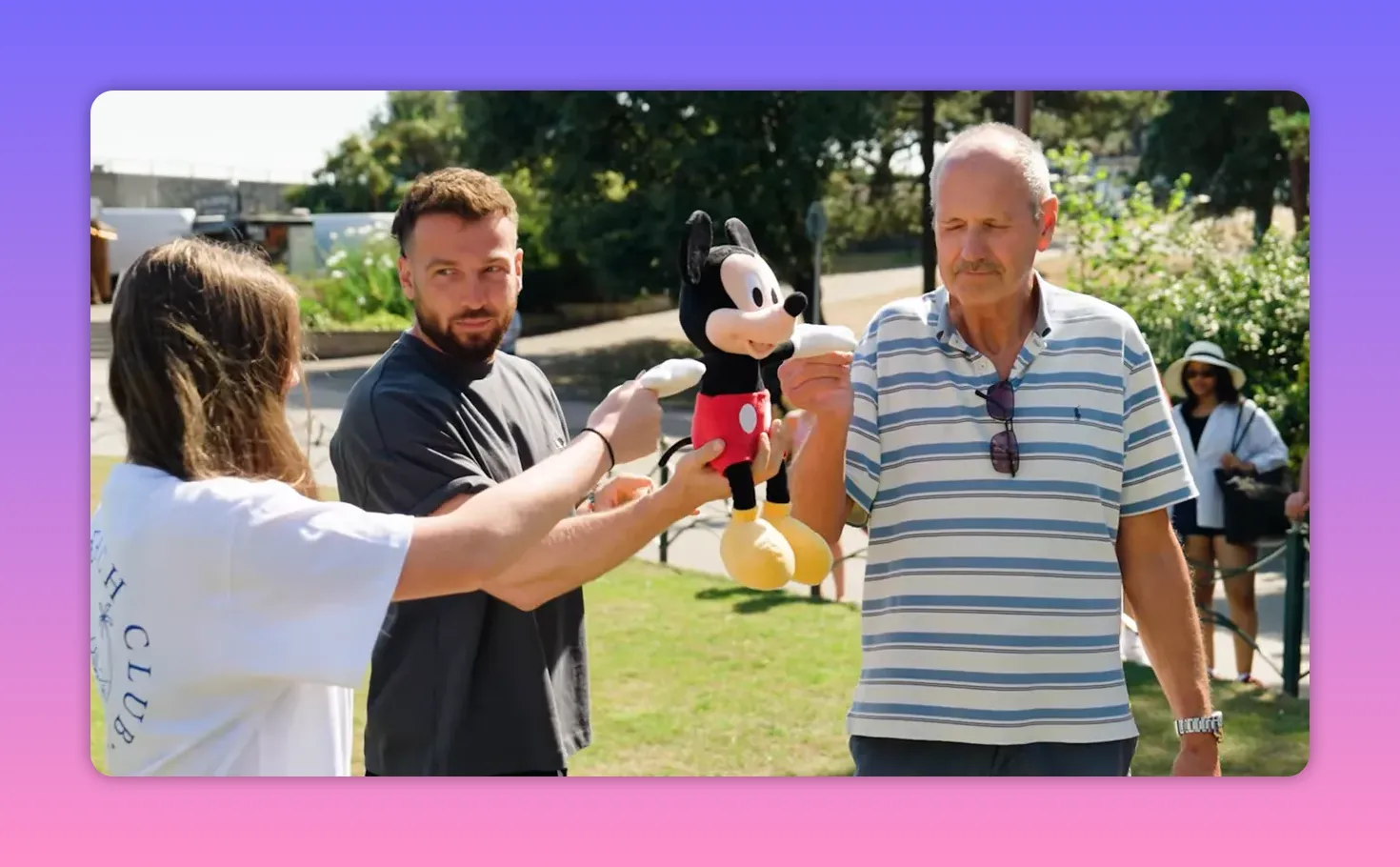
For the finale, I held a Mickey plush and asked both players to hold each of his hands. They closed their eyes. On the count of three I said “Let it go.” If both players either released Mickey’s hands or both held on, they won a toy. It sounds like a coin flip. In practice it turned into a tiny emotional experiment: one person released, the other held, and the pair split the prize line at 50/50.
Why this is such a potent micro-game

There are three ingredients at work here: lack of communication, simultaneous decision-making, and the binary payoff. Each player faces a choice without being able to read the other. That creates a delightful tension where a second’s hesitation can cost the team a prize.
Game theory and real-world lessons
This simple setup mirrors coordination problems we face in bigger life moments. People must decide whether to trust their partner to choose the same option. The best practical takeaways:
- Set pre-game agreements when possible. “If in doubt, hold” or “If in doubt, let go” are both fine — what matters is that both people agree before they close their eyes.
- Use small signals at the last second. If talking is allowed, a single whispered pre-agreement like “we’ll let go” helps. If not, consider foot tapping or a shared breathing pattern as a signal if the format allows.
- Understand personal tendencies. People who are protective or cautious may hold on; more adventurous people may release. If you know your partner, adjust your prior agreement accordingly.
- Embrace the risk. Part of the charm is the risk itself. Losing together is okay; it’s the shared laughter that matters.
Putting it all together: a guide to running a three-game set
Building a short show of challenges is about variety and rhythm. Start with something physical and messy, move to something quiet and sensory, and end with a brief emotional pay-off. That pacing keeps the energy up and balances tension with relief.
Materials checklist
- Small trolley or table full of playful prizes
- Blindfolds (one per blindfolded player)
- Peanut butter (or substitute), bread, spreader, plate
- Timer or phone with countdown
- Assorted plush toys or figurines for tactile identification
- Microphone or megaphone if you’re outdoors with a crowd
Scoring and fairness
For casual fun, keep rules loose: win a toy, lose a toy. For events, consider a simple points system:
- Challenge 1: 2 points for assembled and edible, 1 point if edible but messy
- Challenge 2: 2 points for both correct, 1 point if only one correct
- Challenge 3: 2 points if matched action, 0 if not
At the end, let players pick from the prize table based on points. Always have small consolation prizes for everyone so no one walks away empty-handed.

The power of shared silly moments
What sticks with me after these games is not who won. It is the laughter, the small apologies, the proud smile when a grandparent tries something silly for the sake of their grandchild. Those micro-moments are what make gatherings memorable. Games that highlight miscommunication and then offer a reward for aligning are micro-lessons about patience, listening, and playfulness.
When things fall apart in public, the kind response is often a grin and a hand offered to help pick up the pieces. That was the mood at the end — two toys for the pair, a handshake, and a lot of good-humored ribbing. The crowd clapped because it felt like a little community win whether or not the sandwich looked perfect.
Practice exercises to level up social coordination
If you like the vibes of these games and want to sharpen your group’s coordination skills, try these short exercises:
- Thirty-second instruction: One person describes an object while the other draws it from memory. This builds precise verbal instruction skills.
- Blindfold relay: Small obstacle course guided by only verbal commands to train calm, clear direction under time pressure.
- Silent coordination: Two people must synchronize a movement without talking. This builds nonverbal synchronicity and awareness.
Safety and etiquette

High-energy games in public require simple safety rules. Keep knives blunt or swap for safe spreaders. Make sure the playing surface is stable. Check allergies before making edible challenges. And always get consent for participation — not everyone enjoys being the comedic focus in front of a crowd.
Finally, remember this: if someone fluffs a task, the right response is amusement and encouragement. Laughter is the reward; prizes are just the icing.
Final thoughts
These three small games — communication under pressure, tactile identification, and trust coordination — are fast, cheap to run, and big on human connection. They teach practical skills while creating stories people tell later. Whether you are planning a family afternoon, a team-building icebreaker, or a cheeky street-side surprise, this trio is a perfect template.
And if you ever find yourself in the position of being the blindfolded maker or the partner shouting instructions, breathe, be concise, and enjoy the ridiculousness. Sometimes the sandwich does not survive, but the memory does.
Frequently asked questions
How long should each challenge last?
Keep the peanut butter sandwich to 60 seconds, tactile identification to 30 seconds, and the trust release to a single synchronized countdown. Short time limits preserve energy and laughter.
What if someone is allergic to peanut butter?
Substitute with jam, hummus, or a safe spread. Always check participants for allergies and dietary restrictions before starting edible challenges.
Can these games be played indoors?
Absolutely. They are compact and ideal for kitchens, living rooms, school halls, or community centres. Ensure there is enough space and a stable surface for the sandwich challenge.
How do you make the trust game fair for older participants?
Offer alternatives like holding a lightweight object instead of a plush, or extend a brief pre-agreement period. Make sure the physical action is comfortable; aging hands may prefer not to grip tightly.
What prizes work best for this kind of event?
Fun, inexpensive prizes such as plush toys, stickers, small figurines, and novelty lamps work well. Offer a mix of practical and whimsical options so winners can choose something that sparks joy.
How can teams practice clear instructions?
Use short drills like “describe and draw” where one describes an object while the other draws it. Focus on concise language, single-step commands, and confirming completion to build effective instruction habits.
Are there scoring systems for longer events?
Yes. Use a points system where each challenge yields 0 to 2 points based on success and quality. Tally points across several rounds and let winners pick higher-value prizes.
Can children participate safely?
Definitely. Adapt rules for age: use kid-safe utensils, shorten the timer, and ensure an adult supervises. Make the tactile items soft and easy to identify.


