

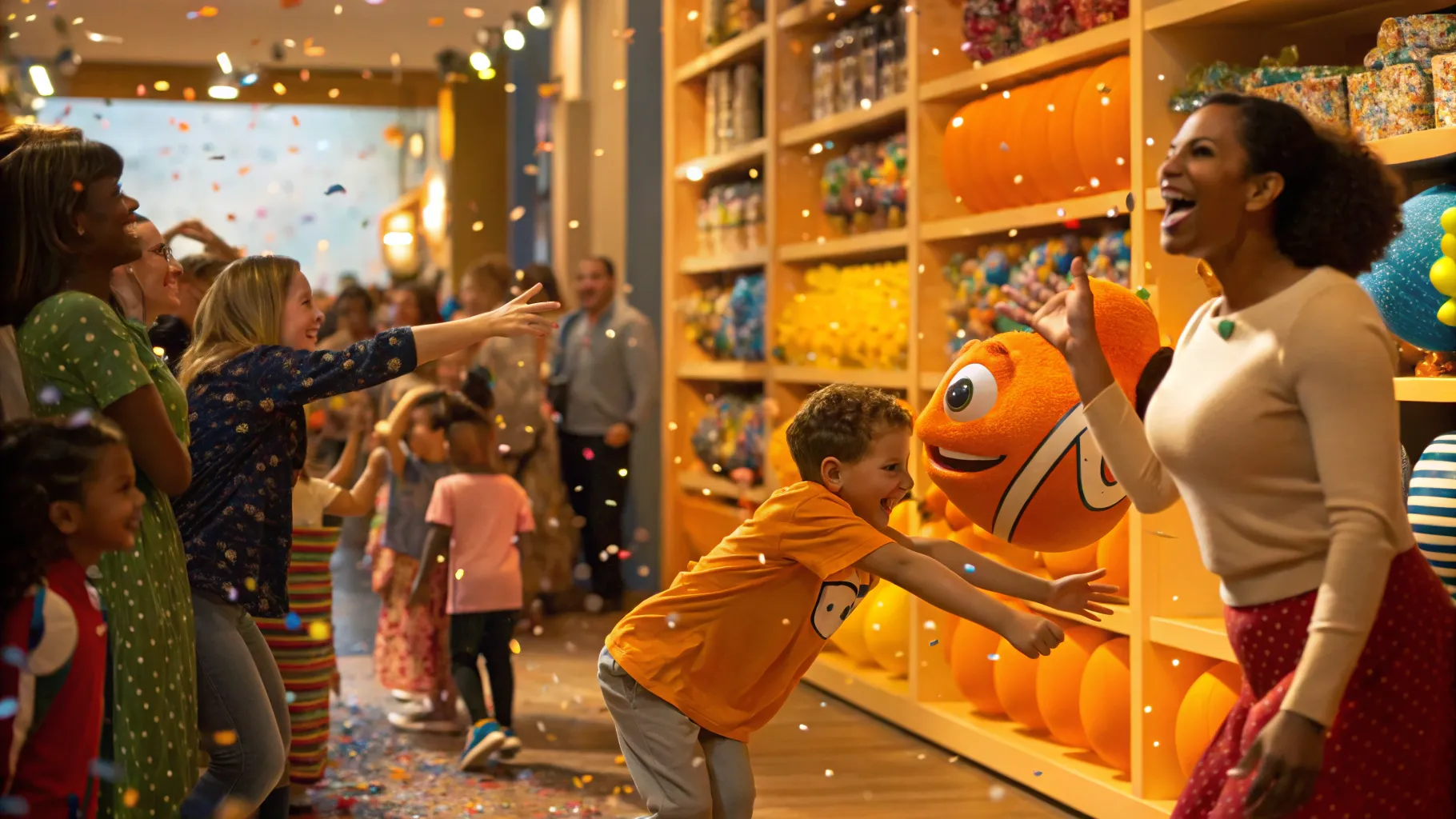
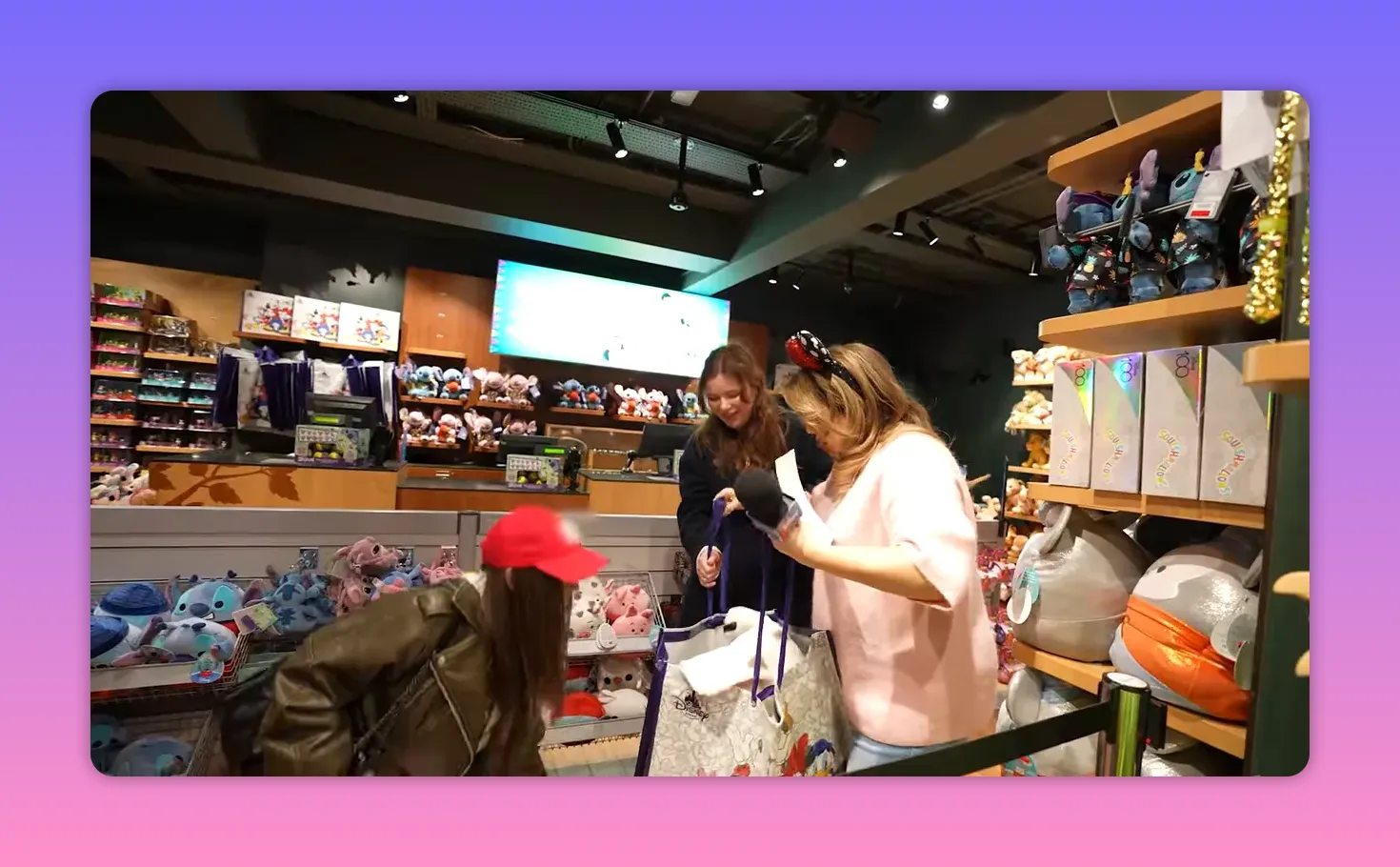
There is nothing quite like a little in-store magic to turn an ordinary shopping trip into a memory. Picture a bright Disney Store in London, a genuinely wholesome basket full of plush, mugs, ears and tees, and the kind of crowd that leans in the moment a challenge is announced: four quick questions and one heart-pumping, 30-second mission to find Nemo. That mix of playful tension, instant reward, and genuine delight is exactly the recipe for retail experiences that people remember and share.
Why playful in-store experiences matter
Retail is no longer just about products on shelves. The modern store that succeeds creates an experience — and experiences stick. A short, well-designed game taps into several powerful drivers:
- Emotion: A cheering crowd, a sprint across the floor, the gasp when someone finds a hidden toy — those feelings form stronger memories than a simple transaction.
- Social proof: When one family gets excited, others watch and lean in. That social energy converts casual browsers into participants.
- Shareability: Playful, short moments are tailor-made for social clips, reposts, and word of mouth. An easy-to-understand game gets people talking instantly.
- Immediate gratification: Instant prizes remove friction. When people can walk away with a souvenir in minutes, conversion and satisfaction rise.
That day in the store delivered all of the above: simple rules, a little pressure, a shining prize, and the kind of host energy that turned a normal outing into an event.
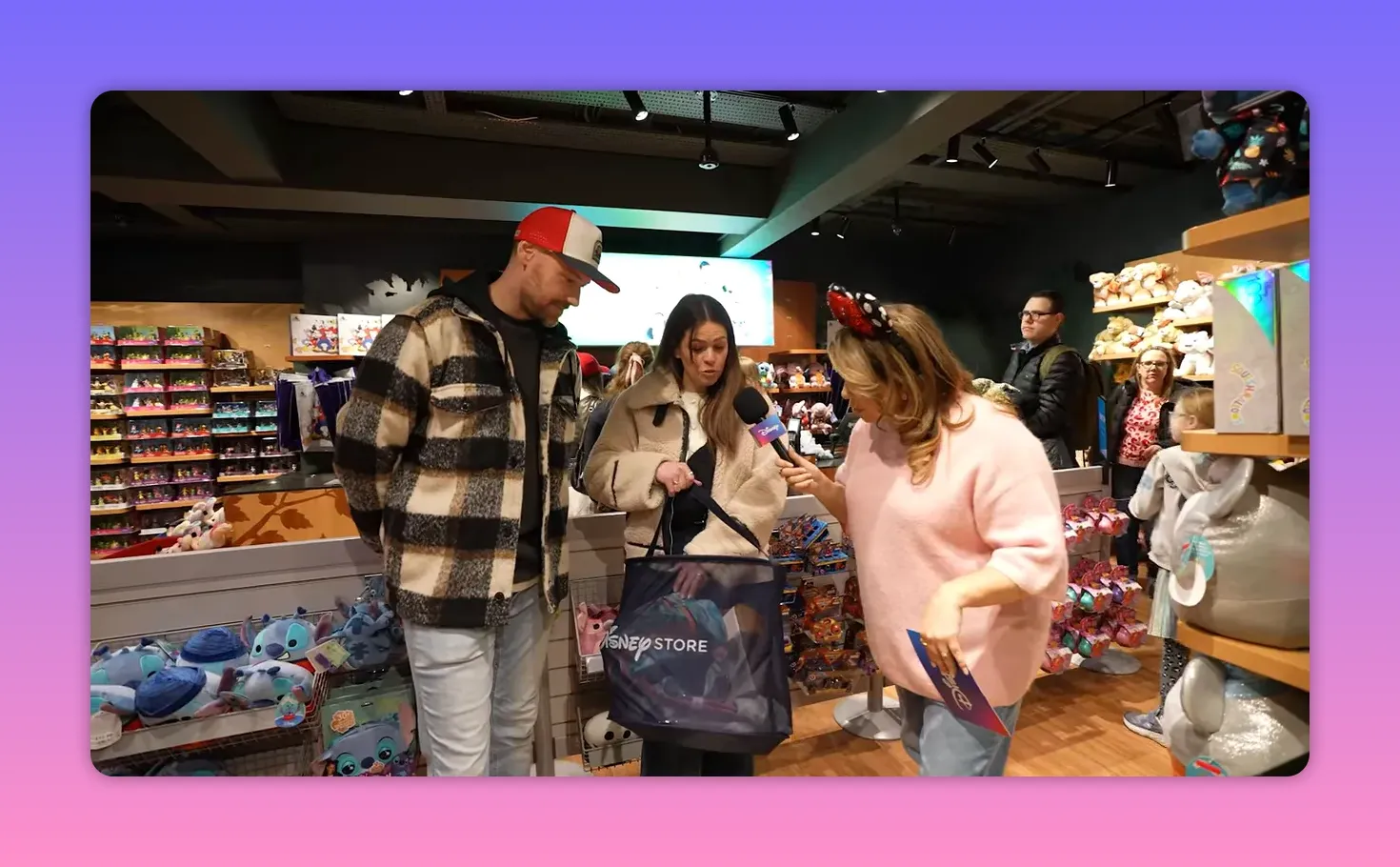
Anatomy of a winning retail challenge
Not every in-store activity becomes memorable. The ones that do share a common structure. Here’s a breakdown of the core elements that made the Disney Store challenge work and how to apply them to your own events.
1. Clear, simple rules
Complexity kills momentum. The rules were obvious: answer four quick questions and then take a timed challenge. Simple constraints create focus.
- Limit the number of steps to three or four.
- Explain the rules once, clearly, and stick to them.
- Use a countdown or a visible timer to keep the energy high.
2. A host who sets the tone
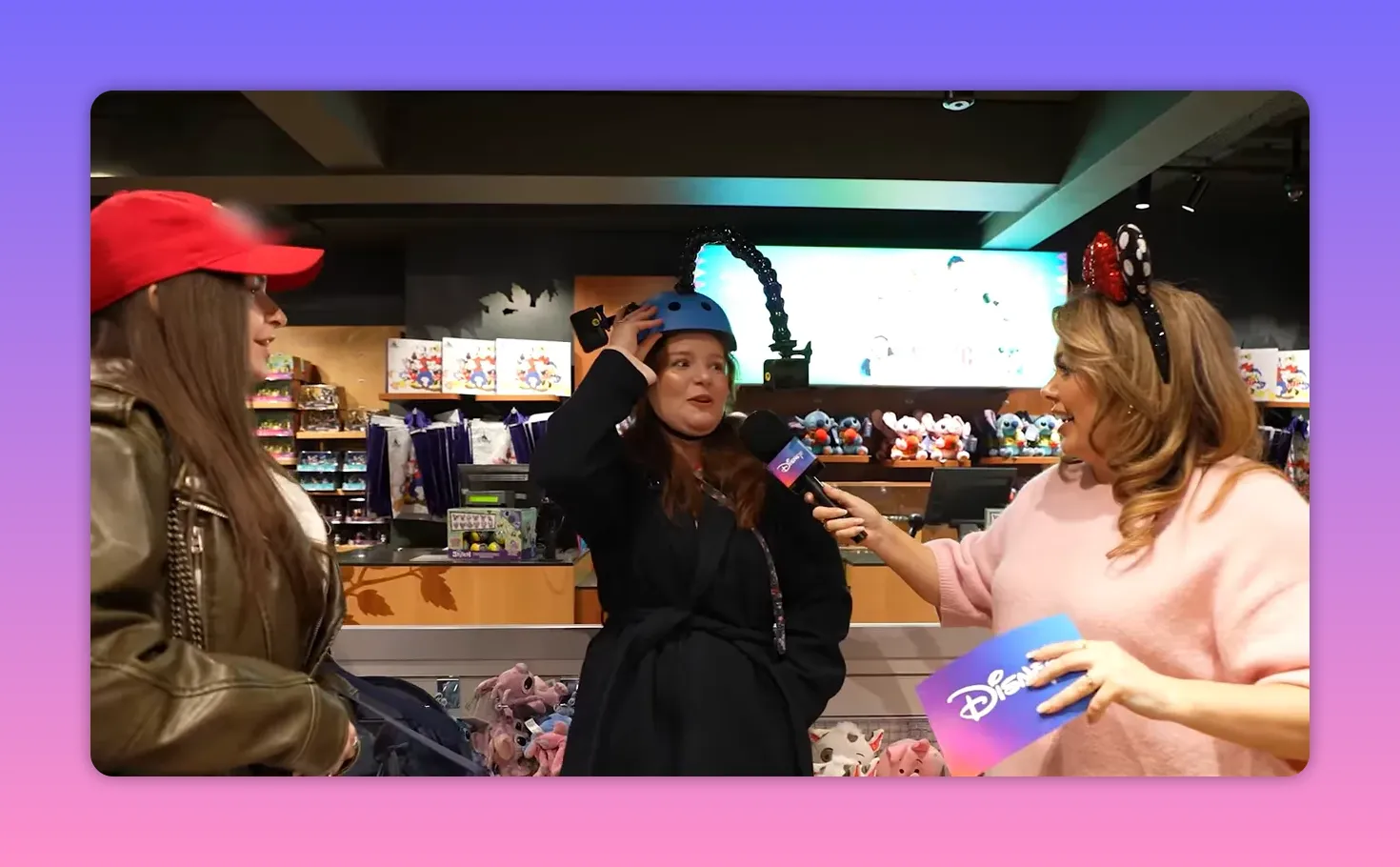
The host sets the emotional temperature. Warm, chatty, encouraging energy keeps everyone engaged and calms nervous participants. A playful line here and there — like teasing that guests have been “obsessed” with certain items — creates rapport instantly.
3. Time pressure for excitement

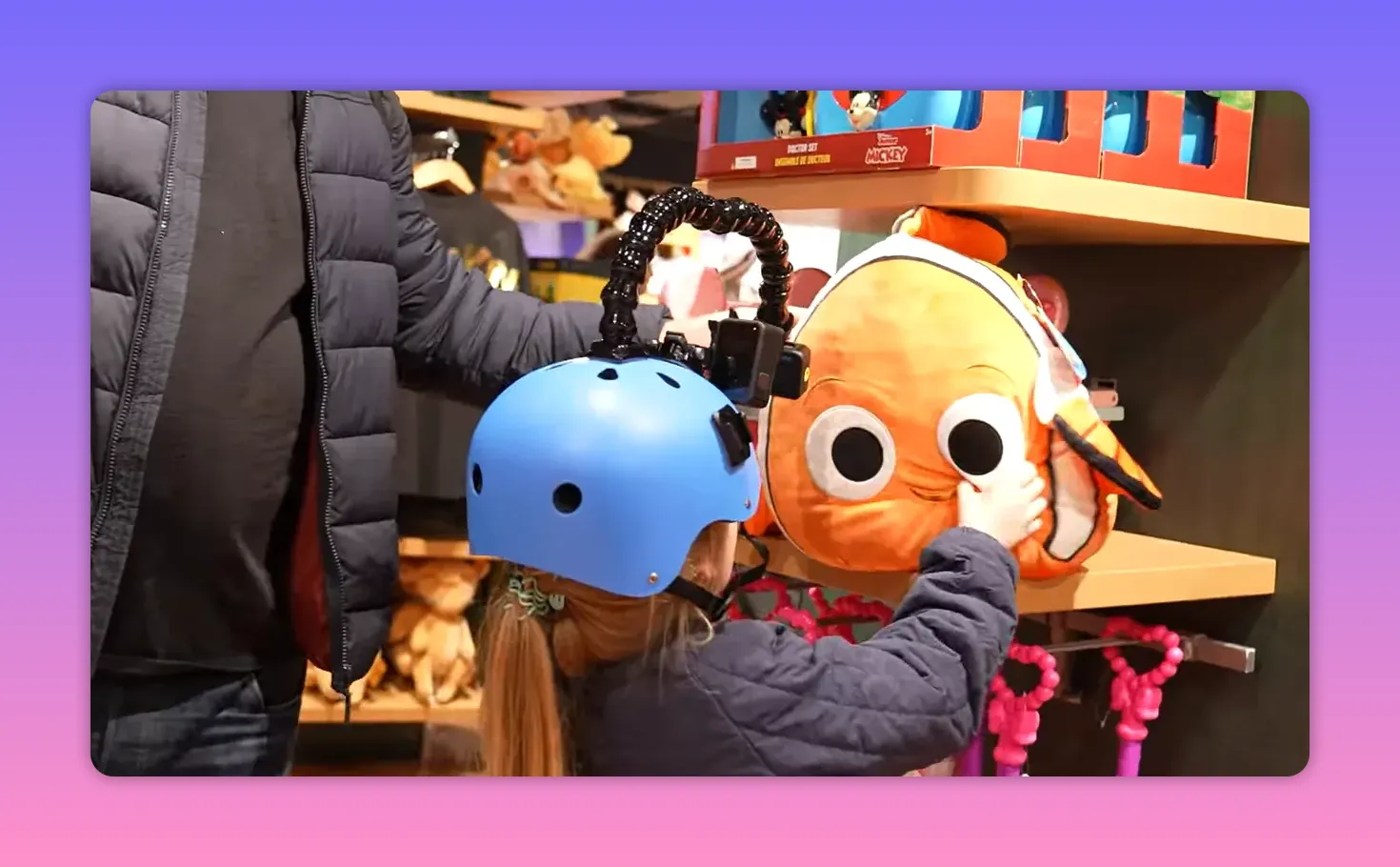
Thirty seconds to find Nemo was perfect. Short windows create urgency without causing panic. That urgency gets spectators involved, shouting directions and creating a group moment that amplifies the fun.
4. Meaningful, visible prizes
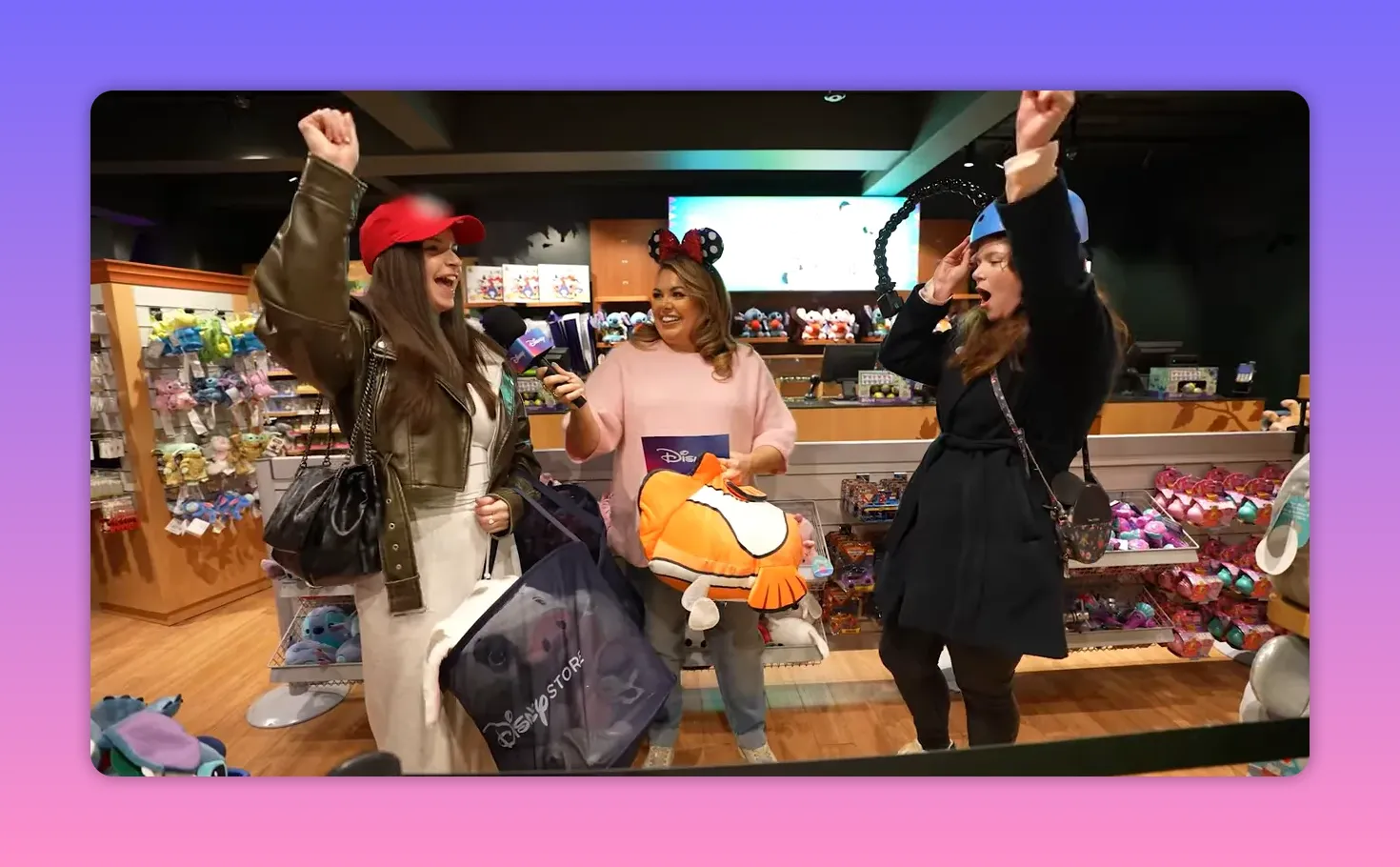
Prizes need to feel valuable and be visible. A basket stuffed with recognizable characters immediately signals worth. Giving the whole basket away makes the stakes real and the reaction even bigger.
5. Audience participation
Moments become social when the crowd can join in. Whether cheering, chanting answers in unison, or sprinting across the shop floor to hand over an item they’ve found, community participation elevates the experience.
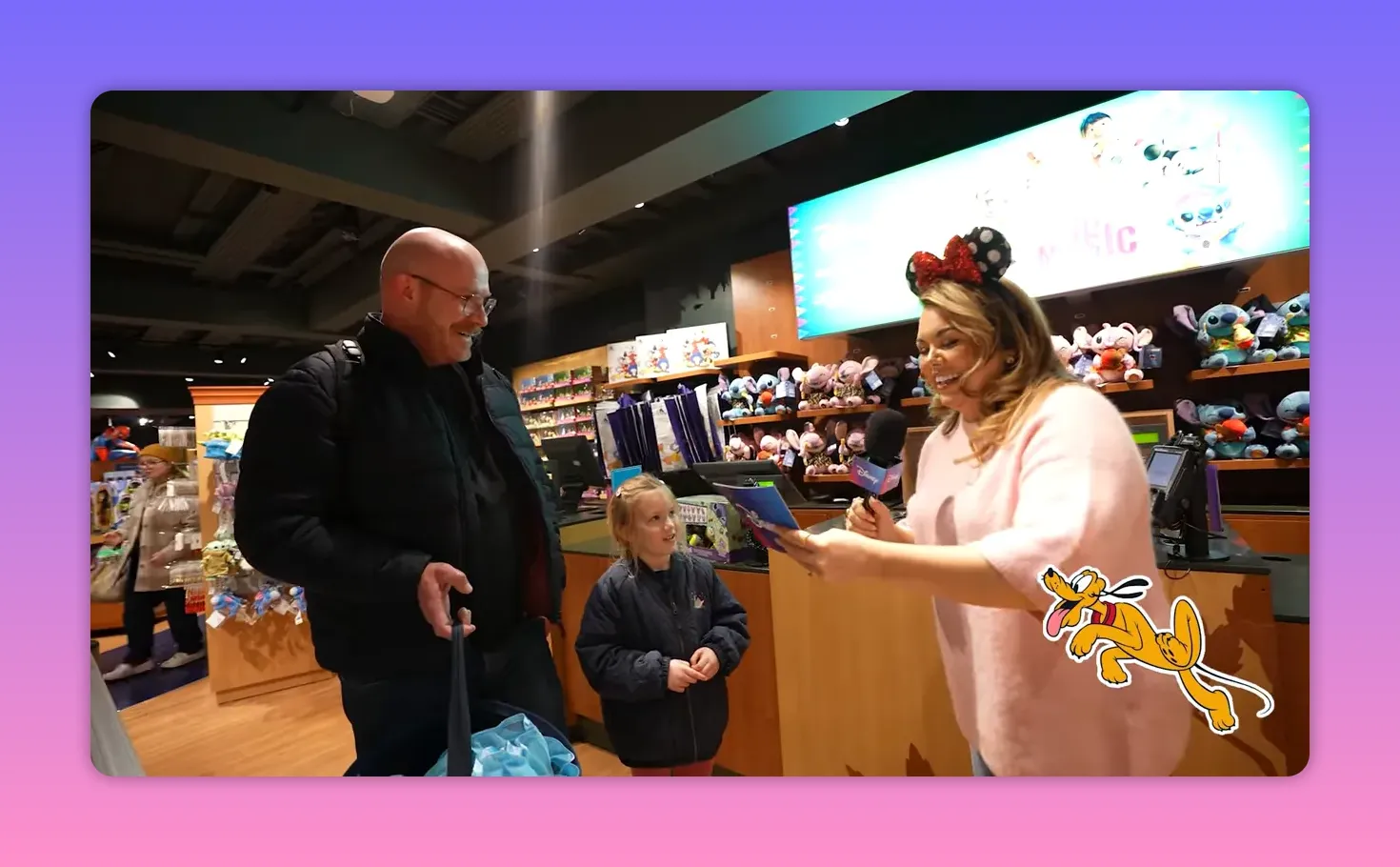
Designing the quiz portion: quick, themed, and inclusive
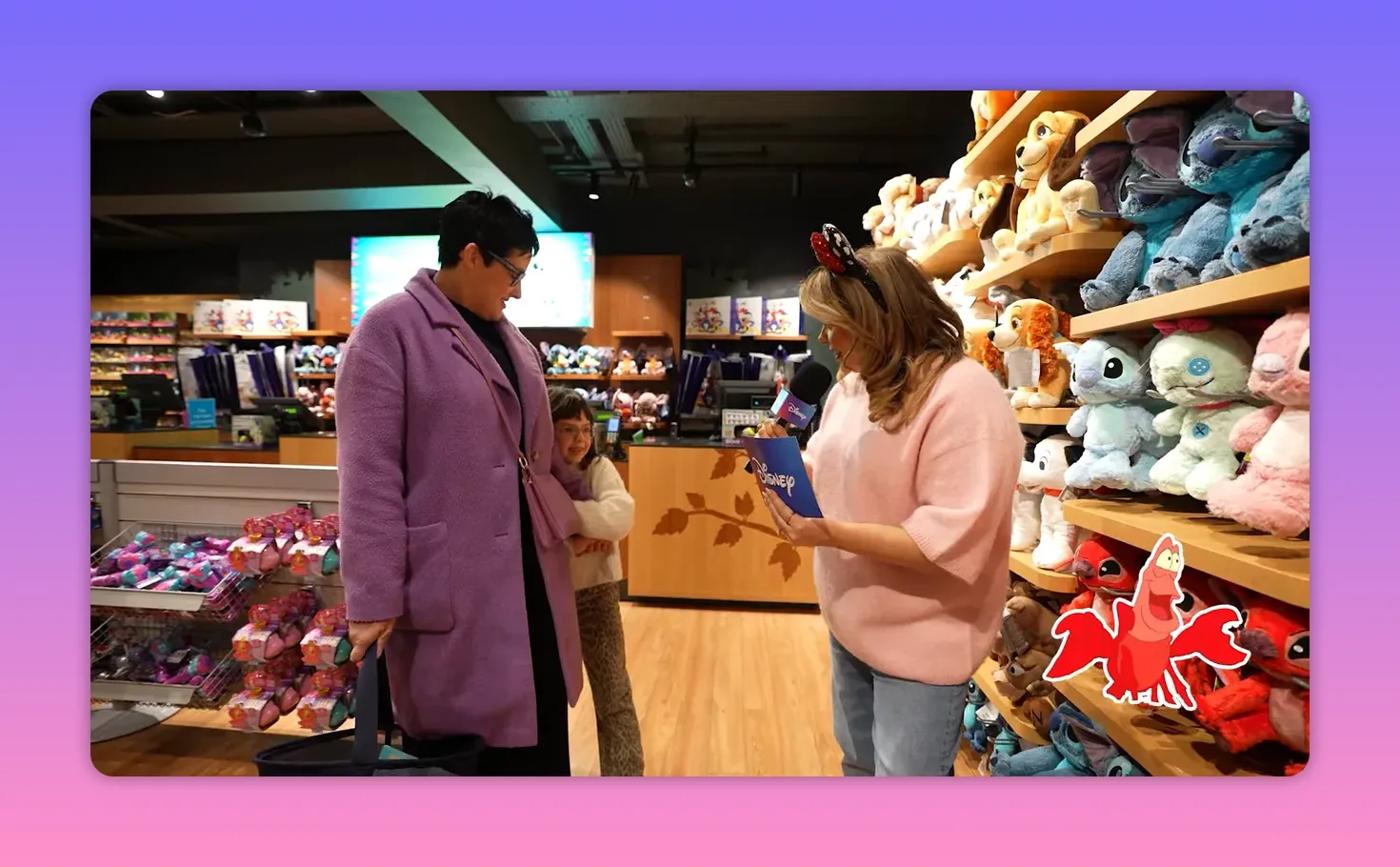
A trivia gateway is a great way to start. Questions should be easy enough for casual fans but still rewarding. The five-question structure below creates momentum and warms up the audience before the physical challenge.
- Focus on recognizable characters and iconic lines.
- Keep responses short: single words or short phrases.
- Encourage group responses to build camaraderie.
Sample question flow:
- What is the name of Mickey Mouse’s dog? Pluto.
- What kind of fish is Nemo? Clownfish.
- What is the crab called in The Little Mermaid? Sebastian.
- Finish the line from Frozen: Yoohoo. Big summer blowout.
These are simple, recognisable, family-friendly questions. The audience can answer in unison, which is both fun and makes the segment feel inclusive. Keep the tone light and celebratory at each correct answer to sustain momentum.
The “Find Nemo” challenge blueprint
Turning trivia into a mini physical quest is where the magic happens. Here is a step-by-step blueprint to run a “Find Nemo” style challenge safely and successfully.
Setup
- Choose a safe area of the store where guests can move without risking merchandise or other customers.
- Place the target item somewhere visible in hindsight but not obvious to a quick glance. Think: tucked behind a stand, peeking from under a display, or perched near a themed section.
- Inform staff where the item is and designate a staff member to confirm the find.
Rules to announce
- Participant has 30 seconds to find the hidden item on the floor level indicated.
- The search remains within a defined area. No climbing on displays.
- If the participant runs out of time but performed well, consider a consolation prize to keep the experience positive.
Execution tips
- Start with a clear countdown: “Three, two, one, go.”
- Encourage the crowd to shout helpful prompts but keep it fun. Use lines like “You can do it!” and “Keep looking!”
- Have staff gently guide traffic so the search is safe and fair.
- If the participant nearly finds the item but runs out of time, reward the effort. The cheer and recognition are just as valuable as the prize.
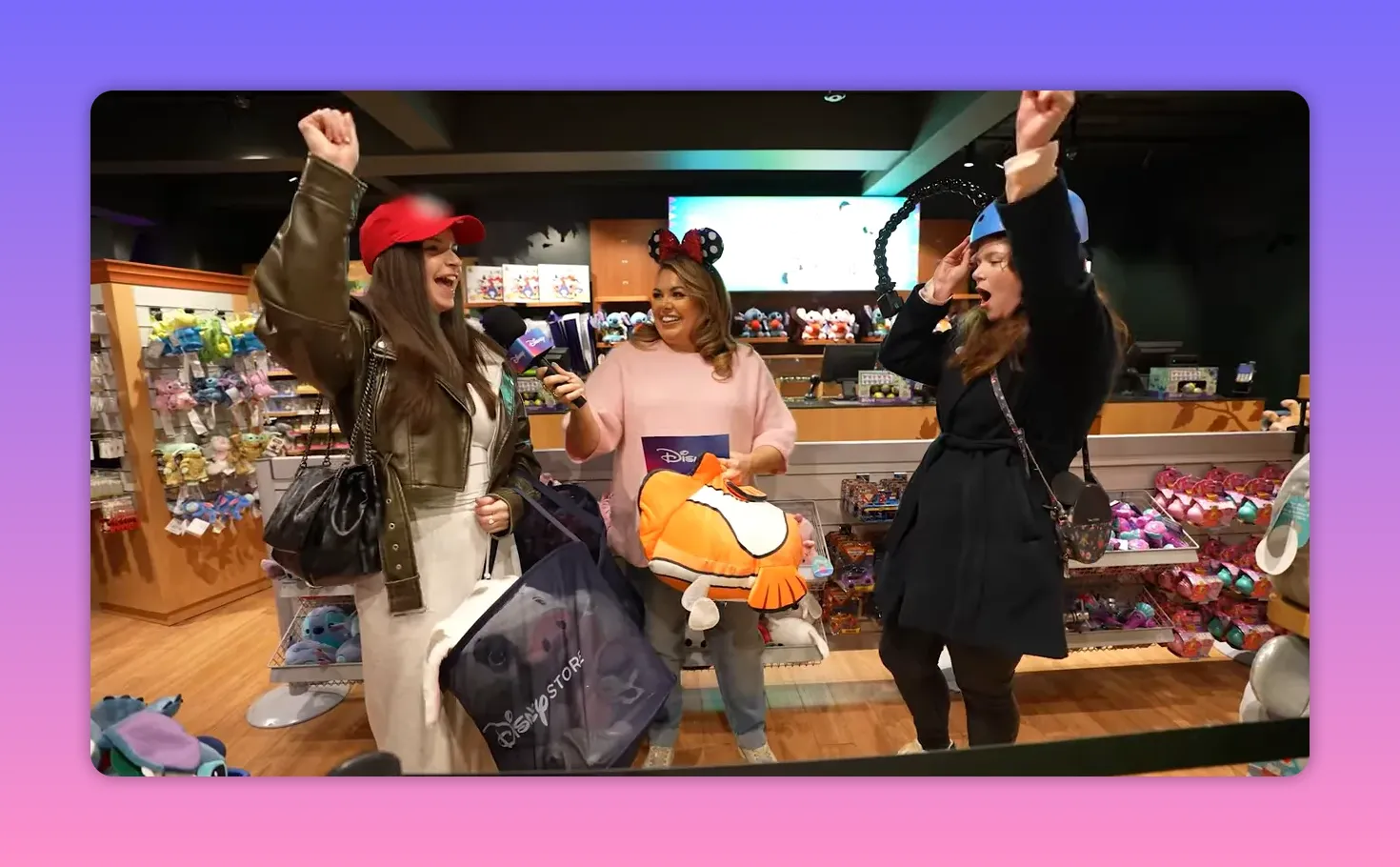
In the example scenario, the player spotted Nemo at the back, sprinted to grab him, but ran out of the last few seconds. The response from the host and staff — not only awarding the basket but crowning the participant a “Lion King” — turned an incomplete success into a full, feel-good win.
Sample scripts and playful lines

Having a few go-to lines keeps the energy playful and polished. Use them to guide, tease, and celebrate. Keep them short and natural.
- “Would you like to play a game of Lion King? We could try and win the contents of your basket.”
- “Okay, four questions and a challenge. If you complete them all, those are free to take away today.”
- After a correct answer: “Correct! Love it!”
- Before the challenge: “On this floor and you have 30 seconds. Ready? Go!”
- When someone misses by a hair: “You’re not going to go away empty-handed just for you.”
- When handing over the prize: “You are a Lion King.”
These lines are light, encouraging, and focused on making the participant feel special — not embarrassed. That tone matters as much as the prize.
Crafting the family-friendly atmosphere
A family-friendly atmosphere is anchored in warmth, inclusivity, and a sense that everyone, big or small, can have fun. Here are the micro-decisions that create that vibe:
- Music: Play upbeat, recognizable tunes softly in the background to keep the mood lively.
- Language: Use positive, encouraging language. Avoid teasing that feels exclusionary.
- Visibility: Keep the action visible so families and other customers can watch safely from a short distance.
- Photo moments: Create a small space where winners can pose. Capture those smiles for social amplification.
What made the moment genuine was how every small choice — from the host’s energy to a simple crown or title like “Lion King” — elevated the participant’s sense of accomplishment.
Prize strategy: make it feel like a real win
The choice, presentation, and value of prizes determine how a game is perceived.
Prize selection
- Offer items people already love and recognize. Branded merchandise or bundles are ideal.
- Bundle smaller items into one visible reward so the prize looks substantial even if individual items are low cost.
- Have a consolation item like a small voucher or sticker so everyone leaves smiling.
Prize presentation
How you give the prize matters. Handing over the basket with a short congratulatory moment and a commemorative line changes the prize into a ceremony. That memory is what people share back to their friends.
Legal and terms considerations
Any prize giveaway needs clear rules and compliance with local laws. Practical steps include:
- Publishing concise terms and conditions, including eligibility requirements and closing dates.
- Restricting entries appropriately: for example, “Open to UK residents only” or “Participants must be 18+ to enter” if required for a particular promotion.
- Clarifying how winners will be contacted and warning against fraud: “We will never ask for your bank details.”
These simple protections keep the promotion legitimate and instill trust.
How to measure success

Events like these generate multiple kinds of value. Track both direct and indirect outcomes:
- Engagement: Number of participants, number of spectators, social shares, and saved moments.
- Conversion: Sales uplift in the store during and after the event, or specific products that saw increased interest.
- Brand lift: Sentiment in social comments and qualitative feedback from staff and customers.
- Content reach: Short clips of the event, especially emotional moments, are prime for social-friendly edits.
Measure both immediate impact and the afterlife of the content. A single joyful clip can produce weeks of brand moments if reposted, captioned, or turned into promotional content.
Scaling the idea for different stores and brands
The model can be adapted beyond one-off events. Consider these variations:
- Mini-morning sessions: Short games during off-peak hours to draw foot traffic before midday.
- Weekend headline events: Bigger rounds with multiple winners, photo ops, and local influencers.
- Product-focused promos: Use the challenge to highlight a new launch — hide a new product and let participants find it first.
- Theme weeks: Rotate characters and questions each day to keep repeat foot traffic returning for new challenges.
These variations keep the concept fresh and allow easy measurement of which formats drive the most value.
Play safe: practical accessibility and safety notes
Games are fun, but safety and accessibility must come first. Implement these rules to make sure every participant and spectator has a good time without risk.
- Clearly mark the search area. No climbing on displays or running near fragile items.
- Offer alternative versions for less mobile participants, such as a “spot the item” challenge from a seated position.
- Keep staff visible and ready to intervene if a crowd gets too excited.
- Ensure the floor path is free of trip hazards and consider soft mats in areas where a quick dash might occur.
Content capture and amplification
Capture the moment with short, vertical-friendly clips and candid photos. These are ideal for social channels. A few capture tips:
- Film short clips that capture the tension and the reaction — the countdown, the sprint, the gasp, the cheer, the prize handover.
- Use natural sound; the crowd’s noise is often the best part of the clip.
- Keep captions short and playful to match the tone of the moment.
- Share the clip with the participant if they’re willing — a small act that extends goodwill and encourages reshares.
When shared with simple, descriptive copy — like “Round four, 3 2 1 — and she’s off!” — clips perform particularly well because they invite curiosity and emotion.
Complete script and timeline for a 10-minute in-store activation
Here’s a practical runbook you can use to replicate a similar activation. Total time: 10 minutes per round. This keeps lines moving and maximizes reach.
- 00:00–00:30 — Gather a small crowd and introduce the game with enthusiasm. Show the prize basket and outline the rules.
- 00:30–02:00 — Trivia round: ask four simple questions to build energy and warm up the participant.
- 02:00–03:00 — Announce the timed challenge and the search area. Confirm staff readiness.
- 03:00–03:40 — Countdown and the 30-second search. Film from a safe angle to capture both runner and crowd.
- 03:40–04:30 — Reaction and prize handover. Take a photo with the winner; offer a consolation for near-misses.
- 04:30–06:00 — Quick wrap: invite spectators to stick around for upcoming rounds and share a small discount voucher for all attendees to encourage purchases.
- 06:00–10:00 — Reset, tidy the space, and prepare the next round.

This rhythm keeps queues short and excitement high. It also creates multiple shareable moments across a single event window.
Question bank: keep it fresh
Vary your questions by difficulty and topic to maintain appeal across ages. Mix classic questions with a few topical ones related to seasonal promotions.
- What is the name of Mickey Mouse’s dog?
- What kind of fish is Nemo?
- Who is Simba’s dad in The Lion King?
- What creature helps Moana on her voyage?
- What color is Olaf’s carrot nose?
- Finish the line: “Let it….”
- Which toy cowboy says “There’s a snake in my boot”?
- What does Eeyore always lose?
- Which princess has a tiger friend named Rajah?
- Which movie features the song “Under the Sea”?
Keep a mix of easy and moderate questions so families with young children can participate alongside older fans.
Turning a near-miss into a big win
Not every participant will complete the challenge. The key is to reward effort and enthusiasm as much as success. A few successful ways to do that:
- Offer a small consolation prize when someone almost reaches the goal.
- Give public recognition — a title like “Lion King” or a ribbon — that makes the person feel special even without the main prize.
- Allow a second chance under slightly different rules for brave participants who want to try again.
In the scenario described, the participant found Nemo but ran out of time. Awarding the basket anyway and giving a playful accolade turned disappointment into delight, creating one of those unforgettable customer stories that staff and customers talk about for weeks.
Case study takeaways
From a single activation we can extract several lessons that translate across retail and experiential marketing:
- Simplicity scales: Short rules, clear prizes, and quick rounds make it easy to replicate and to share.
- Energy matters more than perfection: The host’s tone determines how the crowd feels. Make empathy and encouragement the priority.
- Reward attempts: People will remember how you made them feel more than whether they won or lost.
- Visibility multiplies impact: A visible basket and a visible search space create instant trust and excitement.
FAQs
How much space do I need to run a challenge like this safely?
You do not need a huge area: a clear section of floor that allows for a short, unobstructed walk is sufficient. Mark the search boundaries clearly, remove any fragile items from the immediate vicinity, and ensure staff are present to redirect pedestrian traffic. Safety and respect for other customers should always come first.
What types of prizes work best for in-store challenges?
Visible bundles of well-known items perform best. Branded merchandise, character plush, or themed bundles that align with current product lines create perceived value. Always include a small consolation prize to ensure everyone leaves feeling positive, and consider vouchers that drive follow-up purchases.
How do I handle legal requirements and terms for giveaways?
Publish clear terms and conditions that include eligibility, closing dates, method of winner selection, and how winners will be contacted. If running an online or combined offline-online promotion, comply with local regulations for contests and ensure any age restrictions are clearly communicated. Always warn participants about potential fraud and clarify the official channels for prize notifications.
How can I make the event accessible for people with mobility challenges?
Offer alternative versions of the challenge that do not require running or reaching. For example, provide a stationary “spot the item” challenge where participants point to the hidden object from a designated spot, or create a button-press timed quiz. Ensure staff offer these alternatives proactively and make the prize awarding equally celebratory.
What is the best way to capture and share the moment on social media?
Use short vertical clips that capture the countdown, the search, and the reaction. Keep captions playful and encourage the participant to share the clip. Tagging and location markers increase reach. Obtain consent for any footage you plan to publish, especially when minors are involved.
How often should this type of activation be run in a store?
Start with weekly or weekend activations to build momentum and test formats. If performance and foot traffic are strong, increase frequency. Rotate themes and questions to keep repeat customers engaged and measure which time slots deliver the best return on staff time and engagement.
Final thoughts
Retail moments that feel joyful are the ones people keep. The combination of quick trivia, a timed physical challenge, a visible prize, and a warm host turns ordinary shopping into a memory. You do not need a large budget to create memorable moments — you only need clear rules, good pacing, and staff who care about making people feel special.
Try a short, repeatable activation that fits your store layout and customer base. Keep it simple, celebrate failures as much as wins, and always make safety a nonnegotiable. When you nail those elements, customers leave not just with products, but with a story worth telling.


