

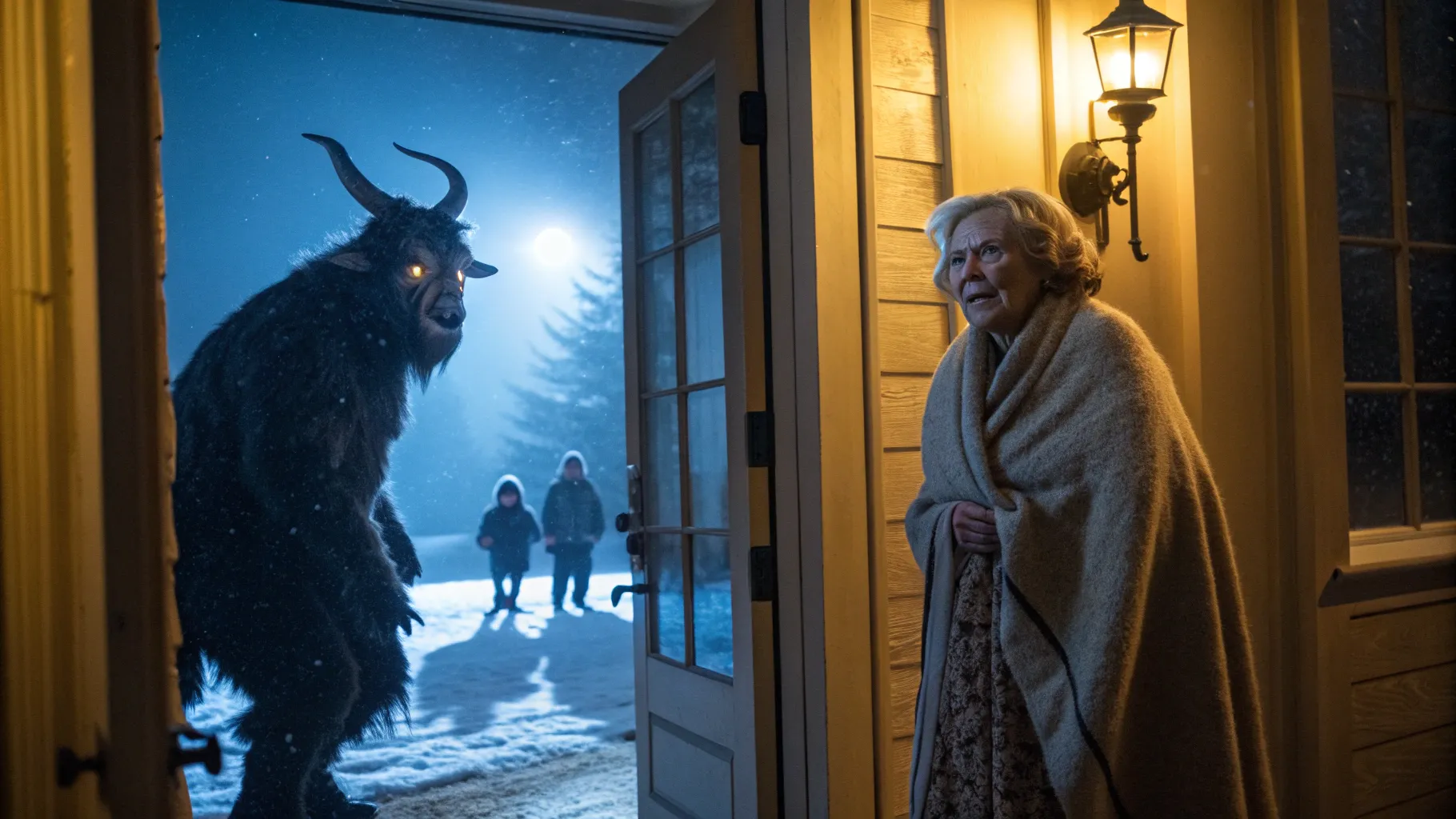
Some confrontations arrive like a thunderclap—sudden, brutal, and impossible to ignore. The moment a family faces the thing that has been stalking their worst impulses is one of the most electric sequences in modern holiday horror. Here, an elder named Omi stands alone at the threshold between warmth and the cold, between the house of human frailty and the mythic force that punishes it. This piece unpacks that confrontation, examining how folklore, faith, and familial duty collide in a scene that is as heartbreaking as it is terrifying.
Setting the Stage: Why This Scene Matters
At its core, this scene is not only a horror set piece. It is a reckoning. The family has already fractured under the weight of its own bitterness, and the arrival of a punitive myth forces a reflection: what happens when belief unravels? The confrontation between Omi and Krampus crystallizes the film’s primary theme—the consequences of forgetting old rituals, the loss of communal belief, and the ways adults and children interpret moral accountability.
Omi, a grandmother figure, represents continuity. She is the last living bridge to a tradition the rest have dismissed or mocked. Her choice to stay behind and face the demon is not merely brave in the action-movie sense. It is deeply symbolic. It is an act that says belief is not always about blind faith; sometimes it is an ethic, a practice of care for others that persists even when no one else remembers why it mattered.
Quick Summary of the Confrontation
After shepherding her family to safety, Omi remains behind to confront the intruder. The terror rises through the house—the creaking, whispers, and final emergence of Krampus through a chimney. The lines in the sequence are terse, fractured, and full of panic. Voices command, plead, and instruct: “Everybody is holding on to each other,” “Open this door now,” “You have to go. I need you to go.” These short, clipped phrases create a rhythm that speeds the heart and keeps the focus on survival.
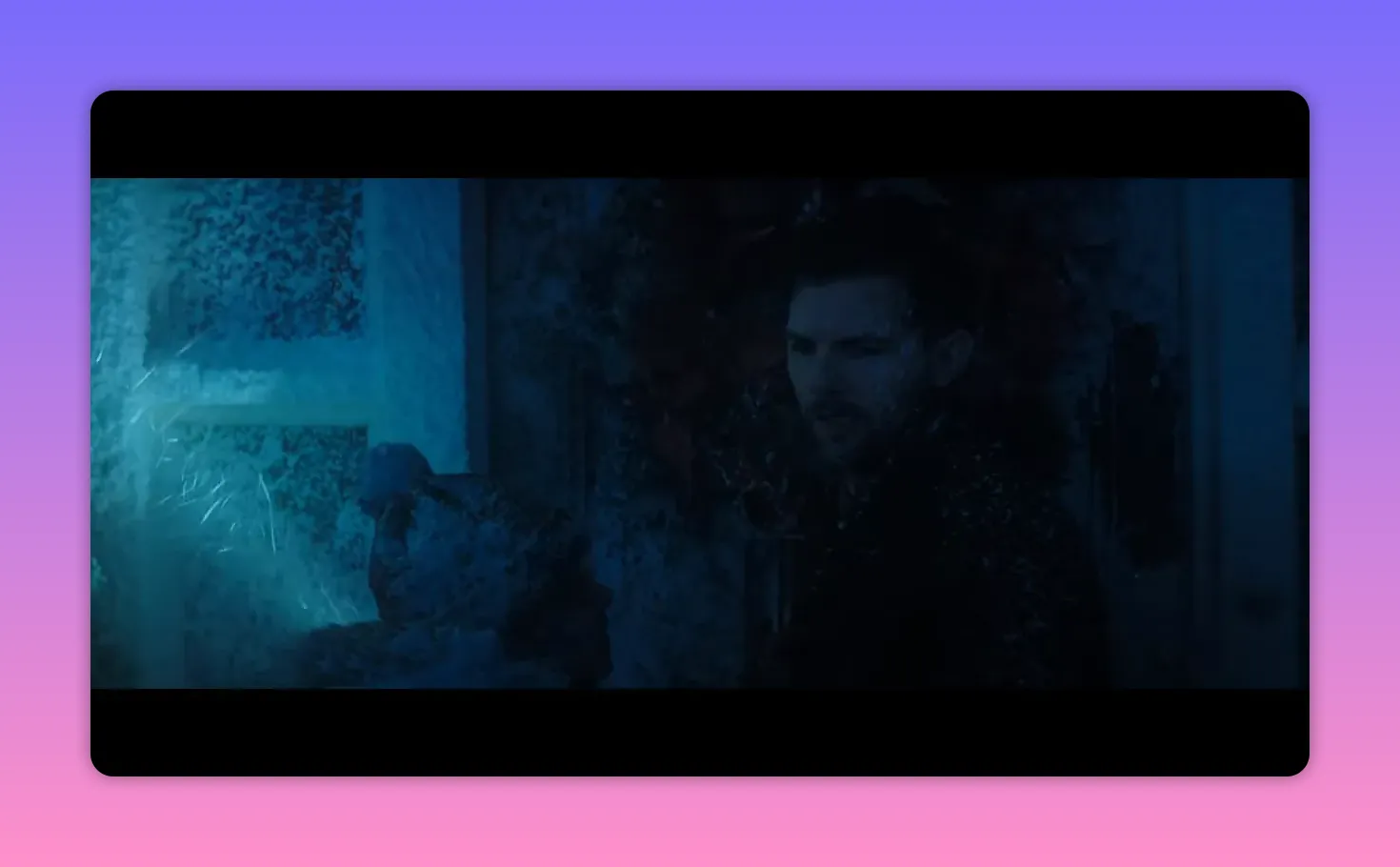
When the demon finally appears, the camera and sound push the viewer forward into the face-off. This is not a shouty showdown; this is intimate terror, an old woman squaring up to an ancient punishment. Her final reflection—”He left me as a reminder of what happens when my belief is forgotten in the spirit”—is wrenching. It reframes Krampus. He is not only a villain; he is a mirror for the family’s neglect.
Breaking Down the Sequence: Moment by Moment
The scene unfolds with a cinematic economy. Nothing is wasted. Each line and beat serves to heighten dread and to clarify stakes.
- Opening panic — The early moments are all about reaction. Short commands like “Hurry, hurry” and “Get your head off” convey urgency. They stake out a tonal baseline: survival over exposition.
- Collective fear — “Everybody is holding on to each other” points to how terror can temporarily reunite fractured bonds. Physically clinging becomes a metaphor for emotional dependence.
- Attempts to flee — Repeated pleas to “Open this door now!” and “The window” show both improvisation and the failure of normal escape routes. This echoes an important horror trope: the usual human solutions do not apply to supernatural punishment.
- Close quarters — The presence of the demon in tight spaces—chimneys and doorways—creates claustrophobia. Krampus invades the hearth, the center of domestic safety. That invasion is storytelling shorthand for the loss of home as sanctuary.
- The final reckoning — Lines such as “You have to go” and “Keep driving” shift the responsibility outward, demanding that someone survive to remember. The choice for Omi to stay behind is framed as duty as much as sacrifice.
Character Focus: Omi as Moral Anchor

Omi’s presence reframes Krampus from a single-minded predator into an ethical force. She is not naïve about the danger. Instead she meets it with clarity. There is a tragic dignity to her decision. The dialogue fragment “Stay here. I’ll be right back” reads like a promise and a literal lie to fate—because for her, facing Krampus is a kind of necessary explanation for what the family ignored.
Her stance makes us ask: what does it mean to hold belief as duty? Omi treats tradition as a living thing worth protecting. In contrast, other family members treat it as nostalgia or superstition. Horror often uses elder figures to represent continuity or forgotten wisdom, but here that representation carries moral weight. The demon is not merely vindictive; it is the consequence of communal forgetfulness.
Krampus as Folklore and Allegory
Krampus is a figure with deep roots in Alpine traditions: a horned, half-goat, half-demon creature who punishes children who have misbehaved. In the context of this confrontation, the demon functions on multiple levels.
- Literal antagonist — He is the monster at the door, the tangible threat that kills or maims.
- Cultural memory — Krampus stands for cultural consequences when rituals die. He is the personification of what occurs when communities abandon rites that once knitted them together.
- Morality mechanism — Unlike a chaotic monster that revels in violence, Krampus is judgmental. His purpose is corrective punishment, not sadistic play. That renders the encounter more unsettling because it implies reason behind the horror.
The scene places this folkloric force in a modern, suburban context. A demon that once lurked in mountain villages now emerges from a modern chimney. That displacement generates commentary on how traditions are rendered powerless or monstrous when they cannot be integrated into new social realities.
Visual and Sound Design: How Fear Is Manufactured
Fear in this sequence is built through contrast. Bright, domestic spaces become alien when sound and composition are altered. Close-ups on hands, the flinch of a face, or the fullness of an animalistic snout create psychological proximity. The camera often stays tight, refusing to give viewers a godlike overview. That restriction means every scrape, whisper, and gasp matters.
Sound plays a critical role. Silence, interrupted by small noises, can be more terrifying than constant noise. The scene deploys silence as a pressure cooker, then releases that tension with a guttural, inhuman sound. These moments transform the familiar into something treacherous. The decision to have the demon emerge through the chimney is also a brilliant use of auditory surprise. The house’s usual creaks become language.
Performances: Minimal Lines, Maximum Impact
Minimal dialogue forces actors to communicate with eyes, posture, and small choices. When the family cries “Open this door now!” the real message is in the trembling hands and in the shaking breath. Omi’s presence is quieter, weightier; she does not need to shout to be heard. Her final line—”He left me as a reminder of what happens when my belief is forgotten in the spirit”—is not melodramatic. It is mournful and instructive.
The interplay between the frantic younger members and the stoic elder underscores generational tension. Younger characters, in their rush and noise, are reactive. Omi is deliberate. That contrast deepens the thematic inquiry: who pays for collective amnesia?
Symbolism and Themes: What This Face-Off Represents

Several motifs are at work here:
- Hearth as Heart — The chimney and fireplace are traditional symbols of domestic warmth and endurance. Krampus entering through that point inverts the symbol: home warmth becomes the entry for cold judgment.
- Memory versus Forgetting — Omi embodies memory. Krampus embodies consequence. The scene suggests that forgetting cultural practices can have tangible, destructive consequences—both literal and social.
- Sacrifice and Witnessing — Omi’s sacrifice is not merely to defeat Krampus but to become a witness. Her actions call for someone to remember. The family’s survival depends not only on escaping harm but on retaining the lesson.
- Punishment as Mirror — Instead of being senseless destruction, punishment here reflects the family’s failures. The demon is less a villain than a reflection of neglection.
Comparative Context: Holiday Horror and Its Purposes
Holiday horror uses festivities as a backdrop to highlight the gap between expectation and reality. Where celebrations promise warmth, horror exposes disconnection. This confrontation sits in the same lineage as other seasonal horrors that use tradition as both setting and obstacle. What separates this sequence is the explicit moral dimension. Krampus is not random chaos. The narrative insists on cause and consequence.
Other films in the subgenre often rely on irony or shock. This confrontation layers irony with elegy. It takes the time to mourn the lost sense of civic ritual even as it stages visceral scares. That blend makes the sequence linger beyond cheap jump scares. It asks questions about communal responsibility that are rarely so directly posed in a horror scene.
Directing Choices: How the Scene Balances Tension
The director treats the camera like another character—curious, frightened, yearning for truth but unable to intervene. Angles favor faces over spectacle. Even when the demon appears, it is framed against the human reaction, never in isolation. That keeps the audience emotionally tethered to the family.
Editing choices are sharp. The pace accelerates through short cuts during panic, then slows to long, uncomfortable beats during the face-off. This manipulation of rhythm makes the eventual emergence feel inevitable rather than surprising. The scene’s power relies on inevitability: the family created the conditions, and now they must meet the outcome.
Writing and Dialogue: The Weight of Few Words
Horror dialogue often needs to do less. Here, commands and fragments work better than exposition. Lines like “Keep driving. Do you understand?” are not just instructions; they are prayers disguised as orders. The brief exclamations and staccato phrasing create a musicality to the panic that draws the ear away from specifics and toward emotion.
“You have to go. I need you to go.”
That plea holds the emotional nucleus of the scene. Survival is not an end in itself; it is a responsibility. The survivors must carry meaning forward. In a sense, the film suggests that the living owe something to the dead or to tradition. This line turns survival into a moral act.
The Moral of the Scene: Remembering So We Can Change
The final line—”He left me as a reminder of what happens when my belief is forgotten in the spirit”—is both condemnation and lament. It is not delivered triumphantly but with quiet sorrow. The moral ambiguity here is important. The film does not insist that old rituals are always just. Rather it warns that when a community discards shared practices without replacing their social functions—rituals of accountability, generosity, and memory—it creates a vacuum that can be filled by destructive forces.

This is not an argument to return to any specific rite blindly. It is an argument to consider what those rites did. They held people accountable, connected generations, and created a shared narrative. When those functions dissolve, the social glue weakens. Horror, in this context, is a genre that visualizes the consequences of that loss.
Lessons for Creators and Storytellers
There are several practical takeaways for writers and filmmakers from this confrontation:
- Lean on silence. Let the absent beat as loudly as any scream. Silence invites the audience into the moment.
- Use minimalism in dialogue. Short, urgent phrases can be more effective than heavy exposition.
- Anchor supernatural forces in human failings. When monsters reflect ethical lapses, they feel more meaningful and less arbitrary.
- Let symbolism carry emotional load. The hearth, the chimney, the elder as memory—these visual anchors can say more than long speeches.
- Make sacrifices purposeful. A character who sacrifices themselves gains resonance if their act ties back to theme, not just shock value.
How the Scene Resonates Culturally
At a time when communities are negotiating which traditions to keep and which to let go, a story that dramatizes the consequences of forgetting feels timely. The confrontation insists on accountability: when rituals are abandoned, the social consequences can be severe, sometimes literally. It invites readers to ask what their own communities have exported to memory and what they have quietly abandoned.
That question is not only about holidays. It is about civic rituals that make life tolerable—acknowledgment of suffering, communal remembrance, and the mechanisms by which people enforce care for one another. When those mechanisms erode, the result can be both small and catastrophic.
Visual Anchors: Suggested Screenshots and Why They Work
The sequence benefits from several visual beats that can be captured to illustrate the article’s analysis:
- 00:04 — The moment of recognition: a face, a whisper, the first realization. A perfect anchor for the opening panic described above.
- 01:11 — The search for escape: windows, doors, failed exits. Use this to illustrate the collapse of normal escape routes.
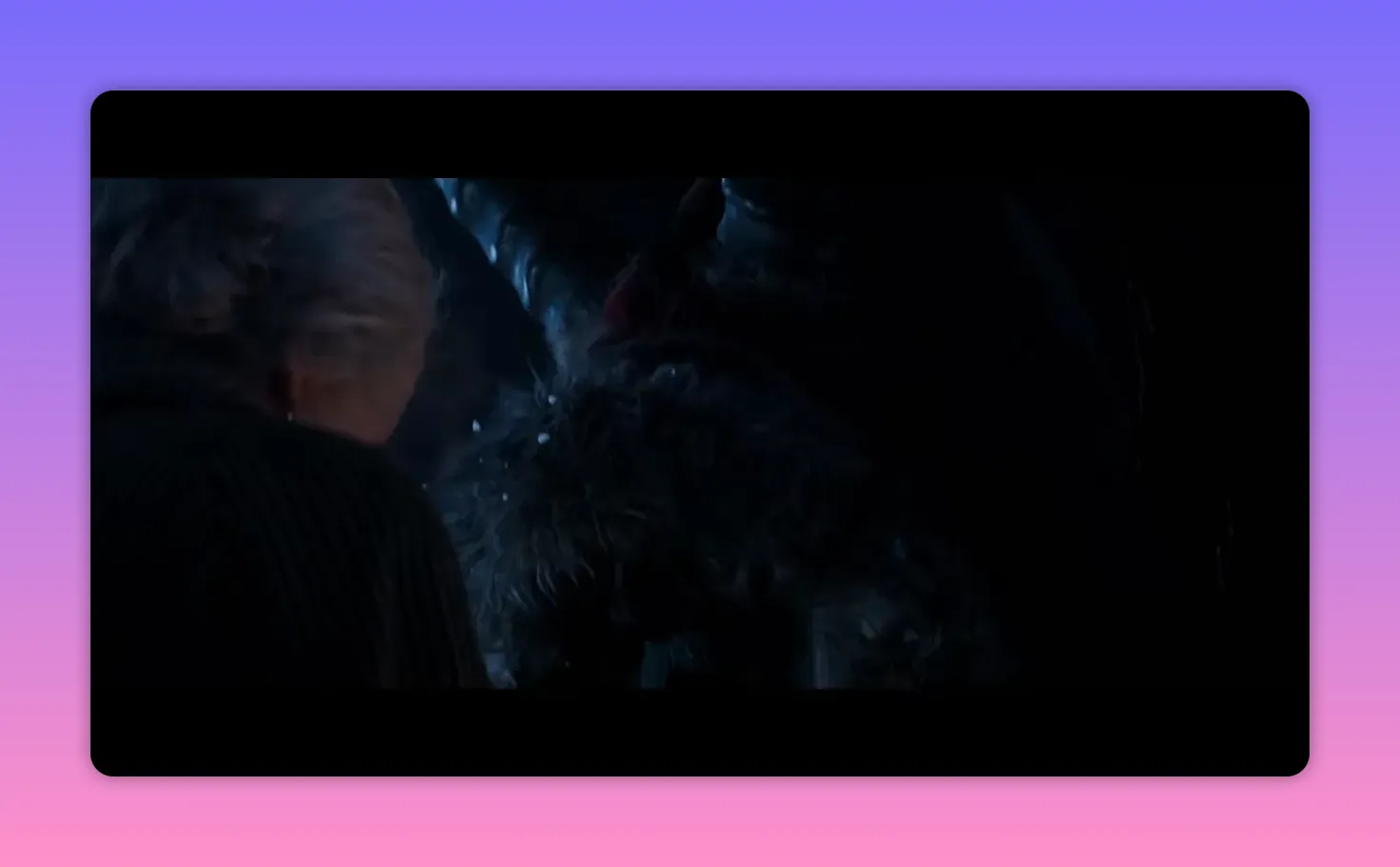
- 03:06 — The demon’s partial reveal or a key reaction shot. This image emphasizes proximity and claustrophobia.
- 05:15 — A physical struggle or an emotional peak. This can anchor the discussion on performance and minimal dialogue.
- 06:26 — A moment where an attempt fails and panic crescendos. This supports the point about inevitability and editing rhythm.
- 07:38 — The final line and emotional coda: the elder’s reflection as the moral center.
Final Thoughts: The Power of a Confrontation
Confrontations like this one succeed because they combine spectacle with a moral question. They make the monster more than an obstacle; they make it a consequence. The elder’s fate becomes a lesson wrapped in terror, and the viewer—or reader—walks away with the uneasy sense that forgetting matters. Not because of supernatural shorthand, but because community memory is part of the scaffolding that holds people together.
Whether or not one believes in the literal existence of such a creature, the confrontation accomplishes a different kind of truth-telling. It makes us examine what we value, whom we listen to, and what we choose to preserve. That kind of horror does more than frighten. It prompts reflection. It challenges readers to consider what in their own lives should be remembered, and why.
FAQ
Who is Omi and why does she confront Krampus?
Omi is an elder and moral anchor who represents continuity with older traditions. She confronts Krampus because she understands the cultural and ethical role those traditions played. Her choice is an act of duty: to face the consequence and ensure that survivors remember why communal practices mattered.
What does Krampus symbolize in this confrontation?
Krampus symbolizes the consequences of forgetting rituals that once enforced social accountability and cohesion. He is both a literal antagonist and a cultural mirror showing what can happen when communal memory fades.
Why is the chimney an important visual in this scene?
The chimney and hearth are traditional symbols of home and safety. Krampus entering through the chimney inverts that symbolism, turning the center of domestic warmth into a point of invasion, emphasizing the theme of lost sanctuary.
How does the scene use sound and silence to create fear?
Sound design plays heavily with contrast: silence builds tension, and sudden inhuman noises deliver release. Small ambient sounds become ominous, and the demon’s arrival through an everyday object heightens the auditory surprise.
What storytelling lessons can creators take from this sequence?
Key lessons include using minimal dialogue, allowing silence to carry emotional weight, anchoring supernatural elements in human failings, and making sacrifices purposeful so they resonate with the overall theme rather than serving only shock value.
Does the scene argue for a return to old rituals?
The scene does not demand blind return to any specific ritual. Instead it suggests that rituals served social functions—accountability, memory, and connection—and that abandoning those functions without replacement can create destructive social gaps.


